The Ashford House and Its Abandonment
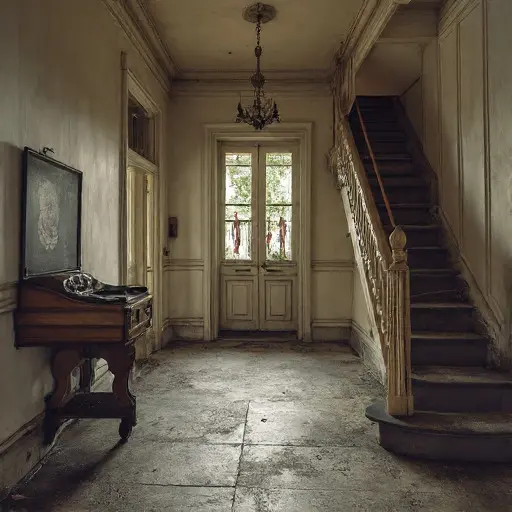
Ashford House was completed in 1896 for Henry Caldwell Ashford, born 1849 in Glasgow, a land and lake transport financier who made his fortune by underwriting timber shipments and inland ferry routes across northern forest-lake districts. His wealth grew through conservative investment in transport rights and seasonal trade contracts tied to logging and rail distribution networks. After decades managing accounts between port offices and inland estates, he commissioned a permanent residence beside a remote lake, intended as both family home and administrative base.
He lived there with his wife Sarah Linton Ashford and their son Robert, who assisted in maintaining shipping records and estate valuations.
The decline began in 1907 when inland transport revenues fell sharply after repeated disruptions to logging routes and lake shipping schedules caused by prolonged seasonal instability. Ashford had guaranteed several transport consortium loans using personal holdings, assuming steady long-term demand. As contracts defaulted, creditors began issuing formal demands against estate-backed securities. Correspondence shifted from routine ledgers to increasingly urgent notices. By 1911, portions of transport rights and timber-linked shares were quietly liquidated through intermediaries, and Robert’s administrative role was suspended pending review of contested valuations.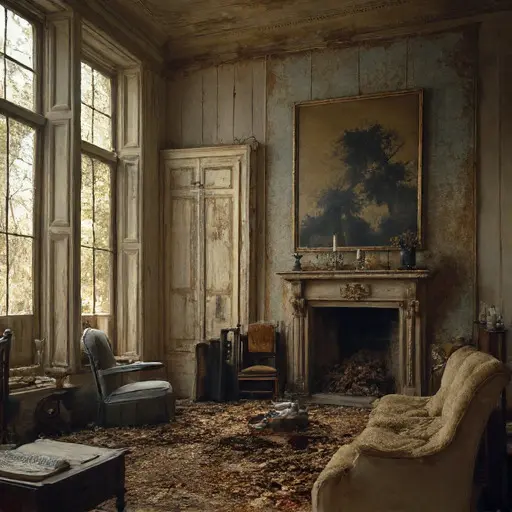
By 1913, Henry Ashford had relocated to nearby administrative offices to manage unresolved transport disputes, leaving the house under minimal oversight. Sarah’s correspondence ceased shortly afterward, and Robert appears only once more in a legal document concerning disputed estate valuations. The Ashford House remained fully furnished but unmanaged, its ledgers locked in the study and its greenhouse left to grow unchecked. No sale was completed, no return was recorded, and the property was officially listed as vacant, standing intact but abandoned without resolution.