The Ashcombe Painted Lady Waiting Beyond the Garden Gate
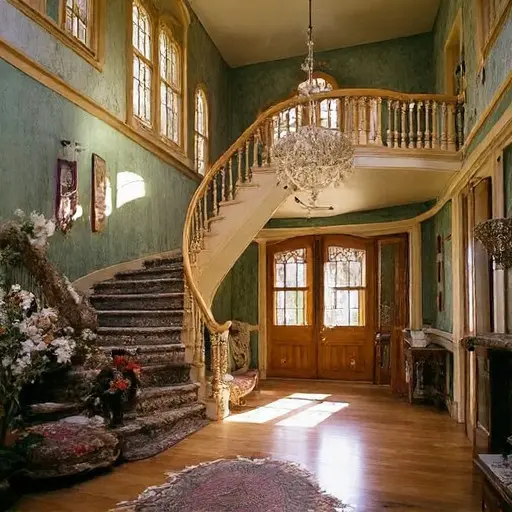
Ashcombe House was completed in 1891 for the Ellsworth family, who envisioned a residence that celebrated both architectural artistry and everyday domestic life. Designed in the exuberant Queen Anne style, the home combined expressive massing, richly carved woodwork, and a lively painted palette that made it one of the most admired houses along the neighborhood avenue. Three generations eventually shared the residence, filling its many rooms with music, conversation, and seasonal celebrations.
The wraparound veranda overlooked gardens that were cultivated with extraordinary care, where climbing roses, lavender, foxgloves, hydrangeas, and fruit trees provided color and fragrance from spring until late autumn. Every corner of the property reflected patient attention rather than formal perfection, giving the estate a deeply personal character.
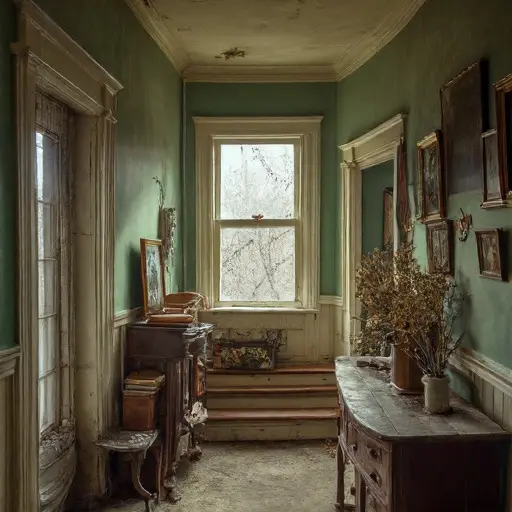
The family’s fortunes changed gradually during the economic hardships of the early twentieth century. As maintenance became increasingly difficult, the larger rooms were closed one by one to reduce heating costs, and only the central portion of the house remained regularly occupied. Repairs to the cedar roof and elaborate exterior trim were postponed year after year, allowing moisture to penetrate decorative woodwork and weather the painted surfaces. Outside, the once-tended cottage garden slowly escaped its borders. Hollyhocks leaned across the winding brick path, wisteria enveloped the old gazebo, and the grape arbor bowed beneath vines that no longer received careful pruning. Fallen apples and pears remained beneath the orchard trees each autumn, feeding birds and small woodland animals that gradually claimed the quiet property.
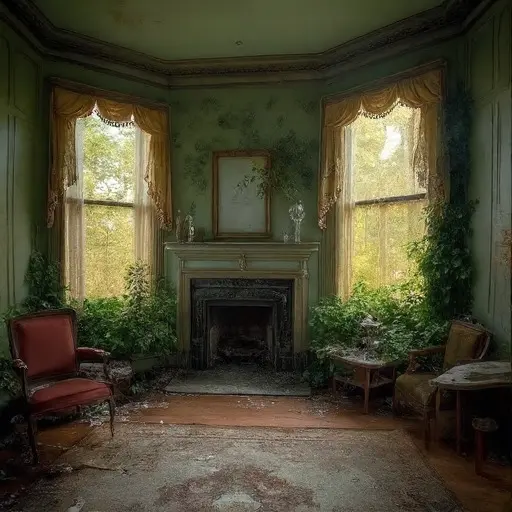
By the late 1940s, the final member of the Ellsworth family had quietly relocated to live with relatives after finding the house too costly to maintain alone. Many possessions remained exactly where they had always been, as if departure had been expected to last only a short while. The marble sculpture beside the reflecting pond gradually disappeared beneath climbing vines, fallen leaves gathered upon the still water, and the weathered gazebo became wrapped almost entirely in flowering wisteria. Gardening tools remained scattered where they had last been used, while the white picket fence slowly vanished behind generations of climbing roses. Today Ashcombe House still stands from its stone foundation to its tallest chimney, preserved not by restoration but by time itself, its painted Victorian silhouette quietly overlooking gardens that continue to bloom long after the footsteps of its owners have faded.