The Ashcombe Jacobean Manor Left in Ravine Silence
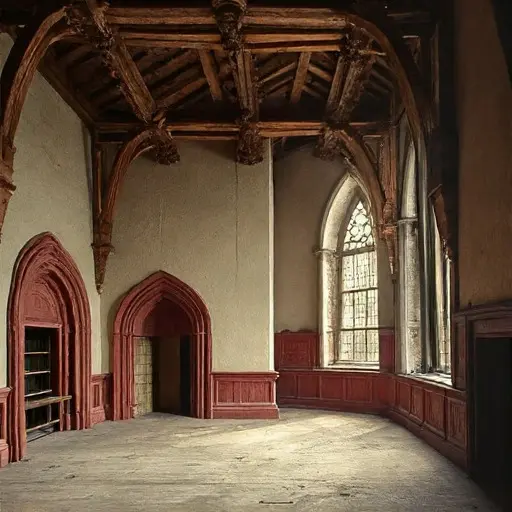
The Ashcombe Manor Complex was established in the early twentieth century by a landed English family whose wealth derived from agricultural estates, timber rights, and regional tenancy collections. Built into a steep forest ravine, the Jacobean-inspired design emphasized layered massing rather than formal symmetry, resulting in interlocking wings, stepped rooflines, and irregular courtyard formations that adapted to the terrain. The household included multiple generations supported by estate managers, clerks, gardeners, and domestic staff responsible for maintaining both the manor interior and the extensive terraced gardens descending into the woodland.
Administrative life centered on the great hall and adjoining studies, where rent books, forestry agreements, and maintenance schedules were managed with consistent discipline. For decades, the estate remained stable, its complex architecture fully inhabited and carefully preserved through regular upkeep.
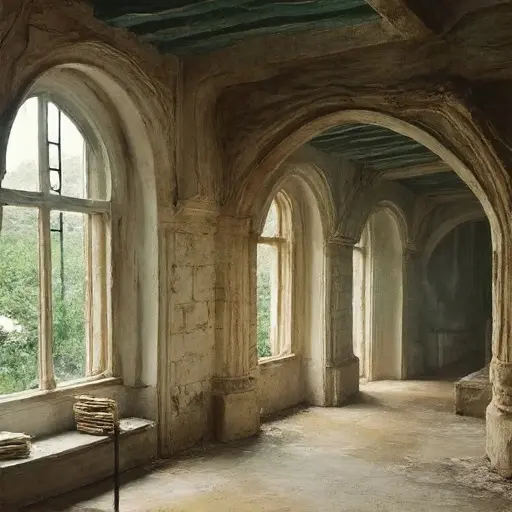
By the late 1920s, the Ashcombe estate began to experience financial strain as agricultural revenues declined and maintenance costs increased across its irregular multi-wing structure. The complexity of its Jacobean composition required constant repairs to roofing, chimneys, and stonework, which became increasingly difficult to sustain. Portions of the manor were closed to reduce heating expenses, resulting in uneven occupation across the interconnected wings and courtyard sections. Unpaid invoices accumulated alongside unanswered correspondence from tenants and local authorities. Moisture from the forested ravine began infiltrating roof seams and masonry joints, gradually weakening the contrast between pale limestone, ruby brick infill, and oxidized copper detailing. The estate slowly transitioned from fully active residence to partially maintained structure with fragmented oversight.
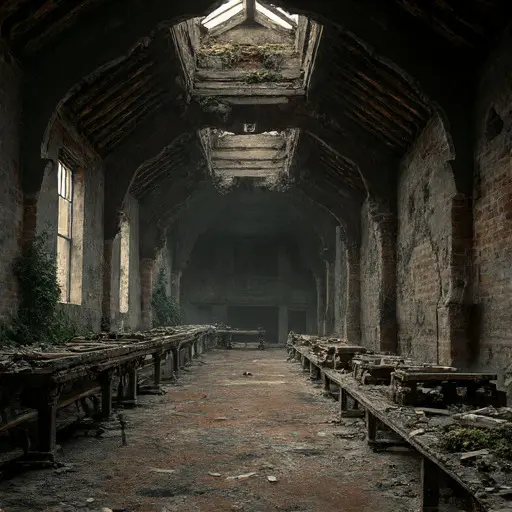
By the early 1940s, following prolonged financial collapse and unresolved inheritance fragmentation, the Ashcombe Jacobean Manor was fully abandoned. No restoration efforts were undertaken, and legal disputes prevented any unified ownership or redevelopment of the estate. The structure remained embedded within the ravine forest but deteriorated steadily under seasonal weathering, vegetation intrusion, and structural fatigue from its layered construction. Interior spaces were left in their final operational states, preserving furnishings, documents, and household records beneath accumulating dust and humidity. Over time, the once complex Jacobean system dissolved into silent decay, leaving the manor as an uninhabited architectural remnant slowly reclaimed by forest growth and the passage of time.