The Ashcombe House by the River and Its Abandonment
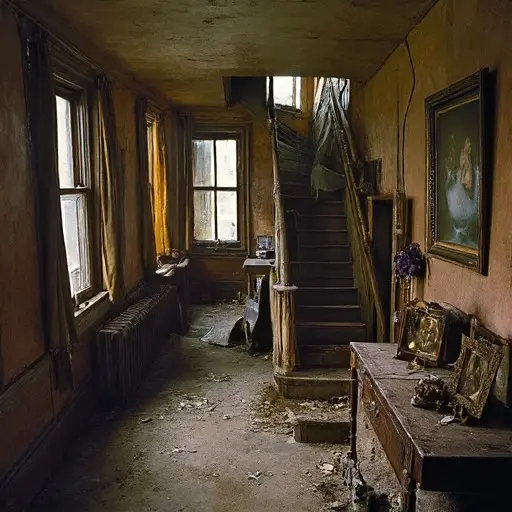
Ashcombe House was completed in 1896 for Henry Caldwell Marston, born 1848 in Worcester, a civil waterways engineer who specialized in mapping river flow stability and maintaining navigation routes for inland trade. His income came from government contracts and private consultancy work focused on flood management and riverbank reinforcement projects.
He chose the riverside site for its direct access to the water system he studied throughout his career, intending the home to serve as both residence and observational point for seasonal river behavior.
He lived there with his wife Alice Beatrice Marston and their daughter Clara, who assisted in maintaining correspondence and field notes.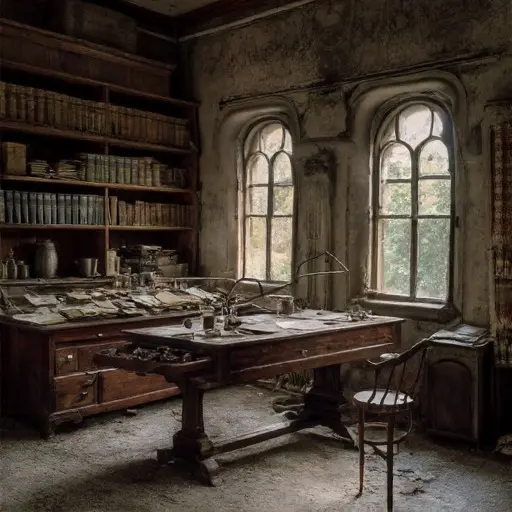
The decline began in 1907 after a sequence of unusually erratic river level changes undermined several regional flood control assessments. Marston’s earlier hydraulic projections were called into question, leading to revisions of multiple engineering reports he had authored. As investigations expanded, his professional responsibilities shifted from field analysis to administrative review.
By 1911, he had largely withdrawn from active surveying work, remaining at Ashcombe House for extended periods while attempting to reconcile revised data sets. Financial stability remained moderate, but professional standing weakened as competing models replaced his earlier assessments. Alice maintained the household during this period, though records suggest increasing isolation as correspondence became sparse.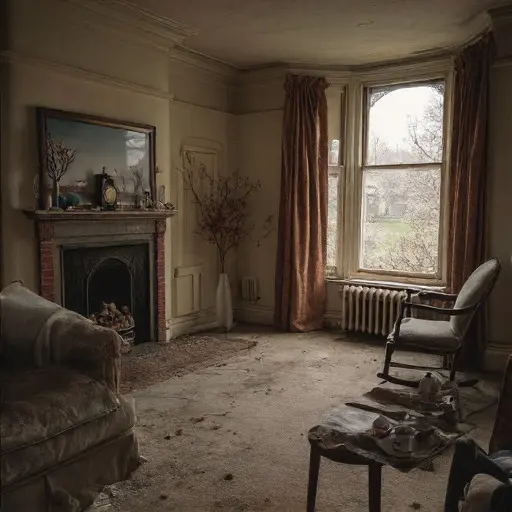
By 1913, Henry Marston had relocated to regional engineering offices to assist in revising river management frameworks, leaving Ashcombe House increasingly unattended. Alice’s correspondence ceases shortly afterward, and Clara appears only once more in a final household filing concerning property documentation. The Ashcombe House remained fully furnished but abandoned, its rooms intact yet subtly shaped by the landscape around it.
The house still stands by the river, gently folded into itself, as if time and water slowly pressed it into a quieter version of its own shape.