The Ashbury House and the Quiet Dissolution of a Lakeside Timber Investment
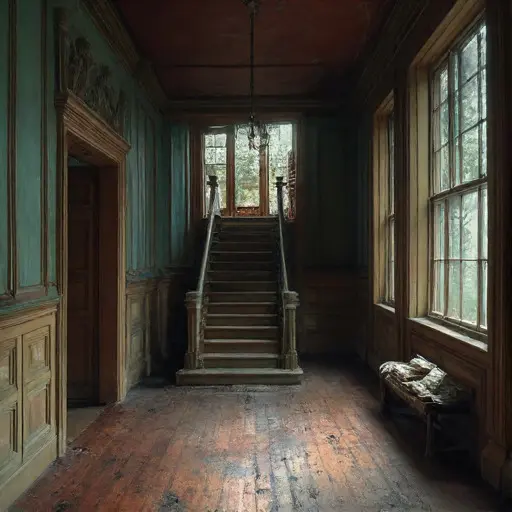
The Ashbury House was completed in 1894 for Edward Leland Ashbury, born 1846 in New Hampshire, a timber investment agent and lake transport financier specializing in forest-to-lake shipping routes. His wealth came from coordinating logging concessions in northern forests and securing transport contracts across inland lakes to milling towns. The house was built as both family residence and seasonal administrative base near the water, allowing oversight of timber staging and shipment schedules.
He lived there with his wife Clara Winslow Ashbury and their son Henry, who later assisted in managing forestry accounts and transport ledgers tied to regional sawmill contracts.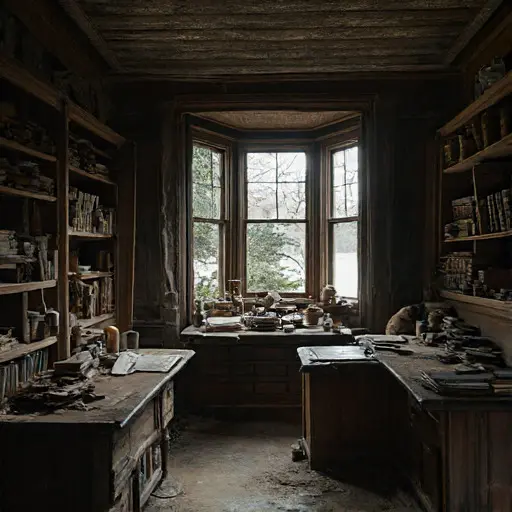
The decline began in 1907 after a series of logging disruptions caused by severe forest fires in the northern concessions, destroying timber inventory tied to Ashbury’s forward contracts. Several transport partners defaulted as shipments were delayed beyond seasonal windows, causing cascading financial losses across his investment network. Ashbury had personally guaranteed portions of the contracts, expecting rapid recovery in timber pricing that never fully materialized. By 1911, banks began recalling credit lines, and correspondence shifted from routine shipment schedules to formal legal demands delivered weekly. Henry’s role in forestry accounting ended abruptly after a valuation audit questioned the stability of several bundled timber assets.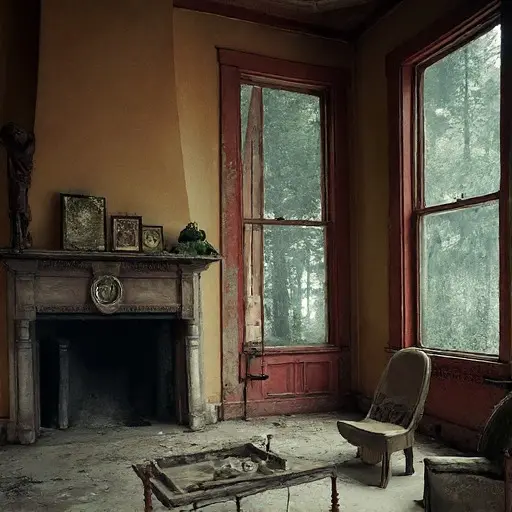
By 1913, Edward Ashbury had relocated to a temporary office in a nearby milling town to manage unresolved timber obligations, leaving the house under only occasional caretaker oversight. Clara’s correspondence ceased shortly afterward, and Henry’s name appears once more in a final legal filing concerning disputed forestry valuations. The Ashbury House remained fully furnished but unmanaged, its ledgers locked in the study and its lakeside rooms left to gather dust and moisture. No sale was completed, no family returned, and the property was recorded as vacant, standing intact but slowly absorbed into the forested shoreline without resolution.