The Ashbourne Cutting House Left Vacant After Rail Realignment Closure
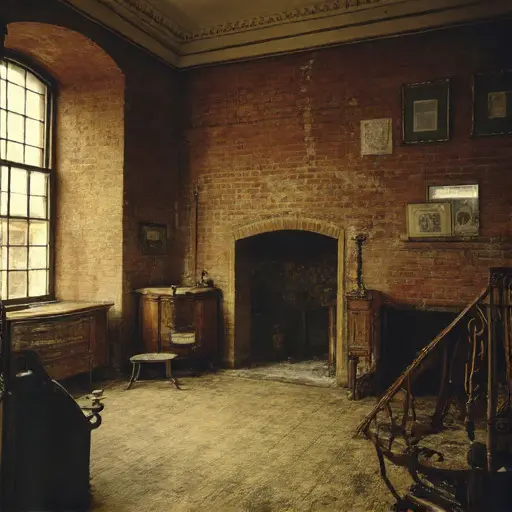
Ashbourne Cutting House was constructed in 1898 for the Merriton family, who worked in railway logistics and signal coordination along a minor inland branch line. Positioned at the edge of a shallow railway cutting, the house was designed as a practical late-Victorian residence, later expanded through modest side additions that widened its footprint while preserving architectural discipline. Built from warm buff brick with ironstone detailing, it reflected the restrained engineering aesthetic of its surroundings rather than decorative excess.
The house’s most distinctive feature was a narrow central bay projection rising through three floors, aligning precisely with stacked sash windows that overlooked both the cutting and the adjacent embankment. These windows provided visual oversight of passing trains and maintenance activity, making the house both domestic space and informal observation point. Over time, this functional role diminished as railway operations shifted toward centralized control systems.
Inside, the Merriton household maintained a steady routine tied closely to railway schedules. Arthur Merriton managed correspondence with station officials and logistics offices, while his wife Ellen oversaw household administration and guest accommodations for visiting railway staff. The interior design emphasized order and clarity, with rooms arranged along predictable axes that mirrored the structural logic of the building itself.
Early operational decline
By the late 1920s, automation and consolidation of railway infrastructure reduced the need for local oversight at smaller cutting points. Signal operations were centralized, and on-site coordination was no longer required. As a result, the Merriton family’s professional relevance gradually diminished. Maintenance funding for ancillary railway properties also declined, indirectly affecting the upkeep of nearby residences such as Ashbourne Cutting House.
Gradual withdrawal from daily occupation
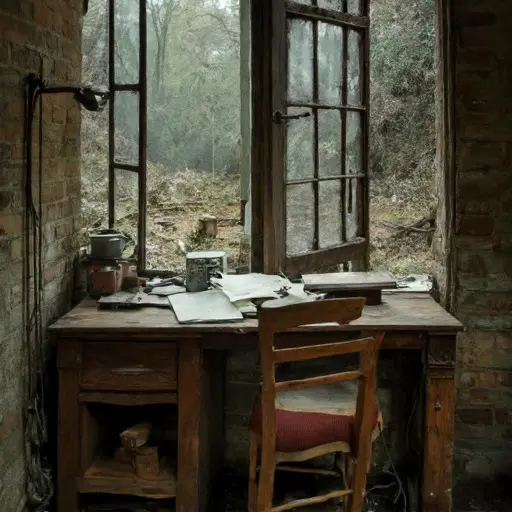
As financial and institutional support waned, portions of the house were gradually decommissioned. Rooms facing the railway cutting were no longer regularly used, and heating was restricted to central areas during colder months. The rear timber annex, added later for additional storage and utility space, became increasingly isolated and underused as structural maintenance was deferred.
Vegetation began to encroach quietly along the edges of the property. Grass grew along the base of the buff brick walls, moss collected in shaded mortar joints, and small shrubs established themselves near the rear boundary fence. These changes did not transform the house dramatically but instead marked a slow shift toward disuse.
Final abandonment phase
By the early 1940s, Ashbourne Cutting House was effectively uninhabited. Railway operations in the cutting had been fully rerouted or discontinued, leaving the trench quiet and overgrown. Utility services were reduced and eventually terminated, and the household ceased all regular occupancy. The structure remained intact, its brickwork stable and its roofline unchanged, but its purpose had ended.
The house left behind
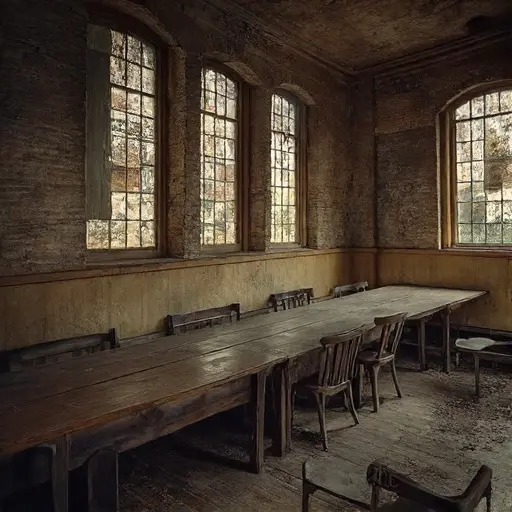
By the late 1940s, Ashbourne Cutting House had no remaining occupants or active claims of ownership. No restoration or redevelopment was undertaken, and no family members returned to reestablish residence. The building remains at the edge of the disused railway cutting, structurally sound but entirely vacant, left to weather gradually under ordinary seasonal conditions without transformation or intervention.