The Alderwick Stick-Eastlake Cottage Left in Forest Quiet
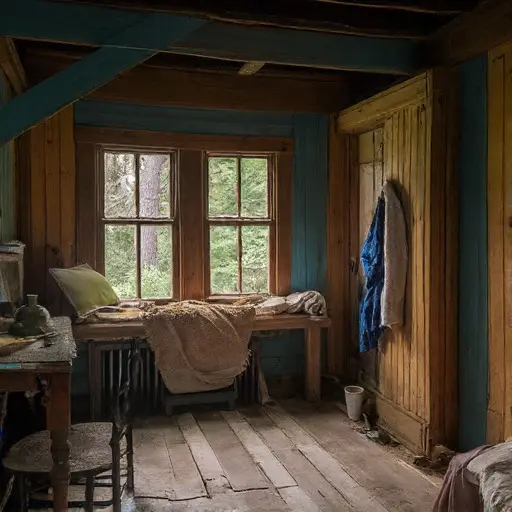
The Alderwick Cottage was built in the early twentieth century on the edge of a dense temperate forest by a family of forest workers and seasonal craftspeople who relied on timber harvesting, small-scale carpentry, and guiding travelers through nearby woodland routes. Designed in a modest Stick-Eastlake style, the house emphasized visible structure and functional detail rather than ornament, blending naturally with its surroundings through cedar siding and green metal roofing. The household consisted of a small family unit that lived closely with the rhythms of the forest, adjusting daily routines to seasonal work patterns and weather conditions.
The home served as both shelter and practical base of operations, with firewood storage, rain collection, and repair work integrated directly into its layout.
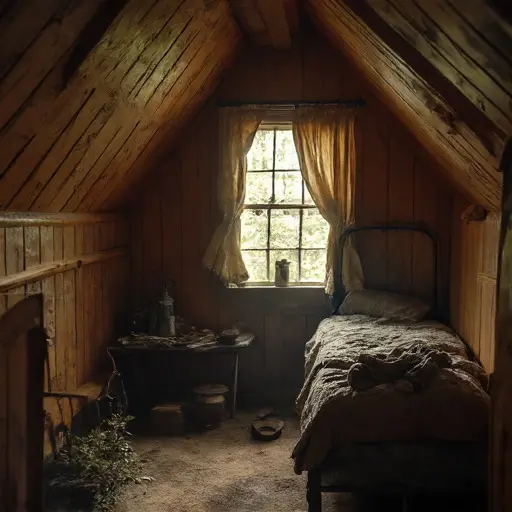
By the late 1920s, the Alderwick Cottage began to experience reduced stability as seasonal forestry work became less reliable and nearby timber operations shifted to more industrialized regions. Income fluctuations made it increasingly difficult to maintain repairs to the roof, beams, and exterior woodwork, all of which required regular attention in the humid forest environment. Portions of the house were used less frequently during certain seasons, and interior spaces became more isolated from one another as heating and maintenance were reduced. The surrounding forest gradually reclaimed nearby clearings, with ferns, violets, and moss spreading closer to the foundation. Household activity diminished, reflected in slower correspondence and fewer signs of routine upkeep, though the structure remained intact and structurally sound for some time.
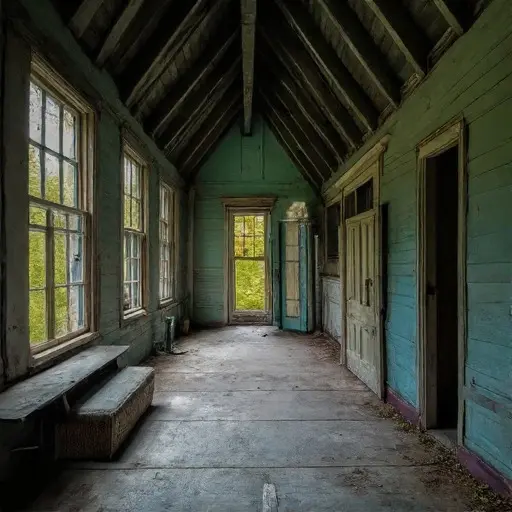
By the early 1940s, following prolonged financial difficulty and the dispersal of the family to distant settlements, the Alderwick Cottage was fully abandoned. No restoration or redevelopment efforts were undertaken, and the property remained isolated within the forest edge. The structure slowly deteriorated under seasonal moisture, vegetation growth, and lack of maintenance. Interior spaces were left unchanged in their final state of use, preserving furniture, tools, and domestic objects beneath accumulating dust and forest encroachment. The cottage persists as a quiet woodland structure, gradually merging with its environment while retaining the memory of a life shaped by solitude, labor, and seasonal time.