The Alderwick Shingle Style House Left to Coastal Weathering
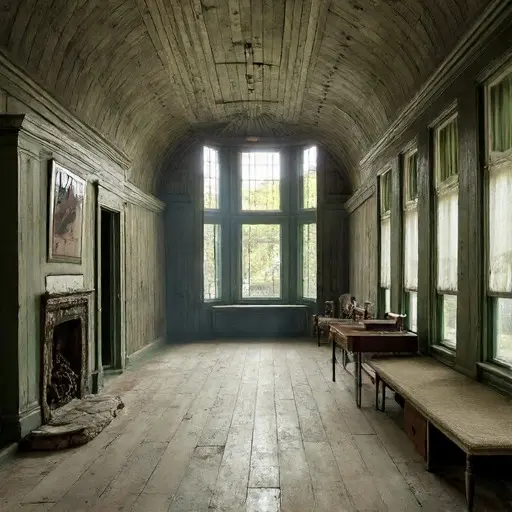
The Alderwick House was built in the late nineteenth century in a coastal-influenced suburban district where the Shingle Style emerged as a response to both Victorian ornamentation and the harsh realities of wind, salt, and seasonal weather. Designed for a family connected to maritime trade and clerical administration, the residence emphasized durability and continuous form over decorative detail. The household consisted of parents and two children, maintaining a quiet domestic rhythm shaped by coastal employment cycles and weather-dependent routines.
Early life in the home was stable and orderly, with the structure’s flowing geometry reflecting a sense of cohesion between architecture and environment rather than social display.
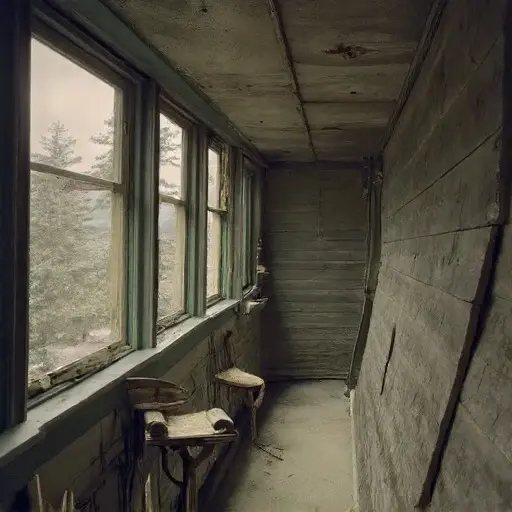
By the late 1920s, the Alderwick household began to experience financial pressure as maritime trade fluctuations and reduced clerical income affected long-term stability. Maintenance of the Shingle Style exterior, which relied on continuous protective upkeep rather than decorative repair, became increasingly difficult. As resources diminished, repainting and weatherproofing were delayed, leading to gradual erosion of surface uniformity. Portions of the upper floors were closed off during colder months to conserve heating, and the use of the rounded bay rooms was reduced. Over time, the house shifted from a fully occupied family residence into a partially maintained structure, with visible signs of deferred care accumulating across both interior and exterior elements.
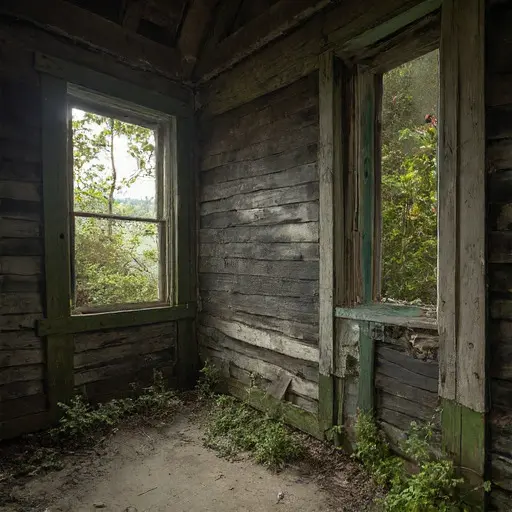
By the early 1940s, after the passing of the original occupants and the dispersal of remaining family members to other coastal towns, the Alderwick House was fully abandoned. No restoration efforts were undertaken, as the property required continuous maintenance that was no longer financially or logistically feasible. Official records eventually marked the residence as unoccupied, with no further maintenance reported. The structure remained standing within its quiet residential street, slowly deteriorating under seasonal weathering and coastal exposure. Interior spaces were left in their final state of habitation, allowing dust, moisture, and creeping vegetation to gradually reclaim the Shingle Style home, which persists as a quiet remnant of late nineteenth-century coastal domestic architecture.