The Alderwick Roadhouse Left Vacant After Farmland Drift
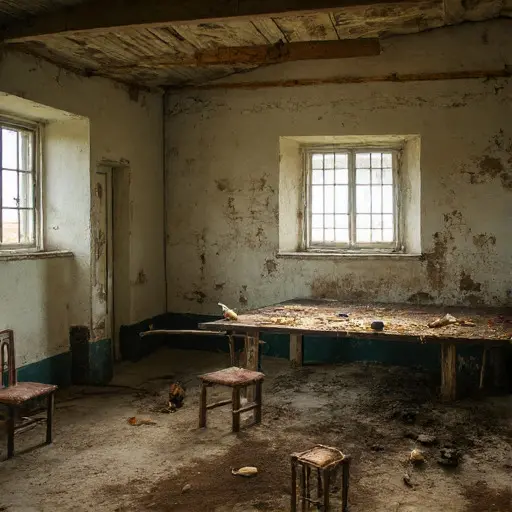
The Alderwick Roadhouse was built in 1901 along a rural transport route that connected scattered farming settlements across a wide agricultural plain. Constructed with chalk-whitewashed masonry and simple timber framing, it served as a combined residence and waypoint for those managing seasonal grain transport and field coordination. Its rust-brown roof and dusty olive trim were chosen for durability rather than ornament, blending the structure into the surrounding wheat fields and stone-hedged farmland.
Positioned slightly back from the road behind a low stone wall, the house functioned as a stable point of reference for travelers and farm workers moving between distant villages.
For several decades, the house remained steadily occupied by the Alderwick family, who maintained close ties to surrounding farmland operations. Daily life followed predictable agricultural rhythms: harvest tracking, equipment maintenance, and coordination with neighboring landowners. The home served as both a private residence and informal administrative point for rural activity, reinforcing its role within the broader farming network of the region.
Gradual decline of rural routes
By the late 1920s, improvements in transportation infrastructure and centralized grain distribution began to reduce reliance on local roadhouses like Alderwick. Larger regional hubs replaced smaller agricultural coordination points, and traffic along the rural road gradually diminished. As economic activity declined, maintenance of the property slowed, and minor structural wear began to accumulate along the stone wall and wooden trim.
Slow fading of roadside relevance
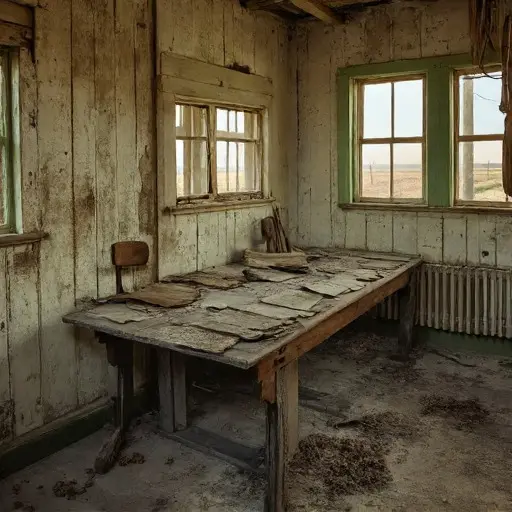
As rural activity declined further, the Alderwick Roadhouse transitioned from an active waypoint into a partially occupied residence. Members of the household gradually relocated to larger towns or more centralized agricultural centers, leaving the property increasingly unattended. Grass and weeds began growing through the stone wall cracks, and the surrounding fields slowly expanded toward the structure’s edges.
Eventually, the house no longer served any functional role in regional transport or farming coordination. It remained standing, but its relevance within the agricultural network had effectively ended, marking a quiet shift from utility to neglect.
Final abandonment of the country house
By the early 1940s, the Alderwick Roadhouse was fully vacated. No formal ownership disputes arose, but no restoration efforts were undertaken. The structure remained stable due to its simple construction, yet exposure to wind, dust, and seasonal weather gradually softened its surfaces. Windows stayed open and dark, reflecting only the fields and sky beyond.
Final rural stillness
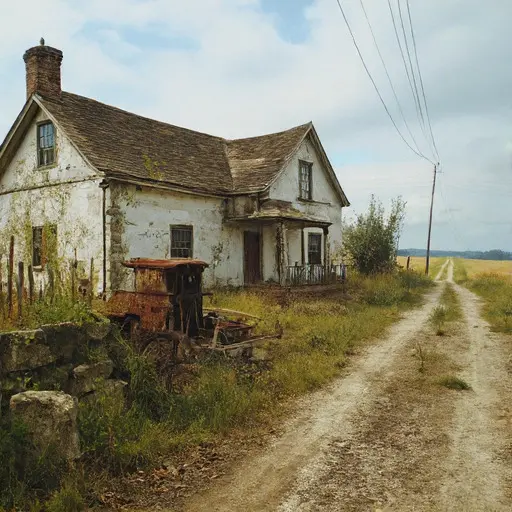
By the mid-1940s, no active ownership or functional use remained for the Alderwick Roadhouse. The surrounding farmland had consolidated into larger agricultural systems, leaving smaller waypoints obsolete. No restoration followed, and the structure was left to age naturally at the edge of the road. Over time, vegetation reclaimed the stone wall and yard, and the distinction between home and field continued to dissolve. The house remains today as a quiet roadside remnant, enduring in stillness as the fields continue to move around it without pause or return.