The Alderwick Manor Left in Glassed Silence
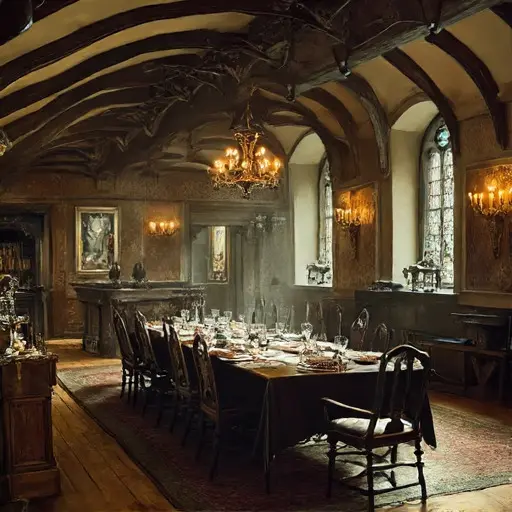
The Alderwick Manor was established in the late nineteenth century on a forested estate edge by a mercantile family who had recently acquired wealth through timber exports and regional trade contracts. Designed in the Tudor Revival style, the residence combined half-timbered domestic architecture with an elaborate conservatory wing intended for botanical display and seasonal cultivation. The household included parents and three children, supported by gardeners and domestic staff responsible for maintaining both the manor and its glass conservatory.
Early life in the estate was marked by careful financial organization, with trade correspondence managed in the dining room and horticultural records kept within the conservatory wing. The property functioned as both residence and controlled cultivation site, reflecting a stable but resource-dependent economic balance.
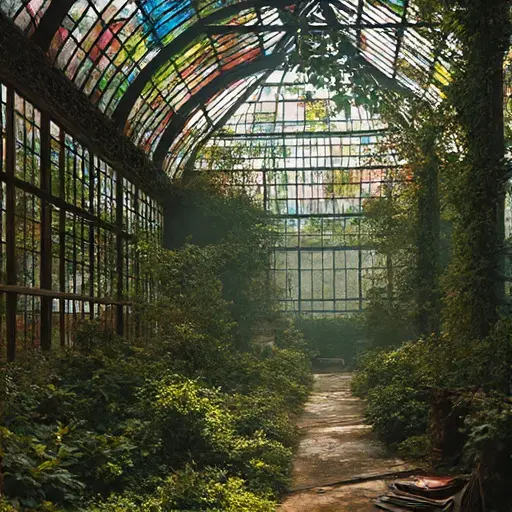
By the late 1920s, the Alderwick estate began to experience financial strain as timber markets declined and export contracts became inconsistent. Maintenance of the conservatory proved increasingly expensive due to its specialized glass and iron structure, requiring skilled repair that became difficult to sustain. Staffing was reduced, and portions of the estate were closed off to conserve heating and operational costs. Administrative correspondence accumulated without timely response, particularly regarding land taxes and trade obligations. The conservatory, once a carefully managed extension of the household’s scientific and aesthetic identity, began to fall out of regular use, allowing vegetation to grow unevenly and structural condensation to weaken interior surfaces. The manor shifted gradually from active residence to partial occupation.
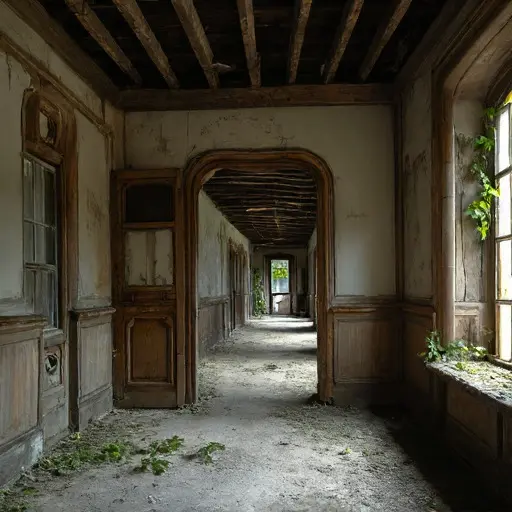
By the early 1940s, following prolonged financial insolvency and unresolved inheritance complications, the Alderwick Manor was fully abandoned. No restoration efforts were undertaken, and legal disputes prevented any unified claim or redevelopment of the property. The structure remained standing within the forest, slowly deteriorating under seasonal weathering and unchecked vegetation growth. Interior spaces were left in their final condition of use, preserving furniture, records, and architectural details under layers of dust and humidity. Over time, the conservatory and main manor wing became increasingly indistinguishable from the surrounding forest environment. The estate persists without occupation or renewal, an unresolved Tudor Revival structure dissolving slowly into nature without return or restoration.