The Alderwick House at the Clearing and Its Abandonment
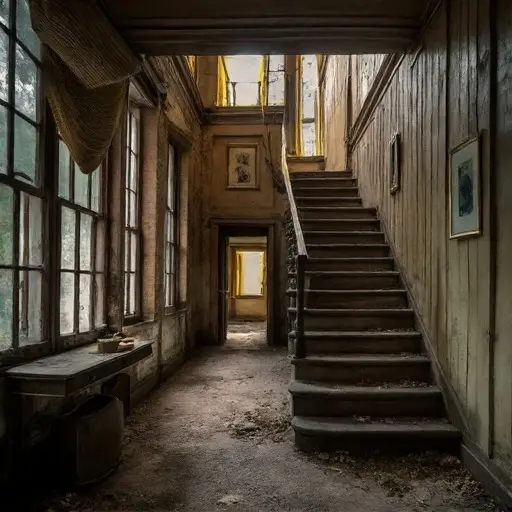
Alderwick House was completed in 1894 for Jonathan Miles Corbett, born 1847 in Surrey, a timber trade accountant who managed supply valuations for regional sawmills and railway construction projects. His income was steady and clerical, derived from contract accounting and material auditing across wooded inland districts.
He built the house at the edge of a forest clearing to remain close to the timber routes he regularly assessed.
He lived there with his wife Edith Clara Corbett and their son William, who assisted with household records and correspondence tied to supply inventories and trade documentation.
The decline began in 1906 when railway expansion contracts shifted timber procurement toward centralized industrial suppliers, reducing the role of independent regional accountants like Corbett. Several of his valuation methods were absorbed into standardized pricing systems, leaving portions of his earlier work partially obsolete.
By 1910, he had withdrawn from active contract auditing and worked primarily from home while attempting to reconcile older records with new industrial standards. Financial stability remained moderate, but professional relevance steadily declined. Edith maintained the household during this period, though correspondence suggests increasing isolation as the house itself seemed divided into slightly misaligned segments of lived space.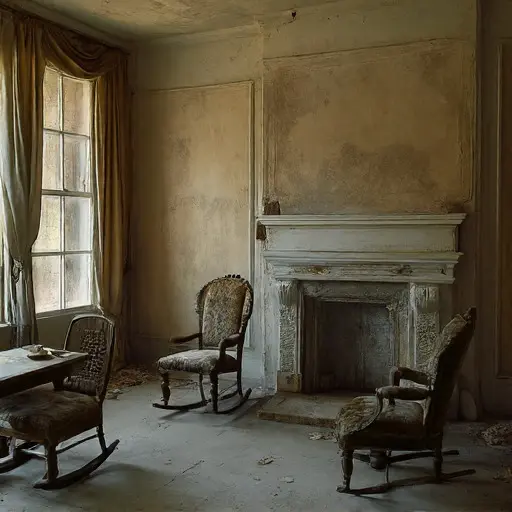
By 1912, Jonathan Corbett had ceased most professional activity, retaining only occasional advisory correspondence with regional timber offices. William’s name appears once more in a final ledger reconciliation before disappearing from records entirely. Alderwick House remained fully furnished but abandoned, its contents preserved in place and its rooms quietly holding their layered offsets.
The house still stands at the forest edge, calm and intact, as if it was never meant to fully align with itself in the first place.