The Alderwick Canal House and the Year the Water Rose Too Slowly
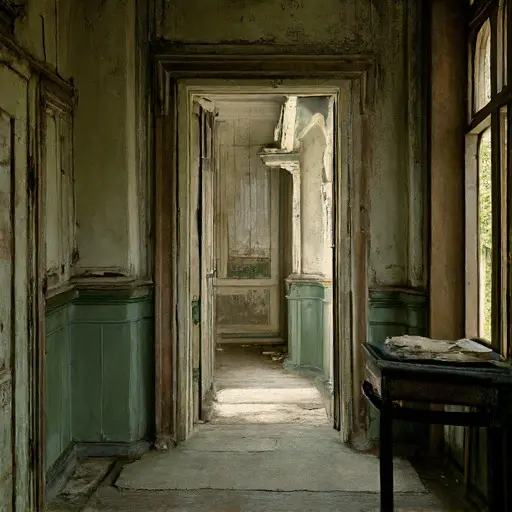
Alderwick Canal House was built in 1893 for Henry Calder Venn, born 1841 in Norwich, a civil waterworks accountant responsible for managing canal toll records, flood control budgets, and maintenance schedules along inland navigation routes. His profession placed him between municipal engineering offices and private shipping interests, where he verified usage fees and seasonal waterway access rights.
He chose the site beside a quiet forest canal as both residence and monitoring point, intending to oversee seasonal water fluctuations while maintaining direct access to administrative records.
He lived there with his wife Rosemarie Venn and their son Oliver, who assisted in copying ledger entries and maintaining duplicate copies of water level reports.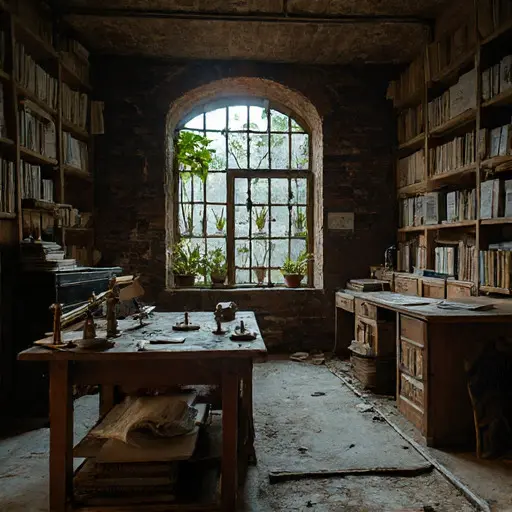
The decline began in 1901 when a series of unusually mild winters altered expected canal flow patterns, disrupting the standardized water level charts used in toll calculations. Venn’s accounting system, dependent on consistent seasonal baselines, began producing discrepancies between recorded and observed canal usage.
By 1906, correspondence between waterworks authorities and private shipping firms became increasingly fragmented, with conflicting reports of depth readings and maintenance responsibilities. Rosemarie’s handwriting fades from household records during this period, replaced by repeated recalculations of water tables and structural adjustments to prior entries.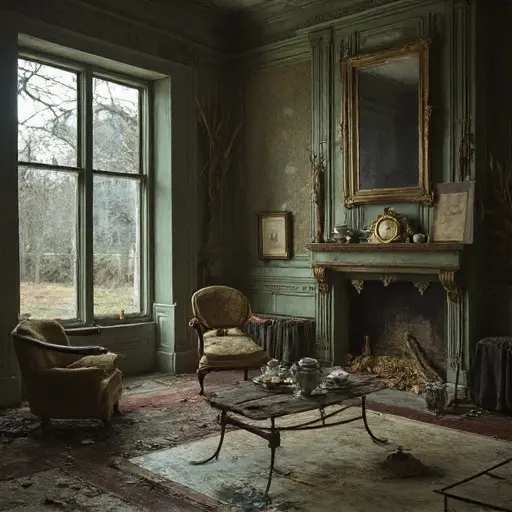
By 1912, Henry Venn had withdrawn from active canal administration, continuing only private reconciliation of water records from a municipal office in town. Oliver appears only once more in surviving documents, in a partial ledger correction with no signature or date confirmation.
Alderwick Canal House remained fully furnished but functionally unclaimed. The ledgers stayed open in the study, the greenhouse continued growing in filtered canal light, and no formal reassignment of ownership was ever completed. The property was eventually listed as vacant beside the waterway, though it still stands intact, quietly reflecting the slow-moving canal beside it without ever fully agreeing with its reflection.