The £97,000 Beaumont Manor — Hidden Fortunes of a Forgotten Engraving Room
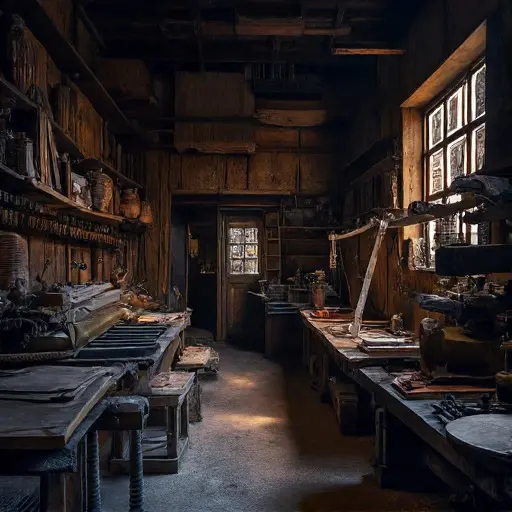
Beaumont Manor’s engraving room exuded quiet calculation, where wealth was tied to both skill and commerce. £97,000 lay recorded in finished prints, copper plates, and commissions—carefully cataloged, yet abandoned and hidden from further use.
Gabriel Félix Beaumont, Engraver and Printmaker
Gabriel Félix Beaumont, born 1857 in Bordeaux, earned acclaim as an engraver supplying both private collectors and colonial offices.
Trained at a local atelier, he married Sofia Del Río, a daughter of a colonial merchant family. Traces of his presence remain: ink-stained gloves on a chair, copper plates numbered and stored carefully, correspondence bound with string, and a small chest containing silver stamps and embossing tools. His daily routine was methodical: engraving in the morning, proofing prints at midday, and writing invoices in the evening. His temperament was meticulous, disciplined, and quietly ambitious.
Commissions Lost and Markets Disrupted
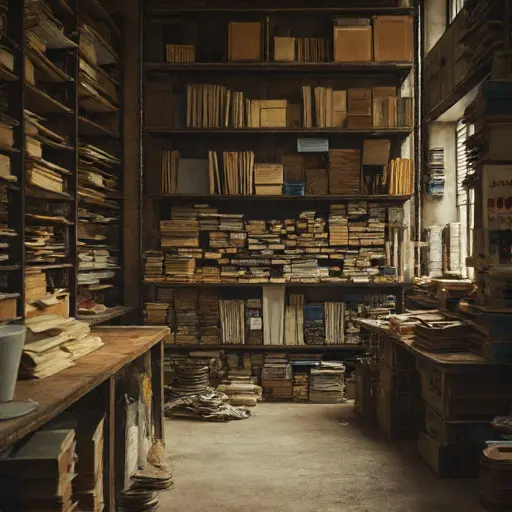
By 1912, political unrest in Mexico and South America disrupted deliveries, leaving Beaumont with unpaid commissions and unsold prints. The engraving room preserves the consequences: half-inked plates, invoices left unsigned, and prints stacked but unsorted. Some materials were quietly removed or destroyed; most remain, their monetary and artistic value unresolved.
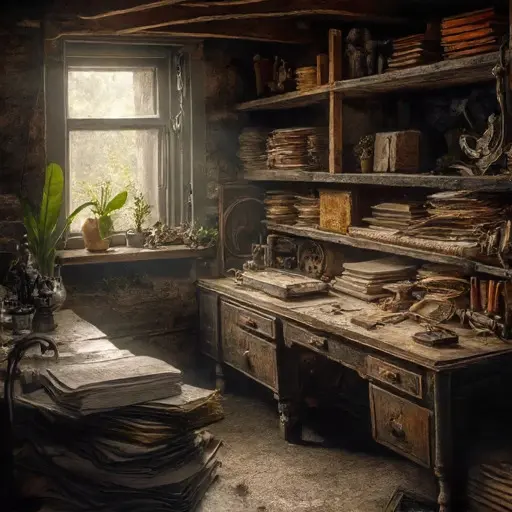
A folded note lies beneath a plate: “Maintain until clients resolve claims.” No claims arrived. Beaumont Manor stands abandoned, its engraving room intact, its prints and plates unclaimed, and its hidden fortunes left unresolved.