The £90,000 Montague House — Veiled Riches of a Forgotten Music Room
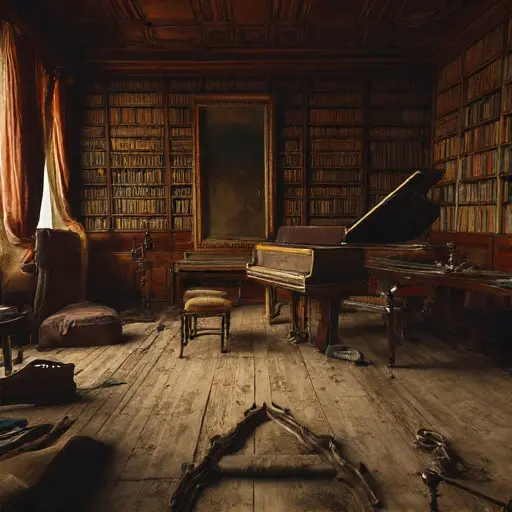
Montague House’s music room carried the silence of halted performances. Within its walls, £90,000 had been bound in instruments, imported scores, and royalties—assets measured as carefully in financial ledgers as in musical precision—now left veiled and abandoned.
Lucien Auguste Montague, Composer and Music Publisher
Lucien Auguste Montague, born 1859 in Lyon, France, moved to London to establish himself as a composer and music publisher.
Trained at the Conservatoire de Paris, he married Marianne Duval but remained largely solitary in his work. His life remains traceable through objects: a worn conductor’s baton atop the piano, ink-stained manuscripts, violin strings coiled on a side table, and a ledger noting foreign sales of editions to theaters and salons. His daily routines—composition in the morning, correspondence in the afternoon, and proofing scores in the evening—left faint imprints on furniture, carpets, and shelves. His temperament was meticulous and disciplined, blending artistry with commerce.
Financial Overreach and Ceased Operations
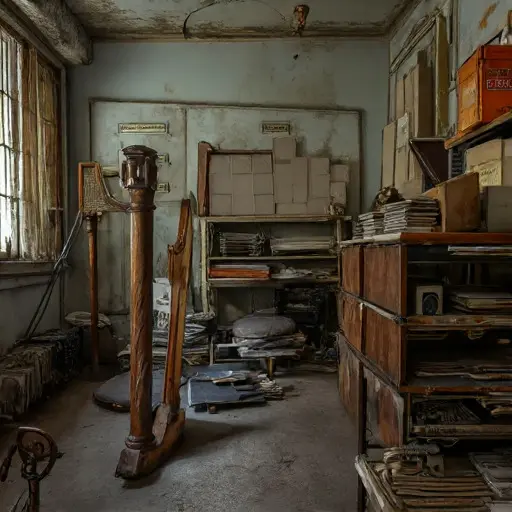
By 1913, an ambitious opera series failed to draw sufficient subscribers. Payments stalled, debts mounted, and Montague’s publishing house froze. The music room reflects the aftermath: half-bound scores, ledgers left mid-entry, instruments stored but unused. Some sheet music may have been sold; other items remain untouched, leaving the precise valuation of Montague’s estate unresolved.
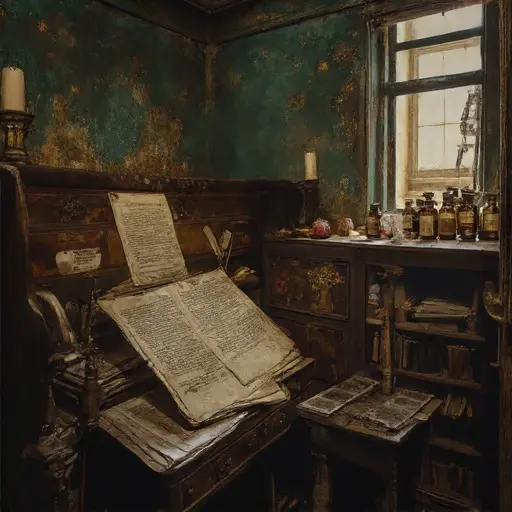
Beneath a folded score on the piano, a note reads: “Preserve until heirs claim royalties.” No claim followed. Montague House remains silent, its music room intact but empty of sound, its ledgers unresolved, and its wealth both artistic and financial left veiled and unclaimed.