The £130,000 Van der Velde House — Rare Collateral in a Forgotten Counting Room
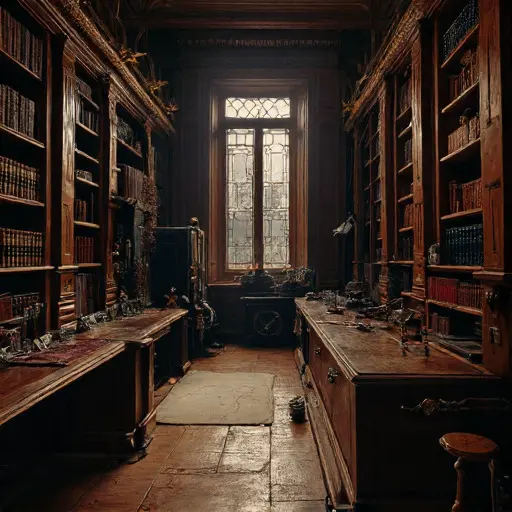
Van der Velde House keeps its quiet in the counting room, where £130,000 once lay in notes, mortgages, and railway shares pledged as collateral. The figures remain, but the certainty has thinned; paper endures where confidence did not.
Pieter Johannes van der Velde, Diamond Broker
Pieter Johannes van der Velde, born 1858 in Rotterdam to a dockside trader, arrived with modest schooling and a reputation for steady arithmetic.
By 1890 he had established himself as a diamond broker, importing stones from the Cape and extending credit to cutters and jewelers. His life is recorded in objects: a loupe resting in a velvet tray; scales calibrated to fractions; a silver watch engraved “P.J.v.d.V.”; invoices bearing Amsterdam watermarks; a framed lithograph of Table Mountain; a cigar cutter worn thin; and a ledger inscribed with his birth date in precise Dutch hand. His wife, Margaretha, is present only in a folded household account tucked among business papers.
He kept strict hours—inspections at dawn, settlements by noon, correspondence after supper. His temperament was restrained, cautious, reflected in columns double-ruled and debts cross-referenced.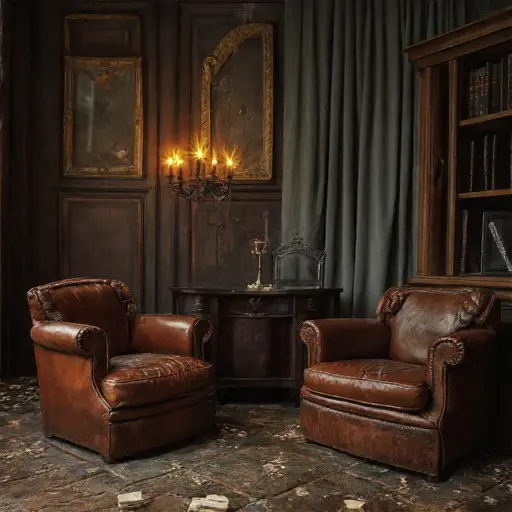
Credit Entangled
In 1912, a shipment of stones was delayed by maritime strike. Clients defaulted; smaller brokers collapsed. Van der Velde extended credit too far, accepting shares and deeds as collateral in place of coin. The safe now contains bundles of certificates for ventures that never matured. Several envelopes are empty, their seals broken with care. Whether redeemed, surrendered, or quietly removed cannot be known.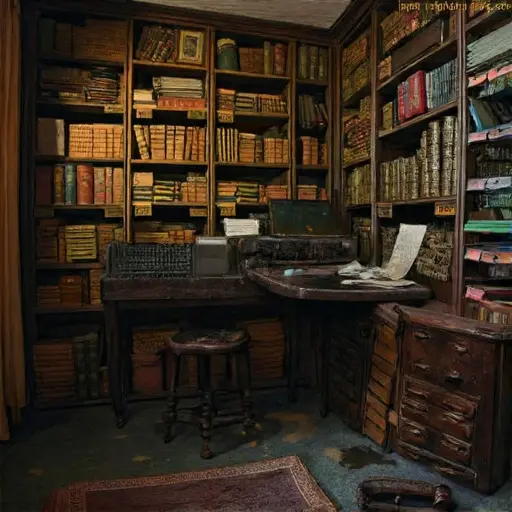
On the last written line, Pieter notes: “To be secured upon resolution.” No resolution follows. The counting room remains furnished and intact, its safe half-open, its collateral stacked in careful bundles. Van der Velde House stands silent, the arithmetic suspended, the fortune neither claimed nor entirely lost.