The £112,000 Corbett Manor — Hidden Wealth of a Forgotten Map Room
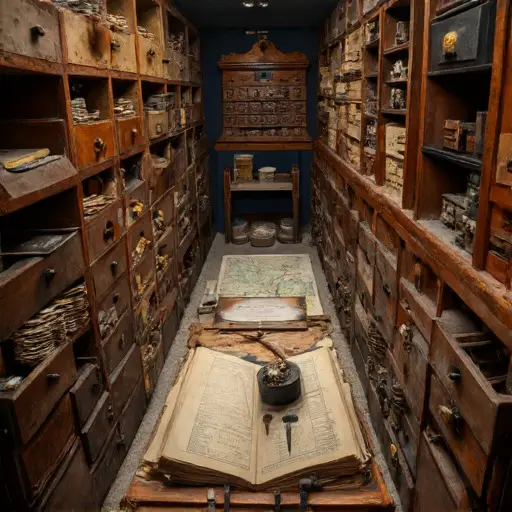
Corbett Manor’s map room exuded precise stillness. Within, £112,000 had been invested in surveying instruments, purchased maps, and exploration contracts, all carefully recorded but left hidden and unused.
Surveying, Charts, and Accumulated Capital
Edmund James Corbett, cartographer and land surveyor, was born in 1857 in Edinburgh.
Educated at a technical academy, he provided maps for colonial enterprises and private investors in Canada. Married to Margaret Corbett, father to a daughter named Eliza, his life is readable through objects: brass compasses polished by use, ink-stained dividers, parcels of Canadian survey reports, a ledger with his full legal name, and a magnifying glass resting atop a partially drawn map. Daily routine followed meticulous order—field calculations at dawn, chart drawing midday, accounts by lamplight—temperament measured, exact, and patient.
Lost Contracts and Financial Strain
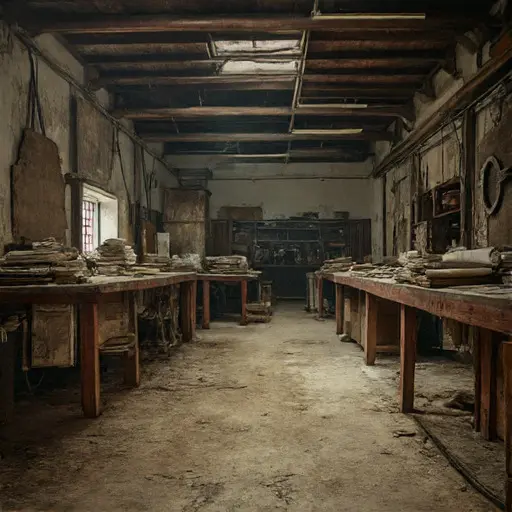
By 1912, abrupt changes in colonial land claims and funding withdrawals left Corbett with unpaid commissions and unfinished surveys. The map room shows the aftermath: charts half-drawn, field notes incomplete, and ledgers ending mid-line. Some instruments may have been returned to clients; most remain, their capital recorded yet unrealized.
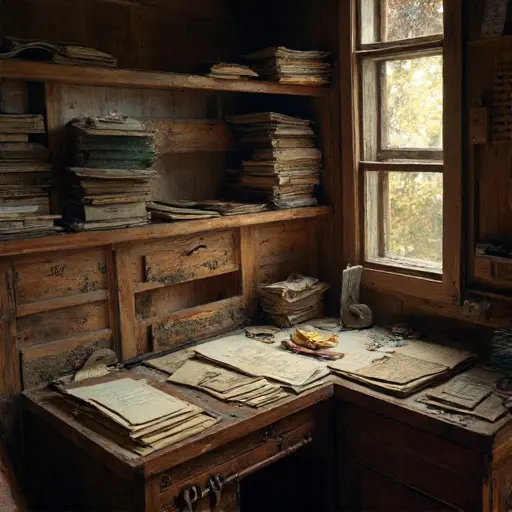
A slip of paper lies beneath a protractor: “Hold until payments confirmed.” Payments never arrived. Corbett Manor stands abandoned indoors, its map room intact, its capital calculated, and its hidden wealth suspended between charted intent and silence.