Terra-Sigil: The Cartographer’s Final Mark
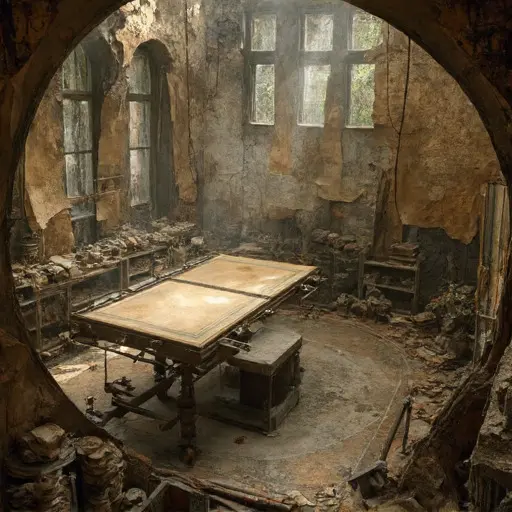
The atmosphere inside Terra-Sigil was dry, crisp, and held the faint, brittle scent of old linen, aged glue, and oxidized copper. The name, roughly translating to “Earth Seal,” suggested a boundary—a line of definitive marking. This abandoned Victorian house felt like a massive, high-ceilinged transit station, designed for the rigorous, solitary work of observation and documentation, now standing as a silent, cold repository of the world’s forgotten edges. The light, though minimal, seemed to fall on surfaces in precise, geometric patches, giving the place an air of clinical, quiet scrutiny.
The last resident was Captain Arthur Bellamy, a wealthy, eccentric, and fiercely dedicated private cartographer of the late 19th century. Bellamy’s profession was the meticulous mapping of uncharted territories and disputed boundaries, driven by a desire to bring perfect, objective order to the globe. He viewed the manor as his personal center of operations, building it to house his massive collection of maps and measuring instruments. His personality was relentlessly focused, introverted, and utterly obsessed with the notion of fixed boundaries—the final, absolute line between the known and the unknown.
The Zero Point Room
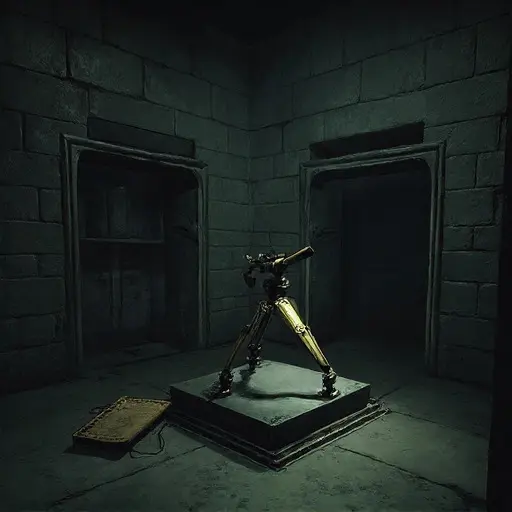
Bellamy’s journals, found locked inside a heavy, iron safe marked ‘Confirmed Coordinates,’ revealed his final, profound descent. He grew tired of mapping the world’s physical boundaries and began attempting to map the unmappable—the flow of magnetic currents, the migration of birds, and the invisible lines of psychic influence. His obsession culminated in his final project: finding the house’s absolute ‘Zero Point,’ a fixed, fundamental location he believed held the key to all geographical truth. He installed his finest equipment in a specially built subterranean room, determined to anchor his entire life’s work to a single, unquestionable spot. “The boundaries are all lies,” one entry read. “The only truth is the single point. I must find the single, final, unmoving mark and sign my life to it.”
The house preserves his intense methodology. The wooden beams in the central attic are marked with thousands of tiny, precise pencil annotations and surveyor’s symbols, remnants of his obsessive attempts to triangulate the manor’s exact position relative to the stars.
The Final Signature in the Abandoned Victorian House
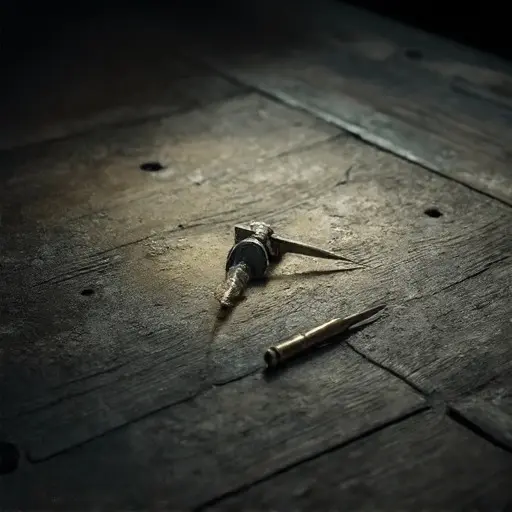
Captain Arthur Bellamy was last seen descending into his ‘Zero Point Room’ with only his silver stylus and a hammer. The next morning, the house was silent and locked from the inside. The massive, brass front door was bolted from within, and no body was ever recovered. His vast collection of maps remained, all perfectly cataloged, but the man himself was gone.
The ultimate chilling clue is found in the floor of the ‘Zero Point Room.’ The silver stylus lies broken on the floor, surrounded by a tiny, precise triangle of pin-pricks. It is the only place in the entire house where the dust has been deliberately wiped clean, revealing the bare wood. This abandoned Victorian house, with its fixed angles and endless charts, stands as a cold, imposing testament to the man who sought to map everything, but who ultimately signed his own final, perfect boundary on the floor of his home before stepping permanently over the edge.
