Stitch-Riven: The Dressmaker’s Unfinished Fabric
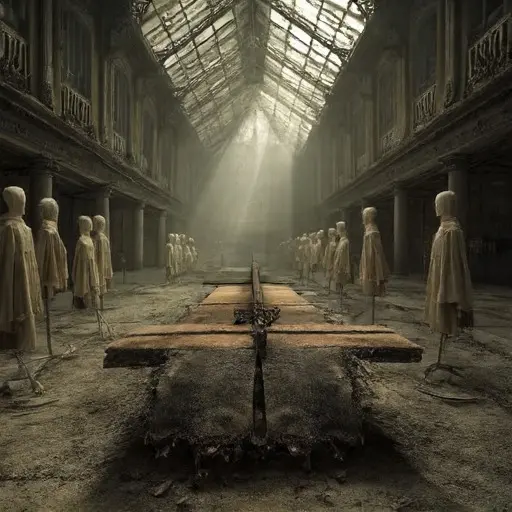
Stepping into Stitch-Riven felt like walking into a massive, frozen breath. The air was dry, heavy, and held the faint, crisp scent of old cotton, dried starch, and the faint, metallic tang of oxidized needles. The name itself suggested a fabric being pulled apart—a violent, final separation. This abandoned Victorian house was structured less for living and more for precise, detailed work, its large windows designed to provide the unwavering light essential for its resident’s meticulous craft. The silence here was not empty; it was the silence of concentration, a profound quiet that seemed to forbid any sudden movement.
The final inhabitant was Madame Isolde Vaudrey, a once-celebrated, yet fiercely reclusive master dressmaker to the highest echelons of Victorian society. Isolde’s profession was creating garments of impossible complexity, tailored to reveal and conceal the precise emotional state of the wearer. Her obsession, however, was not with beauty, but with the perfect fit—believing that the ultimate garment could bind a person to their fate. She built Stitch-Riven with vast cutting rooms and private fitting alcoves. Her personality was intense, hyper-critical, and consumed by the intricate geometry of the human form, viewing cloth as a medium to capture and control the wearer’s life.
The Fitting Alcove
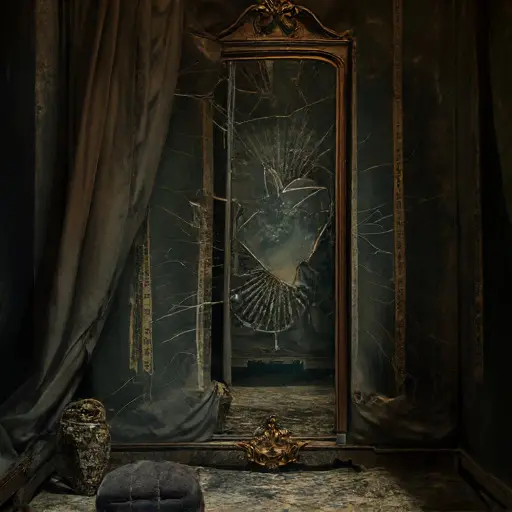
Madame Vaudrey’s mania was revealed in the small, private fitting alcoves. Her journals, hidden inside a hollowed-out bolt of dark silk, detailed her final, terrifying project: a complete, full-body garment for herself, one she called the ‘Binding Shroud.’ She believed this garment, tailored to her exact, final measurements, would prevent the chaos of decay and fix her permanently in the moment of its completion. “The thread must be of silver, the lace must be drawn by shadow,” she wrote, “The perfect form will defy the final, messy seam.”
The house retains the echoes of her work. In the main hall, a heavy, velvet cloak hangs motionless on a stand; if touched, the fabric feels strangely and unnaturally warm, as if recently worn.
The Final Needle in the Abandoned Victorian House
Madame Vaudrey’s disappearance occurred on the eve of her supposed ‘final fitting.’ Servants found the main cutting room empty, the silver shears lying open on the unfinished silk. Her ultimate fate remains unknown, but her Binding Shroud, though incomplete, was gone from the mannequin.
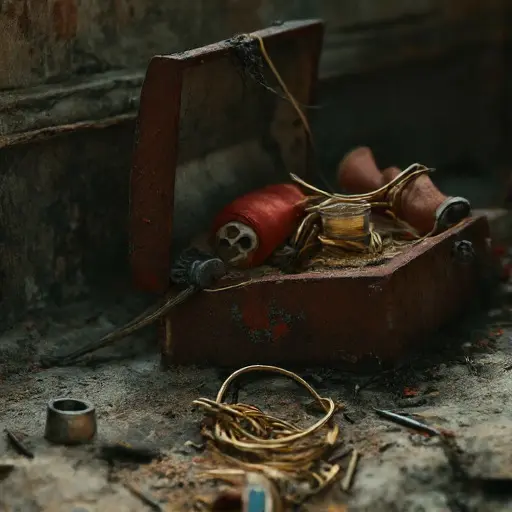
The final, chilling detail is the small, gold needle found abandoned on the floor. It was threaded with a dark strand of human hair, ready for the final stitch. The whole of this abandoned Victorian house is permeated by the static tension of a snapped thread, the feeling of a perfect garment that was ripped open at the moment of its ultimate binding, leaving behind only the cold, precise tools of the dressmaker’s desperate, final obsession.
