Silica-Cipher: The Alchemist’s Final Crucible
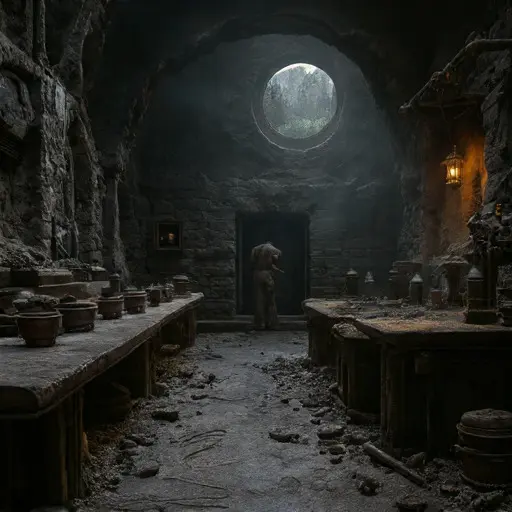
The moment the heavy, iron-bound door to Silica-Cipher was finally breached, the air rushed out—cold, dense, and heavy with the pervasive, unsettling odor of acidic fumes, scorched wood, and the fine dust of pulverized minerals. The name, combining a common material (sand/quartz) with a secret symbol, perfectly captured the manor’s function: a place dedicated to transforming the basic elements of the world through secret, fundamental laws. This abandoned Victorian house was structured not for ordinary living, but for constant, high-risk experimentation, its internal layout a bewildering maze of small, well-ventilated chambers designed to contain volatile reactions.
The final inhabitant was Dr. Septimus Alecto, a brilliant, but intensely reclusive alchemist and chemical philosopher of the late 19th century. Dr. Alecto’s profession was the study of ancient texts and chemical synthesis, seeking to uncover the secrets of elemental transformation. His singular obsession, however, was the creation of the ‘Final Element’—a single, pure, synthesized substance that would possess no natural impurities, capable of transmuting all base matter into gold, and granting the holder absolute, fundamental permanence. After failing to control a violent reaction that nearly destroyed his laboratory, he retreated to the manor. He dedicated his final years to resolving this single, terrifying goal, believing that the only way to perfect the Element was to understand the ultimate impurity that tainted all earthly matter. His personality was intensely secretive, paranoid about contamination, and utterly consumed by the pursuit of elemental finality.
The Purification Chamber
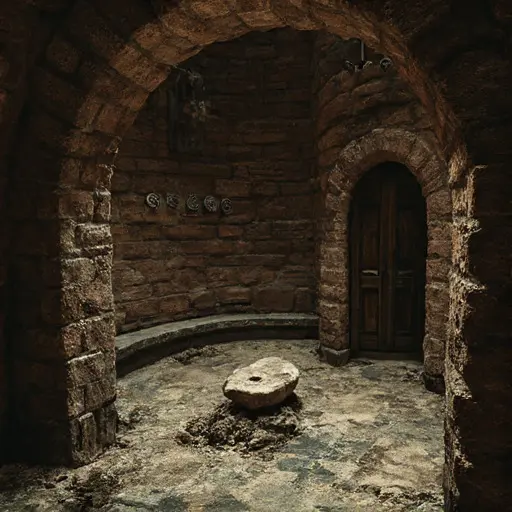
Dr. Alecto’s mania culminated in the Purification Chamber. This secure, sealed room was where he spent his final days, attempting to isolate the ultimate, non-reactive ingredient for his Final Element. His journals, written in a dense, symbolic mix of Latin, chemical notation, and personal sigils, were found sealed inside a lead box. He stopped trying to purify gold and began trying to purify the self, concluding that the only flaw remaining in his work was the human element. “The vessel is weak; the compound requires a catalyst that is beyond decay,” one entry read. “The final transmutation requires the complete removal of the ultimate impurity. The body must become the final, sterile crucible.”
The house preserves his paranoia structurally. Many internal water pipes are made of pure silver instead of copper, installed at enormous cost, reflecting his intense fear that common metals would contaminate his research and his own bodily intake.
The Final Residue in the Abandoned Victorian House
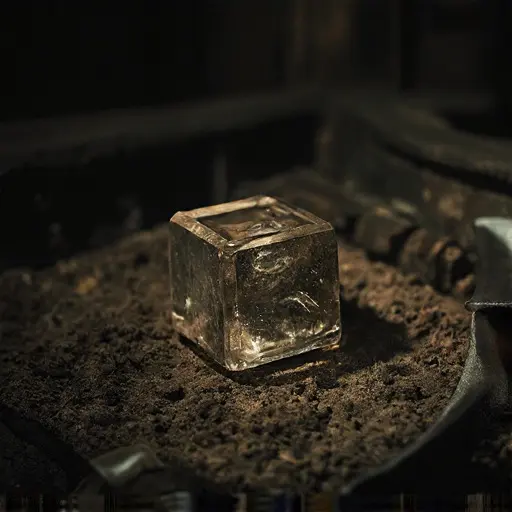
Dr. Septimus Alecto was last heard working in his laboratory, followed by a sudden, intense implosion sound—like a massive vessel collapsing inward—and then immediate, profound silence. He did not leave the manor. The next morning, the laboratory was cold, the furnace silent, and the man was gone. No body was found, and the only evidence was the singular, physical alteration to his final crucible.
The ultimate chilling clue is the flawless glass block. It is the Final Element in its completed, non-reactive form—pure silicon dioxide (glass), achieved through his own unique, terrifying process. This abandoned Victorian house, with its blackened furnaces and chemical apparatus, stands as a cold, imposing testament to the master alchemist who pursued elemental permanence, and who, in the end, may have successfully found the ultimate purity, vanishing into the sterile, unalterable permanence that he engineered as his final, ultimate achievement.
