Silent Witness in Gryphonsgate
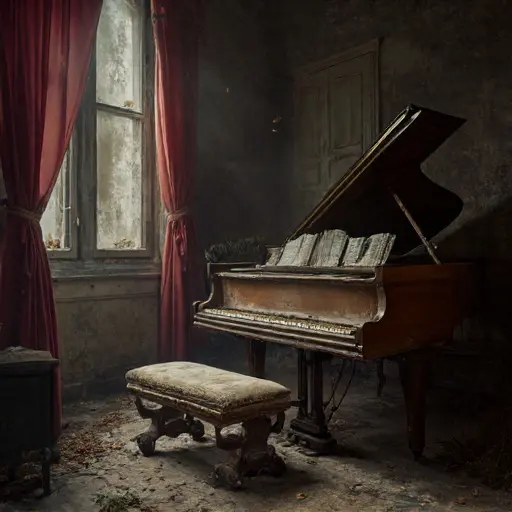
The quiet inside Gryphonsgate was a physical entity, a heavy, velvet cloak settling over the past. Within the Entry Rotunda, the sound of one’s own steps was muffled by the thick, compressed layer of dust and grime covering the marble floor. This was not a house that had been slowly stripped; it had been instantly sealed, leaving behind a complete inventory of a domestic life that had reached an emotional turning point and ceased to function.
The air was dry, almost desiccated, preserving the fabric of the forgotten existence within the walls.
Octavius Finch: The Melancholy Banker
The owner of Gryphonsgate was Octavius Finch, a highly successful but intensely melancholic banker in the late 19th century. His wealth was immense, generated through international finance, but his temperament was defined by deep, abiding sadness, exacerbated by chronic physical ailment—a severe, debilitating case of neuralgia. His public life was one of unwavering financial control, but in private, he was consumed by a quiet despair. He married Isobel, a woman known for her vivacious spirit and love of music, primarily to fulfill his social obligations. They had two sons, Edgar and Julian.
Octavius’s anxiety permeated the house. His First-Floor Study, a severe room paneled in dark walnut, holds the evidence. The large, leather-topped desk is surprisingly clear, save for a single item: a small, intricately carved wooden box containing dozens of daily prescriptions, meticulously labeled and dated. He relied on opiates to manage his pain, an addiction that slowly eroded his capacity for empathy and action.
The Conservatory’s Tragic Light
Isobel Finch, starved of affection and intellectual connection, channeled her spirit into the Conservatory, a magnificent glass structure that caught the southern light. It was her attempt to fill the cold, vast house with life. This room, more than any other, shows the depth of her struggle. Though the ferns are now brittle husks and the tiled floor is cracked by frost and damp, the room’s history is preserved.
The turning point of her personal tragedy is recorded in her Music Stand Journal, found tucked behind a large, shattered terracotta urn. It contains not only musical notations but also increasingly frantic diary entries documenting her discovery of Octavius’s worsening addiction and his cold refusal to seek proper, medical help for his pain, fearing social ruin. The final entry, dated 1899, speaks of her decision to leave for the sake of her sons, whom she feared would be crushed by the despair of the mansion. She did not leave a forwarding address or seek divorce; she simply vanished, leaving a note of absolute finality.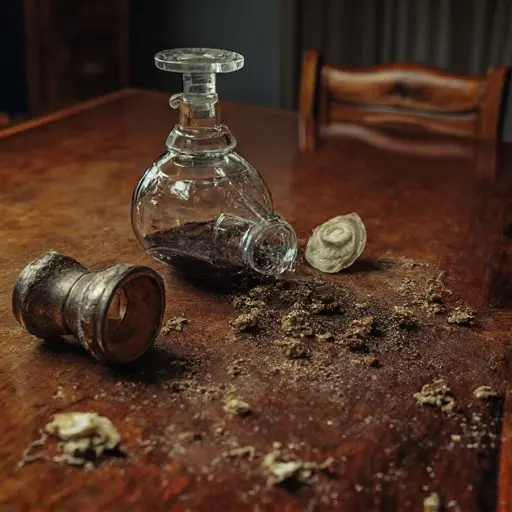
The Boys’ Silent Room
Octavius, devastated by his wife’s departure and increasingly reliant on his prescriptions, completely shut down. He was left with his two sons, Edgar and Julian, whom he could no longer manage or even truly see. He withdrew entirely into the study, leaving the boys largely to the care of the vanishing staff.
The true, final emotional turning point is found in the Children’s Shared Bedroom. The room is a testament to two young boys attempting to cope with crushing isolation. Two small, brass beds are pushed close together. On a low shelf, amidst a pile of dusty, lead soldiers and broken wooden whistles, is a final, poignant document: a School Report Card for Edgar, dated 1901. It is marked with excellent grades but includes a teacher’s handwritten note expressing concern over the boy’s severe, chronic sadness and lack of appropriate parental involvement.
The record shows that shortly after this report, a concerned relative petitioned the court. Octavius Finch, too numb from his addiction and despair to contest the action, relinquished custody of both boys, allowing them to be sent to live overseas. He did not sell the house, empty the contents, or even formally resign from his bank; he simply stopped sending staff wages and allowed the house to slowly close around him. He died in the Master Bedroom six months later, utterly alone.
Gryphonsgate remains, its doors locked by time, its ornate interiors a dense, dust-covered memoir of a family fractured not by malice or grand disaster, but by the silent, internal catastrophe of emotional neglect and forgotten human connection.
