Silent Testimony in the Lost Rooms of Blackwood Knot
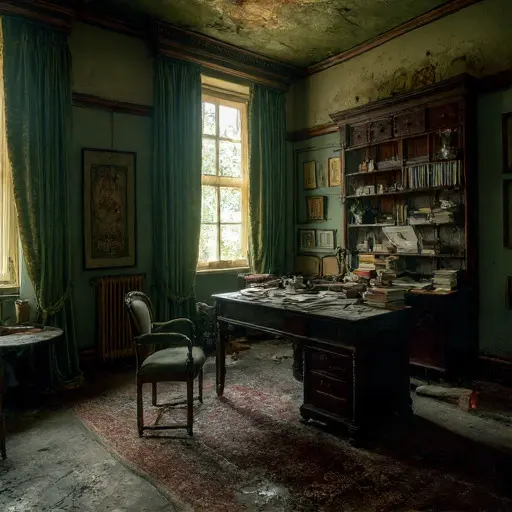
The Chambers and the Solicitor’s Inventory
Blackwood Knot was not a family manor but a dedicated professional residence and chamber for Mr. Silas Thorne, a property deed solicitor who operated from the premises from 1870 until 1899. Thorne, known for his fastidious handling of complex estate filings, resided and worked here until his sudden disappearance from the professional registry. Local gossip suggested debt, but no formal records confirmed it.
His life was immediately legible in the architecture of the office. Every shelf was packed with bound volumes of commercial law and case histories. Our investigation found his personal mark in a small, locked mahogany cabinet tucked into a recess near the fireplace. It contained his essential working kit, suggesting a readiness to depart for court or consultation.
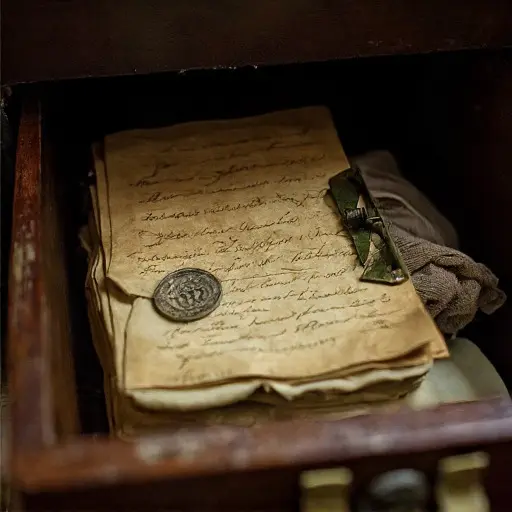
Inside, we found a small, heavy silver seal engraved with the letters ‘S.T.’, a carefully folded, clean white cotton handkerchief, and—most importantly—a thick packet of paper slips held together by a severely oxidized brass clip. These were not legal documents, but a comprehensive, hand-written inventory of all his current clients, complete with outstanding fee balances and notes on their next court dates.
The Sealed Correspondence and the Debt
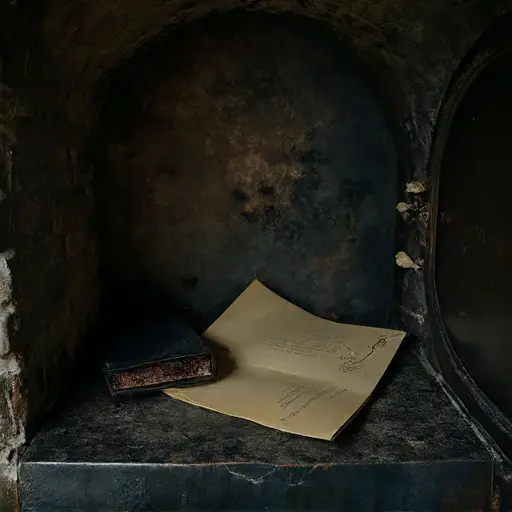
The mystery of Thorne’s vanishing was solved not by grand revelation, but by an administrative detail. We located a sealed, small door at the back of the office leading to a tiny, windowless room, clearly intended for fireproof storage of sensitive documents.
Inside, on a single slate shelf, was a small, locked, iron safe. When forced open, it contained only two items: Thorne’s passport, still valid for travel, and a single, heavy, official-looking envelope, sealed with red wax and bearing the crest of a London investment house. The letter inside was not a threat, but a highly formal demand for immediate repayment of a substantial loan, secured against the entirety of Blackwood Knot. The date on the letter was November 14th, 1899.
Thorne’s inventory of clients confirmed he was wealthy and busy; his passport confirmed he could leave. The demand letter confirmed he was financially ruined. He had not died or gone mad; he had simply traded his elaborate professional life for anonymity and solvency abroad, abandoning his chambers and his demanding legal identity. The house’s silence is not a consequence of tragedy, but of a decisive, strategic retreat, evidenced only by the heavy silver seal left behind and the final, cold paper trail of a debt that outlived its debtor.
