Savage Reverence Stayed in the Cabin Where Oleksiy Recorded the Silence of Ice
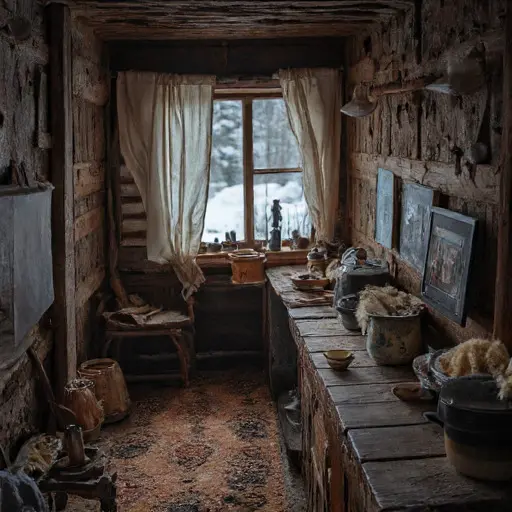
The ice hangs from hooks.
Not for storage.
For listening.
Long translucent slabs remain suspended along the cabin walls, each wrapped in cloth and tagged with fading graphite symbols that resemble dates mixed with river names.
Oleksiy believed frozen water carried accent.
The forest cabin belonged to him for nearly forty years.
He lived alone and practiced a profession so unusual even nearby villagers shortened its name to avoid explanation.
Oleksiy was an ice resonance surveyor.
His work involved cutting, suspending, and studying river ice according to tone, fracture sound, and vibration. Winter crossings, fishing settlements, and cold-region engineers once relied on specialists like him to understand ice stability and environmental shifts through acoustic behavior.
He listened to winter before stepping onto it.
The cold room still preserves his discipline.
Tapping rods rest beside resonance forks. Melt ledgers remain stacked beneath stone weights. Wrapped ice tags hang from pegs above shelves carrying samples marked by river depth, freeze age, and snow cover.
The room feels suspended between science and superstition.
Near the Frozen Murmur Cradle
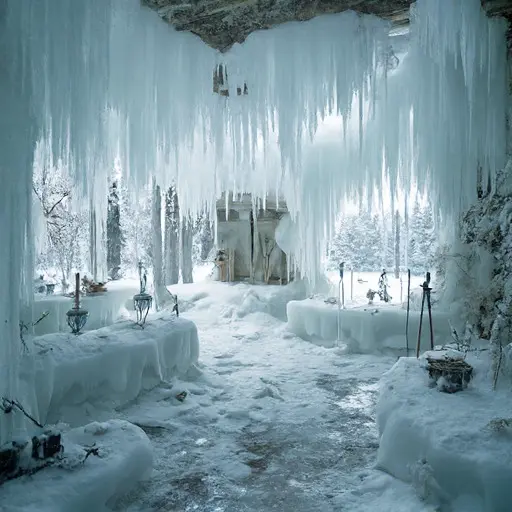
Oleksiy preferred working near the Frozen Murmur Cradle.
The low timber frame supported suspended samples without transmitting outside vibration and allowed subtle tonal comparison impossible elsewhere in the cabin.
One unfinished survey still rests there.
The resonance mapped.
The safety verdict absent.
Oleksiy inherited the profession through winter ferrymen and river wardens who trusted sound before sight.
People remembered him pressing his ear against ice with unsettling calm.
For decades the work endured.
Remote settlements and seasonal crossings still valued acoustic ice knowledge shaped by direct experience.
Then bridges multiplied.
Permanent transport infrastructure, satellite monitoring, and mechanized winter assessment steadily displaced local ice surveying. Fewer people crossed frozen rivers. Fewer listened to them.
Oleksiy respected engineering.
He mistrusted forgetting.
Still, he continued recording tonal patterns long after contracts disappeared.
Then the current warmed.
Hydroelectric regulation upstream altered freeze cycles and river flow, creating unstable ice behavior that no longer followed historical acoustic patterns.
The rivers remained.
Their voices fractured.
Already living with chronic vertigo and deteriorating circulation from decades spent in freezing conditions, Oleksiy continued venturing onto uncertain ice to preserve disappearing comparisons.
One late thaw season he left before dawn carrying rods and notebooks after hearing reports of unusual tonal splitting downstream.
The river broke beneath him.
His equipment surfaced days later near the bank.
The funeral gathered fishers, bridge workers, and elderly villagers who still remembered Oleksiy refusing to cross ice that sounded tired.
The cabin remained afterward.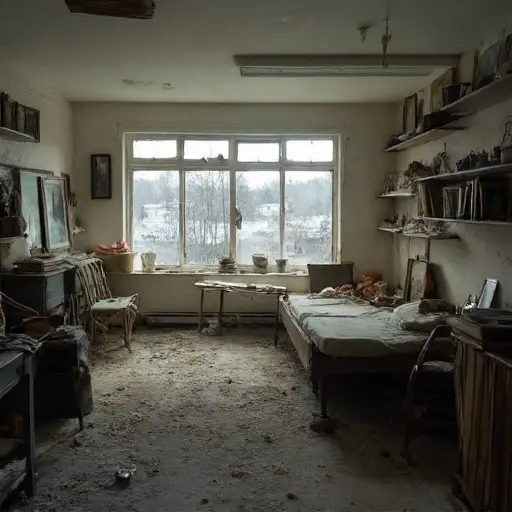
The tapping rods remain beside the forks.
The ice tags still hang from their pegs.
And near the Frozen Murmur Cradle, Oleksiy’s unfinished resonance survey continues waiting in silence—holding the last voice of winter he never returned to hear.