Ritual Shadows Still Drift Through the House Where Noor Catalogued Forgotten Perfume
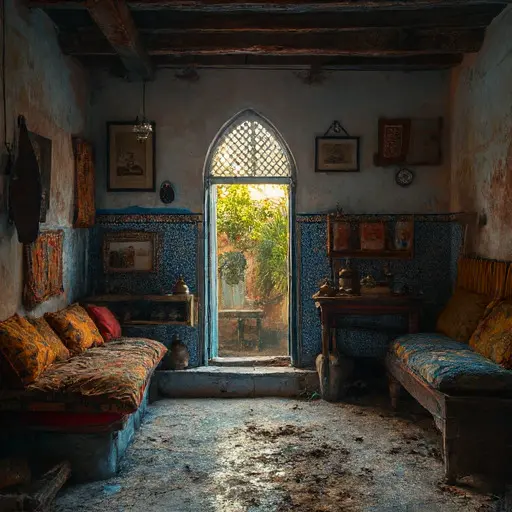
The scent arrives before the room does.
Even now.
People entering the house notice it somewhere near the corridor—a faint mixture of cedar smoke, citrus peel, and something older that refuses easy naming.
Noor al-Khatib called it memory residue.
The house belonged to her for nearly forty years.
She lived alone and practiced a profession that once traveled alongside ceremonies, diplomacy, and hospitality before modern fragrance erased much of its purpose.
Noor was an aromatic lineage recorder.
She did not create perfume in the ordinary sense.
Her work involved preserving and documenting fragrance genealogies—tracing how ceremonial scents evolved through families, districts, and seasonal traditions. Weddings, mourning rituals, and hospitality houses once commissioned specialists like Noor to maintain scent histories and reproduce ancestral blends.
She archived inheritance through smell.
The fragrance room still carries her method.
Glass atomizers stand beneath cloth covers. Resin scales rest beside copper spoons. Handwritten scent charts line the shelves where oils, bark fragments, and dried blossoms remain sealed inside carefully labeled bottles.
The air feels layered rather than stale.
Beyond the Amber Vein Cupboard
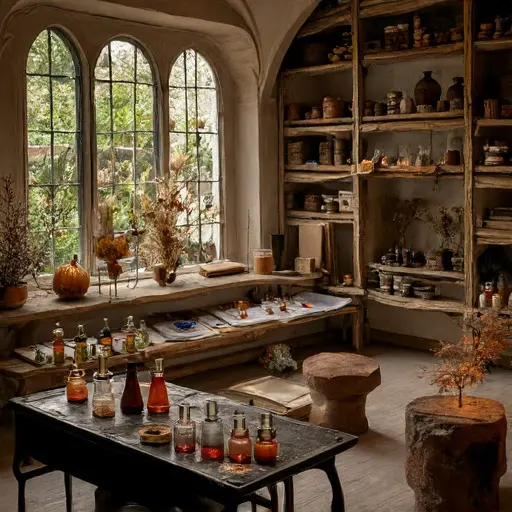
Noor worked beside the Amber Vein Cupboard.
The narrow cupboard remained naturally shaded and protected volatile oils from abrupt heat.
One unfinished lineage still rests there.
The formula measured.
The family annotation absent.
Noor inherited fragments of the profession from her grandmother and expanded it through decades spent recording scents carried across marriages, migrations, and regional exchange.
Visitors remembered how she listened before blending.
For many years her work survived.
Ceremonial households and traditional perfumers still valued fragrance continuity tied to memory and ancestry.
Then branding conquered scent.
Mass-market perfume houses, synthetic replication, and trend-driven fragrance industries steadily displaced localized aromatic traditions. Families purchased labels rather than preserving inherited blends.
Noor disliked fashionable perfume.
She said it smelled impatient.
Still, she continued documenting older scent lines long after commissions dwindled.
Then the groves sickened.
A bacterial blight spread through nearby citrus orchards and devastated the floral and peel harvests that formed the foundation of many regional fragrances. Ingredient scarcity transformed entire scent traditions.
The recipes thinned.
So did Noor’s strength.
Already living with chronic renal illness and worsening fatigue, she spent longer evenings inside the archive room trying to reconstruct endangered blends before materials disappeared entirely.
One unusually hot summer brought rolling power failures that disabled cooling systems throughout the district.
Noor remained working beside the cupboard through the heat.
By morning, she had died quietly from complications worsened by illness and dehydration.
The funeral gathered perfumers, former brides, and elderly neighbors who still recognized fragrances Noor had preserved decades earlier.
The house closed afterward.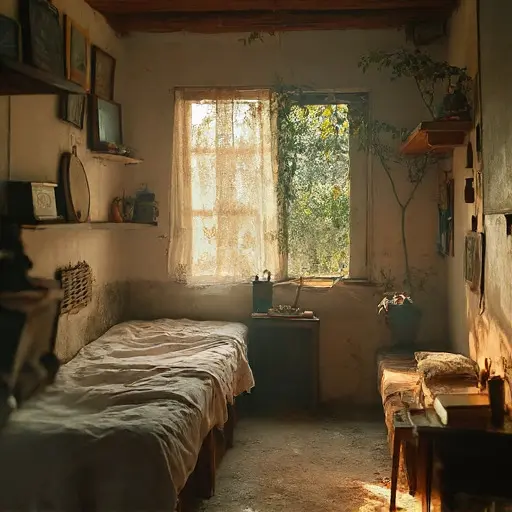
The copper spoons remain beside the scales.
The scent charts still line the shelves.
And beyond the Amber Vein Cupboard, Noor’s unfinished fragrance lineage continues resting in silence—holding a memory no bottle ever fully learned how to contain.