Relentless Silence in the Tea Taster’s Chamber
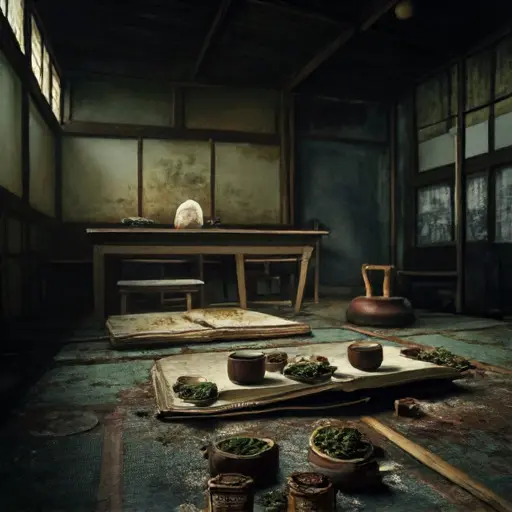
The Tea Taster’s Chamber is built for attention. Cups are aligned with ceremonial precision, each one positioned to receive scent before flavor. At the center rests the aroma ledger, pages filled with careful brush strokes describing notes of grass, smoke, and rain.
The room is quiet, but not empty; it holds the memory of repetition and discipline practiced daily.
A Career Steeped in Sensory Discipline
This room belonged to a professional tea taster, a career shaped by patience and sensory refinement. His days were structured around small tastings, recorded meticulously in the aroma ledger. Each session followed ritual: warm the cup, inhale deeply, sip, pause, write. Lacquered shelves hold identical jars, each marked with harvest dates and mountain names written in ink. The repetition suggests decades of trained perception, an occupation dependent on consistency and calm.
Tools That Once Defined Mastery
Bamboo whisks, porcelain cups, and cloths folded with care surround the table. The aroma ledger shows years of entries, each page documenting subtle differences between batches. A stone weight presses the ledger flat, its edges worn smooth from constant handling. The tools are not decorative; they are functional, designed to support precision. Dust now dulls their surfaces, but their arrangement still reflects practiced order.
When Sensitivity Becomes a Burden
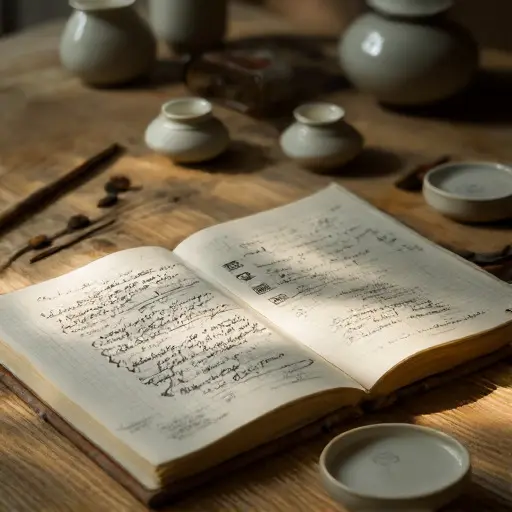
Late entries in the aroma ledger change in tone. Descriptions grow inconsistent. Where once notes were confident, later pages show hesitation: crossed-out words, rewritten impressions, long pauses implied by ink blots. The decline was not age or injury, but overstimulation. Years of exposure dulled distinction; aromas blurred together. The profession demanded sensitivity, yet that very sensitivity became overwhelming. The taster began doubting his own perceptions.
Evidence of Withdrawal
Unwashed cups remain stacked but unused. A kettle sits cold, its interior scaled from past boiling. The aroma ledger stops abruptly, mid-sentence. Nearby, a folded cloth suggests an interrupted cleaning ritual. No signs of haste appear—only gradual withdrawal. The room was not abandoned in a moment, but over time, as confidence eroded and the senses refused to cooperate.
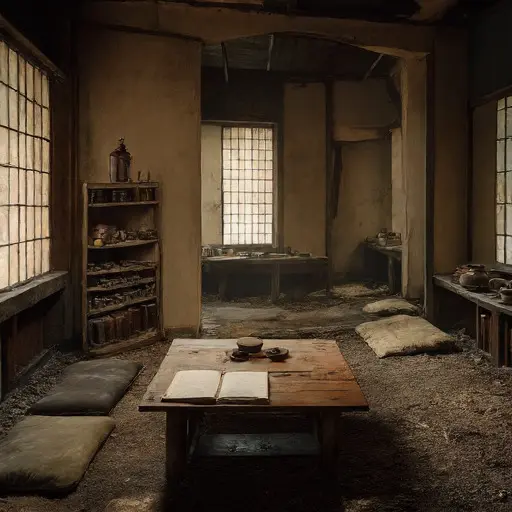
The chamber remains intact, preserved by habit and respect for order. The aroma ledger rests where it was last used, its final page unfinished.
No record explains whether the taster chose silence or was defeated by it.
The room waits, cups aligned, jars sealed, the ritual frozen—an archive of perception lost to excess, and a profession undone by its own demands.
