Relentless Quiet Inside the House the Radio Man Left Behind
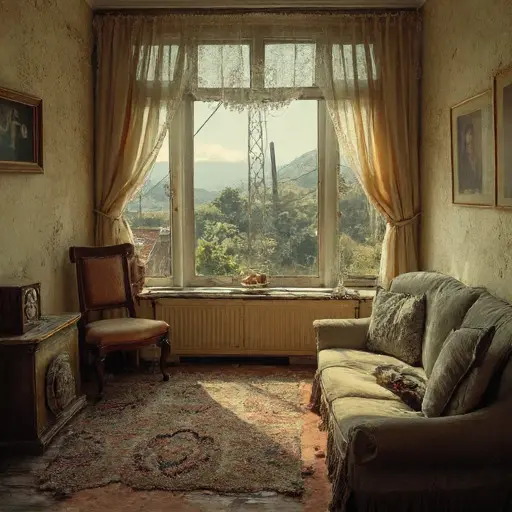
The radio still sits near the window.
Dust has settled into its speaker cloth and the tuning dial no longer moves smoothly, but nothing around it suggests hurry.
The chair beside it remains angled toward the garden.
A wool blanket still hangs across the armrest.
This house belonged to Emil for most of the twentieth century.
He worked as a regional radio repairman, traveling between villages restoring household sets when broadcasts were still central to daily life. News, music, weather reports, and evening voices reached homes through men like him.
The house reflected his profession without turning into a workshop.
Coils of spare wire filled biscuit tins. Small screwdrivers rested inside teacups. Instruction manuals sat stacked beside family albums rather than hidden away in a garage.
His wife died early.
Afterward, Emil stayed.
Neighbors remembered him repairing radios by day and listening to late-night broadcasts alone after dark.
The home remained orderly.
Not grand.
Just familiar.
Beside the Signal Window Shelf
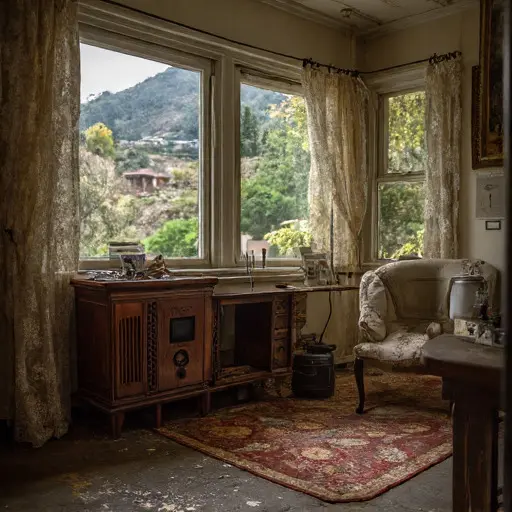
Emil spent most evenings beside the Signal Window Shelf.
The narrow ledge beneath the sitting-room window held better reception than anywhere else in the house.
He knew exactly when atmospheric interference would soften and distant stations might emerge.
For decades his work stayed relevant.
Families repaired radios instead of replacing them. Rural broadcasts mattered. Local stations stitched scattered communities together.
Then electronics changed.
Cheap imported devices and sealed transistor systems replaced repair culture. Radios became disposable. Television slowly took their place and fewer people called Emil for help.
He adapted at first.
Then the station closed.
The regional broadcaster that had served nearby towns for generations shut down after consolidation and budget cuts. Much of the programming Emil loved disappeared with it.
The silence affected him more than retirement.
He still repaired old sets occasionally, mostly for neighbors or habit, but his routes shortened and the house grew quieter each winter.
By the late years of his life, only a few rooms remained regularly used.
The kitchen.
The sitting room.
And the narrow space beside the Signal Window Shelf.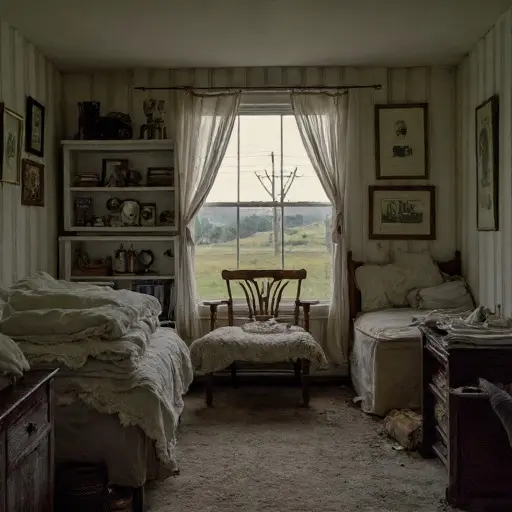
One autumn evening, after days of heavy rain and poor weather, Emil settled into his chair to listen to an old evening frequency he had followed since youth.
Neighbors later said they noticed the radio humming faintly through the wall long after midnight.
He died peacefully in the chair before morning.
No children returned to claim the house.
The furniture stayed.
The manuals remained stacked.
And beside the Signal Window Shelf, the radio still faces the garden—as though Emil simply stepped away between broadcasts and never found his way back.