Prismvale Spiral House Left Vacant After Cliffside Structural Erosion
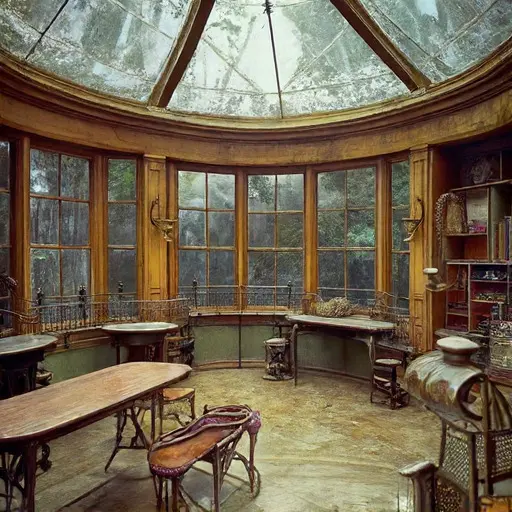
The Prismvale Spiral House was first occupied by the Halewick architectural family in 1909, shortly after completion of the lower cliff foundation They treated the structure not as a fixed residence but as a continuous experimental dwelling, adjusting furnishings and interior partitions to match the spiral ascent of the building The early years were marked by meticulous upkeep, supported by a small staff trained in maintaining the irregular geometry of the curved floors and shifting window alignments The conservatory level served as the household’s central gathering space, where light diffused through tinted glass and reflected off ceramic tiles in controlled, rhythmic patterns that matched the building’s rotational design
However, even in this stable period, maintenance demands were unusually high The continuous spiral corridors required constant recalibration of structural tension along the steel ribs, and minor shifts in cliff moisture began to affect anchoring points along the lower levels Seasonal rains introduced subtle erosion beneath the foundation, but these concerns were initially managed through routine reinforcement work By the early 1920s, rising costs and the increasing difficulty of sourcing specialized materials began to strain upkeep efforts, though the household remained intact and fully occupied
Early Structural Strain and Isolation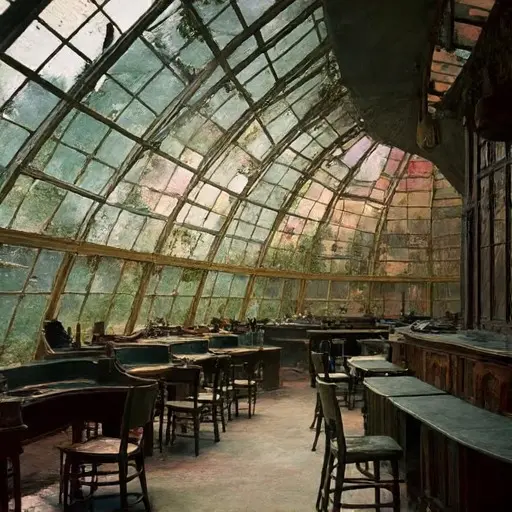
By the onset of the Great Depression, the Halewick family’s resources had diminished significantly and the cost of maintaining the spiral system exceeded their remaining income Specialized engineers were required to inspect the curved load-bearing ribs, but inspections became infrequent and eventually sporadic as funding collapsed Entire segments of the spiral were closed off to reduce structural strain, forcing occupants to rely on a shrinking portion of the habitable ascent
The isolation of upper and lower spiral levels created a fragmented living environment, where sections of the house no longer communicated effectively through their intended curved circulation paths Staircases that once flowed continuously along the inner spiral were partially sealed, leaving discontinuities that disrupted movement and daily function The conservatory, once the center of domestic life, became increasingly peripheral as access routes deteriorated and cliffside erosion deepened beneath its lower supports
Final Evacuation Through the Spiral Collapse
<img src=”https://beyondvisit.
com/wp-content/imagecontent/uploads/abandoned victorian house 38231776.webp” alt=”” />
During wartime labor shortages in the early 1940s, the remaining maintenance teams were withdrawn, leaving the structure without oversight Cliff erosion beneath the lower foundation accelerated, subtly destabilizing the anchoring points that supported the entire upward spiral Legal responsibility for the property became unclear as ownership passed through multiple Halewick heirs dispersed across different regions, none of whom had the means or coordination to intervene
By 1946, the last recorded occupants had vacated the remaining accessible spiral segments, leaving behind maintenance logs and partially completed reinforcement work The house was never formally declared demolished, as its upper structure remained stable despite the failure of lower anchoring systems Instead, it was gradually classified as structurally unmanageable, too integrated into the cliff to safely dismantle without risking collapse of the surrounding terrain
As of the final inspection in 1950, the Prismvale Spiral House still clung to the cliffside, its spiral interior intact but entirely empty No restoration efforts were initiated, and no heirs returned to reclaim or repair the structure The building remained in place, slowly weathering in isolation, its continuous rotation preserved but unused, continuing its silent deterioration above the mist-filled gorge without resolution or return