Predatory Stillness Stayed in the Stilt House Where Huy Measured the Dreams of Fish Scales
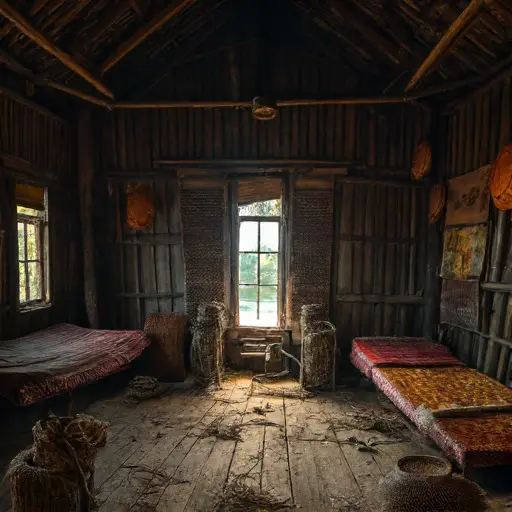
The scales shine after sunset.
Not brightly.
Not unnaturally.
Only enough to make the room appear awake when darkness settles over the water.
Thin silver fragments still cling to trays and tabletops throughout the house, catching lantern glow long after the nets themselves disappeared.
Huy never swept them away.
The stilt house belonged to him for almost fifty years.
He lived alone and practiced a profession that survived quietly among fishing villages before industrial waters rendered it obsolete.
Huy was a scale pattern diviner.
Despite the name, his work had little to do with prophecy.
He studied fish scales to understand migration stress, water chemistry, and ecological disturbance. Scale texture, layering, and reflective change offered clues once valued by small fisheries and estuary communities.
He read rivers through what fish shed behind.
The scale room still preserves his attention.
Shell tweezers rest beside polishing cloths. Water ledgers remain stacked beneath reed weights. Bamboo trays line the shelves carrying sorted scales labeled by species, tide cycle, and spawning season.
The room feels fragile and aquatic.
Through the Silver Gill Passage
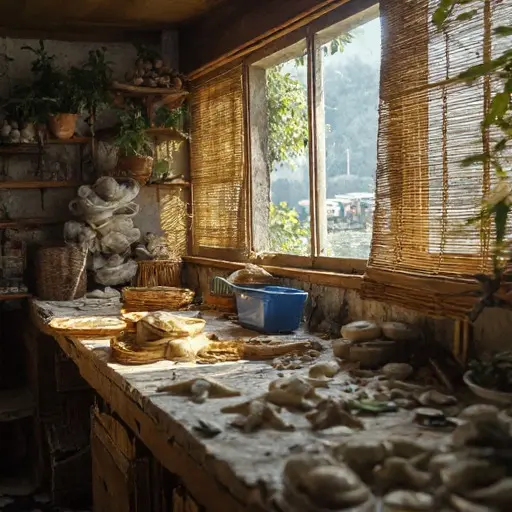
Huy worked through the Silver Gill Passage.
The narrow corridor connecting the room to the outer deck maintained stable humidity and allowed delicate reflective studies to dry without curling or discoloration.
One unfinished analysis still rests there.
The scale mapped.
The estuary diagnosis absent.
Huy inherited the profession through generations of river fishers who believed scales carried environmental memory too subtle for nets alone.
People remembered his fingers always smelling faintly of salt and reeds.
For decades the work endured.
Village fisheries and tidal communities still valued scale interpretation shaped through direct ecological intimacy.
Then trawlers multiplied.
Industrial fishing, mechanized processing, and centralized marine monitoring steadily displaced local observational knowledge and fragmented the communities sustaining it.
Huy never hated technology.
He hated indifference.
Still, he continued sorting and documenting scales long after demand faded.
Then the water soured.
Upstream chemical discharge and salinity disruption transformed estuary conditions and altered scale structures so dramatically that historical comparisons became unreliable.
The fish survived.
Their mirrors changed.
Already living with advanced liver disease and failing eyesight caused by years of chemical exposure and damp labor, Huy spent longer evenings inside the passage comparing damaged specimens against older records.
One monsoon season he remained working after flood warnings spread along the delta, determined to preserve scale collections threatened by rising water.
The tide entered before midnight.
Neighbors found the lower house submerged by morning.
The funeral gathered boat builders, aging fishers, and market women who still remembered Huy predicting troubled seasons by studying fish skin beneath lantern light.
The stilt house remained afterward.
The shell tweezers remain beside the cloths.
The bamboo trays still line the shelves.
And through the Silver Gill Passage, Huy’s unfinished scale record continues waiting in silence—holding the last shimmer of water he never returned to understand.