Ponder-Ache: The Philosopher’s Final Question
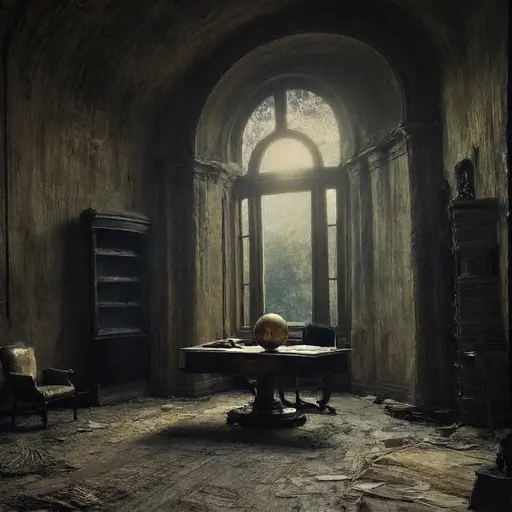
The atmosphere inside Ponder-Ache was one of overwhelming intellectual fatigue. The air was dry, cold, and possessed the faint, bitter scent of ink, old leather, and a pervasive, lingering stillness—the kind of quiet that suggests every possible thought has been exhausted. The name itself, a combination of deep reflection and pain, perfectly suited the manor’s heavy mood. This abandoned Victorian house felt like a massive, beautifully constructed skull, built to contain one terrifying, unanswerable thought, now left hollow and echoing.
The final inhabitant was Professor Aldous Quinn, a brilliant, but deeply nihilistic philosopher and academic of the late 19th century. Professor Quinn’s profession was abstract thought, the rigorous questioning of existence, and the search for absolute meaning. After publishing several widely debated but profoundly pessimistic treatises, he retreated to the manor. He dedicated his final years to posing the ‘Ultimate Philosophical Question’—a query so comprehensive and fundamental that it would either yield the single, final truth of existence or prove that no such truth existed. His personality was intensely rigorous, solitary, and plagued by a debilitating fear of intellectual futility and the meaninglessness of life.
The Doubt Archive
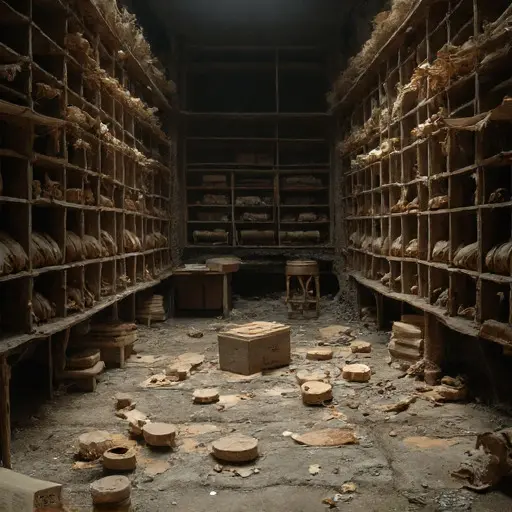
Professor Quinn’s final project was the Doubt Archive. It was here he stored every argument, every essay, and every proof he had ever considered and then discarded. His journals, written in a cramped, elegant hand and found shoved into a hole in the plaster, documented his frightening descent into intellectual collapse. He realized that the deeper he questioned, the less certain anything became. “The Question is complete,” one entry read, “It is the perfect negation of all that is. The final step is to remove the questioner, so that only the question remains.”
The house preserves his anxiety structurally. In the narrow upstairs corridor, a series of identical, low-wattage, gas lamps are installed at irregular intervals, casting a flickering, inconsistent light that seems to perpetually deny any shadow a firm, stable shape.
The Final Proposition in the Abandoned Victorian House
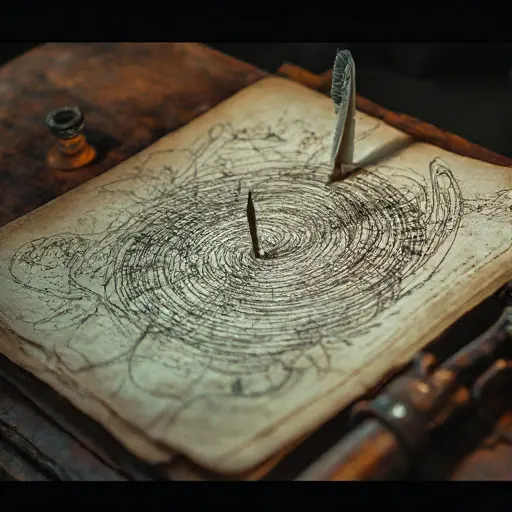
Professor Aldous Quinn was last seen by his housekeeper sitting at his central desk, staring fixedly at a massive, newly drawn diagram. The next morning, the house was empty. His books were in place, his archive sealed, but the man himself had vanished.
The ultimate chilling clue is his final notebook. The last page contains only the massive, unfinished spiral, pierced by his quill. The Ultimate Philosophical Question remains unwritten, because the professor understood that to write it down would be to allow for the possibility of an answer. This abandoned Victorian house stands as a cold, magnificent monument to intellectual failure. Its silence is the heavy, absolute quiet of a mind that achieved its final truth: the realization that the most profound question must, necessarily, be the one that is never spoken.
