Opus-Zero: The Architect’s Blueprint of Absence
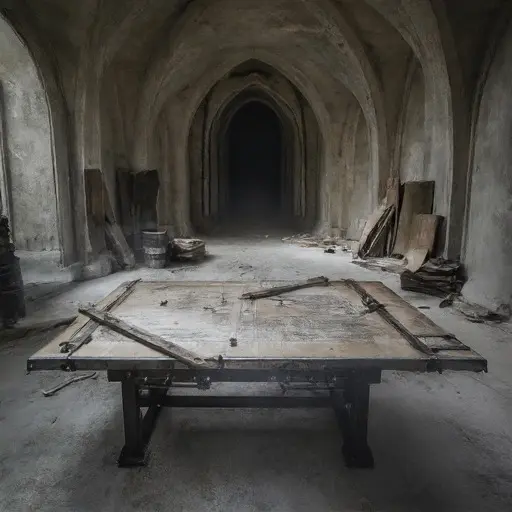
The moment the heavy, bronze-plated door to Opus-Zero was carefully pushed open, the air rushed out—cold, dense, and heavy with the pervasive, unsettling odor of dry wood, linen paper, and the sharp scent of mineral turpentine. The name, combining a work of art with the concept of nothingness, perfectly captured the manor’s function: a physical space dedicated to designing the perfect structure, now embodying its own architectural void. This abandoned Victorian house was structured not for ordinary living, but for unwavering, geometric precision, its internal layout a bewildering maze of unusual angles, sudden shifts in ceiling height, and meticulously balanced sightlines, all designed to test the limits of human perception of space.
The final inhabitant was Mr. Alistair Pylon, a brilliant, but intensely reclusive master architect and structural theorist of the late 19th century. Mr. Pylon’s profession was the design of monumental, functionally complex buildings. His singular obsession, however, was the creation of the ‘Ultimate Blueprint’—a single, perfect, flawless architectural plan that would, when executed, yield a structure with zero volume error, a building that was simultaneously a physical space and a perfect mathematical abstraction. After a major structural failure in his most ambitious civic project shattered his professional reputation, he retreated to the manor. He dedicated his final years to resolving this single, terrifying goal, believing that the only way to perfect form was to understand the ultimate absence of all material flaw. His personality was intensely rigorous, fearful of structural inconsistency, and utterly consumed by the pursuit of spatial finality.
The Model Chamber
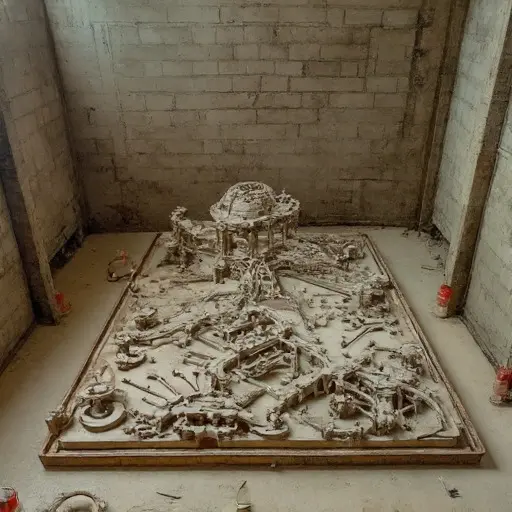
Mr. Pylon’s mania culminated in the Model Chamber. This secure, sealed room was where he spent his final days, not constructing the Ultimate Blueprint, but deconstructing the act of building itself, attempting to define the perfect structure by isolating the space it displaced. His journals, written in a cramped, precise hand that eventually gave way to complex equations concerning volume and negative space, were found sealed inside a hollow wooden column. He stopped trying to design buildings and began trying to design the void, concluding that the only way to achieve structural perfection was to eliminate the need for material. “The structure is a lie; the volume is the truth,” one entry read. “The final work requires the complete surrender of all mass. The self must become the final, perfect, unoccupiable space.”
The house preserves his geometric obsession. Many internal walls feature faint, intersecting chalk lines and plumb-bob markings, remnants of his tests to gauge the perfect verticality and angular relationships within the manor.
The Final Volume in the Abandoned Victorian House
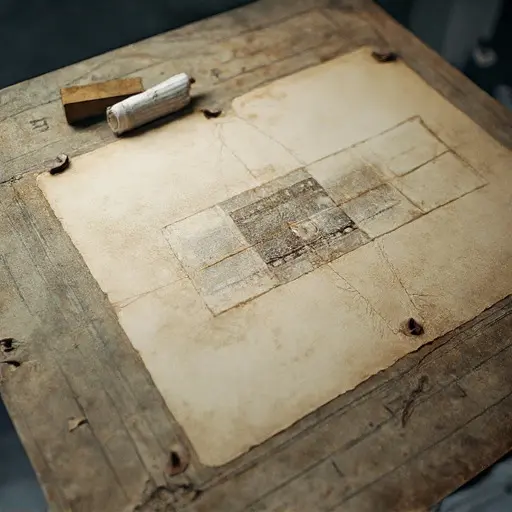
Mr. Alistair Pylon was last heard working in his drafting studio, followed by a sudden, intense sound of heavy paper being ripped with mechanical precision, and then immediate, profound silence. He did not leave the manor. The next morning, the studio was cold, the model chamber sealed, and the man was gone. No body was found, and the only evidence was the singular, physical alteration to his final drawing.
The ultimate chilling clue is the cut-out vellum. It is the final blueprint—the Ultimate Blueprint achieved, containing no lines, no measurements, and only a perfectly defined void. This abandoned Victorian house, with its angular chambers and silent drafting tools, stands as a cold, imposing testament to the master architect who pursued the flawless structure, and who, in the end, may have successfully designed the perfect absence, vanishing into the absolute, unoccupiable space that he engineered as his final, ultimate statement of form.
