Mirevale Hall: The Forgotten Victorian Mansion
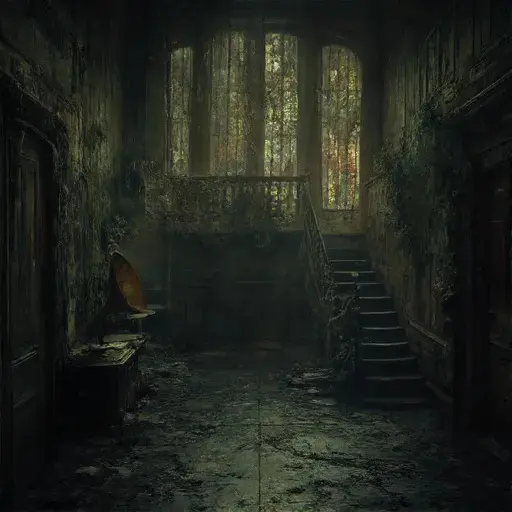
The abandoned Victorian mansion known as Mirevale Hall rises from the mist like a memory that refuses to dissolve. Inside, the air tastes of old timber and dull iron, every breath tinged with a sweetness of decay. Dust spins lazily through broken sunlight, drifting as if guided by the house itself. The floorboards groan underfoot—not with protest, but recognition—welcoming another soul into the hush it has guarded for nearly a century. Even in silence, the mansion feels awake, observing from behind cracked portraits and darkened door frames, reluctant to reveal the stories buried in its fading rooms.
The Painter Who Never Left
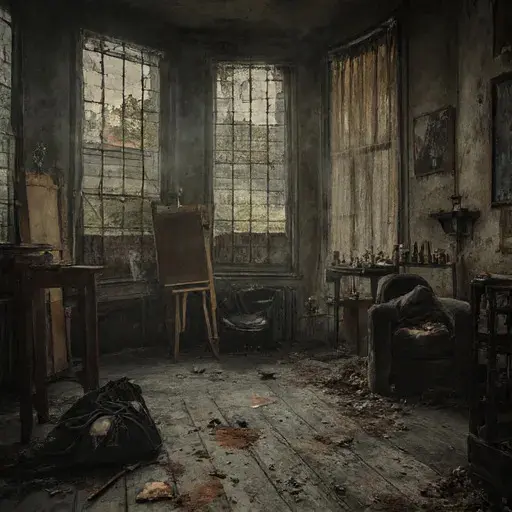
Long before Mirevale Hall crumbled into ruin, it belonged to Elara Winslow, a painter whose work once shimmered with the delicate melancholy of twilight. Elara was a quiet, keen observer of light—its moods, its shifting shapes, the way it clung to people as if revealing their hidden truths. Her profession ruled her life; she often painted until dawn, leaving candles to burn down into soft wax puddles.
The townspeople whispered that she poured too much of herself into her art. Some said her portraits felt alive, their eyes following visitors with unsettling familiarity. After the sudden loss of her beloved sister, Elara’s work grew darker, shadows pooling where brightness once lived. She retreated into Mirevale Hall, convinced the house remembered her sister better than she could. When she vanished one winter night, only her final canvas remained—an unfinished figure standing in the very doorway you pass now.
Rooms That Echo With Memory
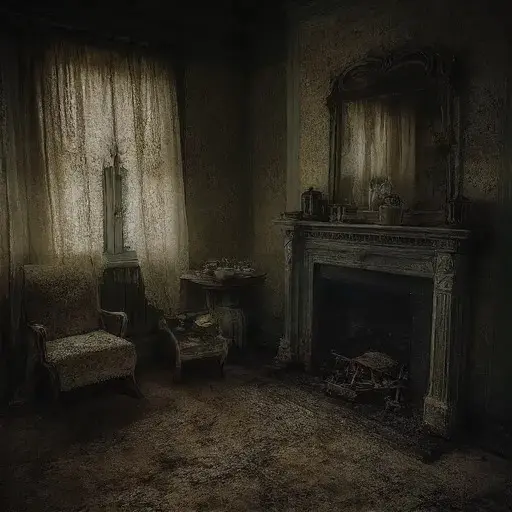
Step deeper, and Mirevale Hall begins revealing its fragments. In the parlor, a tarnished silver locket lies open on a cracked table—Elara’s, still holding a tiny charcoal sketch of her sister. Nearby, the rocking chair shifts ever so slightly when the wind crawls through the gaps in the walls.
Some claim the house holds onto emotion the way others hoard relics. Elara’s longing, her sorrow, her fierce devotion—they bleed through each room like pigments pressed into canvas. At times, a faint scent of turpentine drifts through the corridors, as if her studio door has only just closed.
Mirevale Hall doesn’t try to frighten. Instead, it lingers in that space between remembrance and forgetting, offering visitors a quiet ache—a reminder that love, once carved deeply enough, refuses to fade with dust or time.
