Merciless Quiet in the House the Bookbinder Couldn’t Save
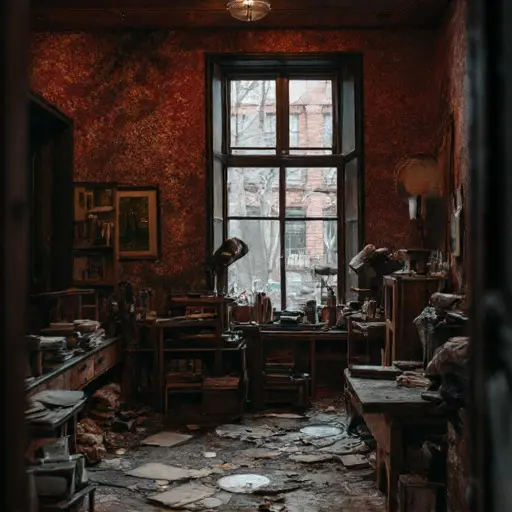
The glue pots still sit on the shelf.
Hardened now.
Cracked around the edges.
Nearby, unfinished book covers remain stacked beneath cloth exactly where they were left years ago.
This house belonged to Tomasz.
He worked as a traditional bookbinder, repairing damaged volumes and hand-binding journals, prayer books, and family collections for local clients.
The workroom occupied the rear of the house where the air stayed dry enough to protect paper.
Wooden presses lined one wall. Rolls of linen thread filled shallow drawers. Small knives and stitching tools remained arranged across the main table with almost obsessive precision.
Nothing in the room looks decorative.
Everything had purpose.
Beside the Linen Spine Rack
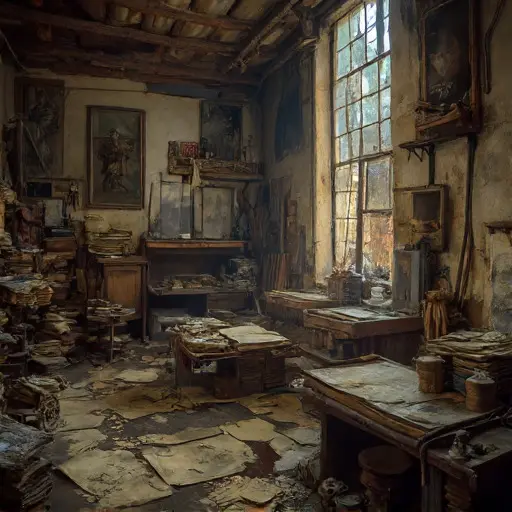
Tomasz spent most evenings beside the Linen Spine Rack.
The narrow shelving unit stored repaired bindings waiting to dry before final trimming and finishing.
His wife handled customer orders downstairs while he worked quietly in the back room late into the night.
For years the profession survived comfortably.
Schools, churches, collectors, and ordinary families still repaired worn books rather than replacing them.
People brought him inherited diaries, recipe collections, and damaged novels held together with string.
Then reading changed.
Cheap printing, disposable paperbacks, and eventually digital media reduced demand for traditional repair work. Fewer people preserved books long enough to require binding.
Tomasz adapted slowly.
Smaller jobs.
Archival repairs.
Occasional commissions from libraries.
But another shift damaged the neighborhood itself.
Independent shops around the district closed as chain retailers and redevelopment projects transformed the old streets. The printing store disappeared first. Then the stationery shop. Then the final secondhand bookstore near the tram stop.
The workroom grew quieter each year.
By the end of his life, Tomasz mostly repaired books for longtime customers and out of routine.
One unfinished binding still rests beside the Linen Spine Rack—a dark green cover waiting for its final stitching.
He never completed it.
Neighbors later recalled seeing light beneath the workroom door during a stormy evening while rain struck the windows for hours.
He died quietly in the house not long afterward.
No one reopened the workshop.
The presses remained where they stood.
And inside the back room, the unfinished volumes still wait in careful stacks—as though the bookbinder simply stepped away before returning to finish the last page.