Malignant Quiet Settled Beneath the Roof Where Ehsan Remembered the Shape of Smoke
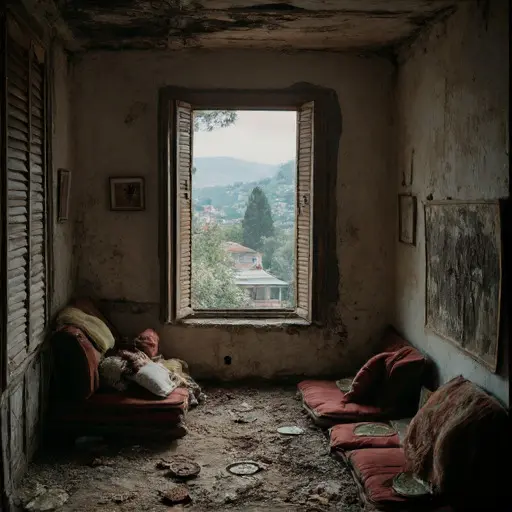
The ceiling remembers before the room does.
Dark veils still stretch across the beams.
Not damage.
Arrangement.
The smoke stains climb deliberately through the chamber in layered ribbons and branching arcs that look almost written.
Ehsan placed them there.
The dwelling belonged to him for most of his life.
He lived alone and practiced a profession erased so quietly that few surviving records mention it at all.
Ehsan was a hearth smoke archivist.
His work involved preserving and interpreting smoke residue created by domestic fires, ritual kitchens, and communal hearths. Different woods, oils, and combustion habits left distinctive traces that households once used to preserve memory, lineage, and environmental history.
He studied combustion after flame disappeared.
The upper chamber still preserves his attention.
Charcoal brushes lie beside soot tablets. Burn journals remain stacked beneath cedar weights. Small clay braziers sit along the wall near smoke panels removed from older homes and carefully labeled by household and season.
The room feels inhabited by residue.
Beneath the Cinder Veil Beam
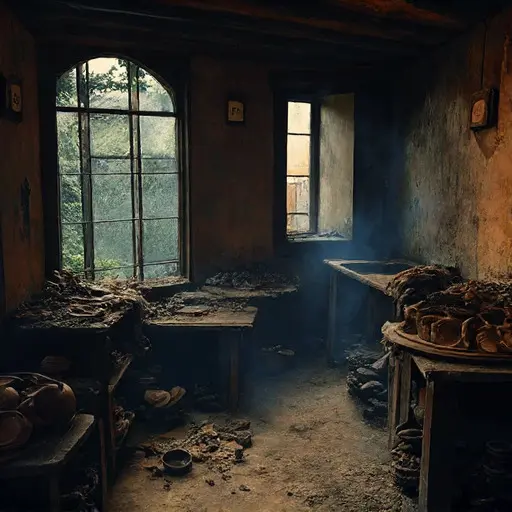
Ehsan worked beneath the Cinder Veil Beam.
The central support trapped rising smoke evenly and allowed comparative residue studies to mature without abrupt draft disruption.
One unfinished archive still rests there.
The residue stabilized.
The source lineage uncertain.
Ehsan inherited fragments of the profession from communal bath attendants and hearth keepers who believed smoke carried biography long after families dispersed.
Visitors remembered how he touched walls gently before speaking.
For decades the work survived.
Traditional homes and ceremonial kitchens still valued smoke histories linked to fuel, ancestry, and household practice.
Then interiors sterilized.
Electric cooking, ventilation systems, and smoke-free architecture steadily displaced hearth culture and erased the environments smoke archivists depended upon. Walls no longer recorded domestic life.
Ehsan found clean ceilings unsettling.
He said memory should leave shadows.
Still, he continued collecting residue and preserving older panels long after demand disappeared.
Then the timber laws changed.
Strict forestry protections and fuel restrictions eliminated access to many native woods whose smoke signatures formed the foundation of his archive. Replacement fuels burned differently and carried unfamiliar residue.
The fires survived.
Their handwriting altered.
Already living with advanced pulmonary hypertension and increasing frailty, Ehsan spent longer evenings inside the chamber cataloguing smoke from vanished fuel traditions.
One winter he remained studying residue samples beside the beam during severe cold after refusing to extinguish experimental braziers too early.
Carbon fumes accumulated gradually through the night.
By dawn, he had died quietly among the panels.
The funeral gathered cooks, elders, and former bath attendants who still recognized homes by the scent of their hearth smoke.
The dwelling remained afterward.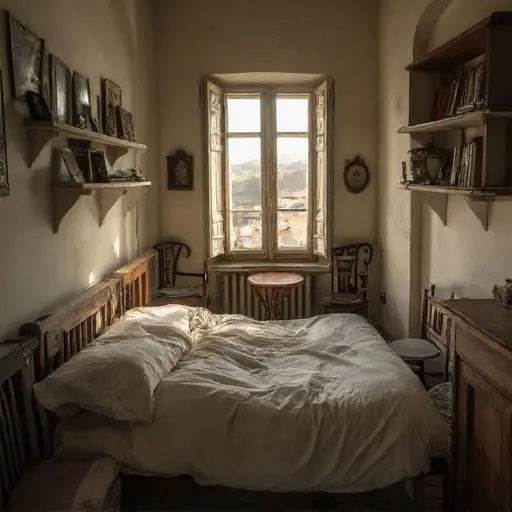
The soot brushes remain beside the tablets.
The braziers still rest along the wall.
And beneath the Cinder Veil Beam, Ehsan’s unfinished smoke archive continues darkening slowly—holding traces of fire he never returned to remember completely.