Lost Nakamura and the Tatami Conservatory Where His Notes Fell Silent
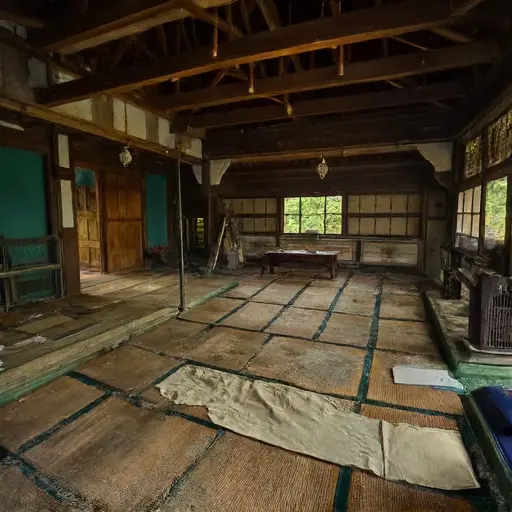
A tempered stillness permeates Nakamura House, gathering deepest in the abandoned tatami conservatory, where Haruto Seiichi Nakamura, a Kyoto-born composer and amateur instrument maker, once shaped melodies inside the modest quiet of home. Now the broken echo on that unfinished sheet suggests a decision he approached but never reached.
An Echo Inside the Composer’s Patient Craft
Haruto, born 1877 in Kyoto, learned string calibration from his elder sister Aiko Nakamura, whose cracked tuning fork rests near the koto’s fallen bridge.
His evenings unfolded in steady measure: tea cooling beside a reed flute, strings tightened in half-tones, notes brushed across rice paper with gentle certainty. His order lingers—bindings tied in narrow cords, brushes washed then left bristle-up in pottery jars, tuning wedges tucked beneath folded cloth. Even the tatami dip before the platform remembers his forward lean, listening for harmonies he hoped might resolve.
Where His Harmony Drifted Out of Tune
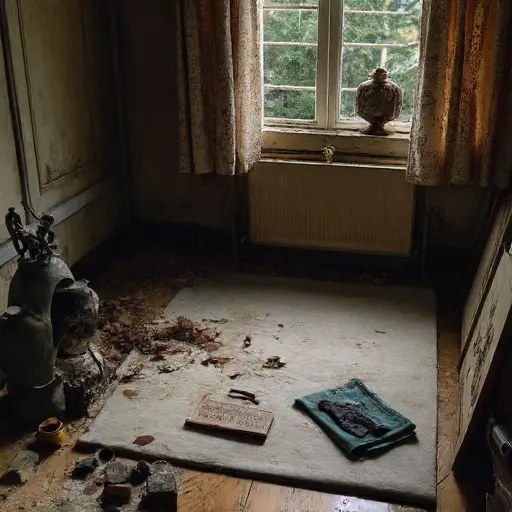
Rumor lingered that Haruto’s commissioned festival piece resembled too closely the melodic contour of a revered ancestral song—unintentionally, perhaps, yet enough to spark quiet offense. In the narrow corridor, Aiko’s tuning fork case lies dented, clasp snapped. A roll of rice paper has unraveled down the hall, edges bent. A set of string bridges sits overturned near the foot of the stairs. A tonal sketch has fallen face-down, several intervals violently crossed out. None of these remnants speak a verdict, but together they lean toward a man shaken by doubt he could not articulate.
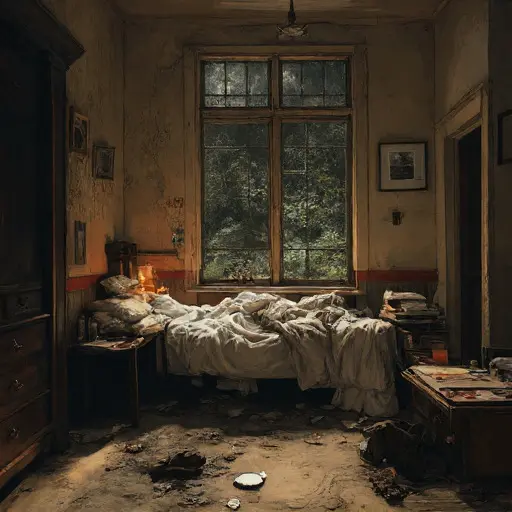
Only the broken echo on his composition sheet remains—an unresolved gesture suspended in silence. Whatever stilled Haruto’s final work lingers in these abandoned rooms.
Nakamura House remains abandoned still.
