Lost McCrae Pressing-Hall and the Type That Shifted
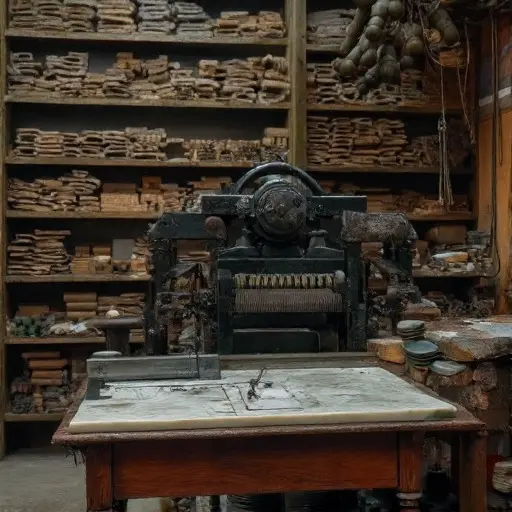
A dry quiet settles inside McCrae House, deepest in the pressing-hall, where ink once thickened the air. Here Fiona Margaret McCrae printed broadsheets for shopkeepers and local societies. Now the shifted type block waits at the center of an unfinished forme, holding the silence in its narrow doubt.
Even the faint ink smell seems caught in suspension, resisting dissolution.
Mark in the Printer’s Exacting Cadence
Fiona, born 1879 in Edinburgh, trained under her uncle Hamish McCrae, whose old composing apron still hangs behind the press. Each morning she mixed ink to consistency; by midday she set columns in measured rows; evenings she proofed under lamplight, checking margins with practiced calm. Her habits remain visible—type sorted by point size, spacers aligned edge to edge, rollers cleaned and left to dry on linen. The press handle’s polished grip reflects years of her steady pull, a memory of effort fixed into metal grain.
When Her Columns Lost Their Line
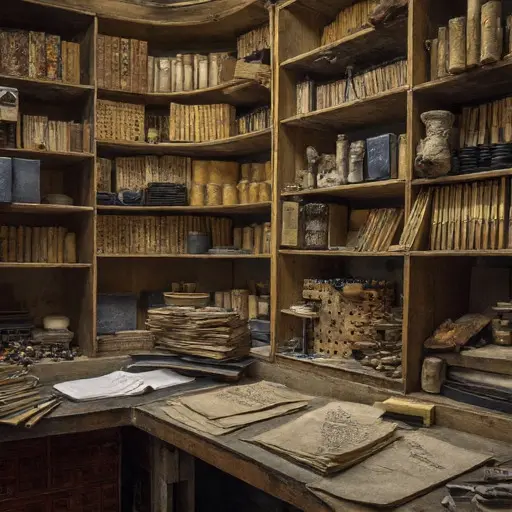
Whispers claimed Fiona misprinted a guild notice—dates reversed, causing a costly dispute. In the supply recess, an ink tin lies dented, lid slipped sideways. Hamish’s apron bears a fresh streak of lampblack across its hem. A box of narrow spacers spills in a curved scatter across the floorboards. A proof pinned to the wall shows uneven pressure, letters paling toward the margins. None of these traces reveal the moment her certainty thinned, though each implies a hesitation deepening across days.
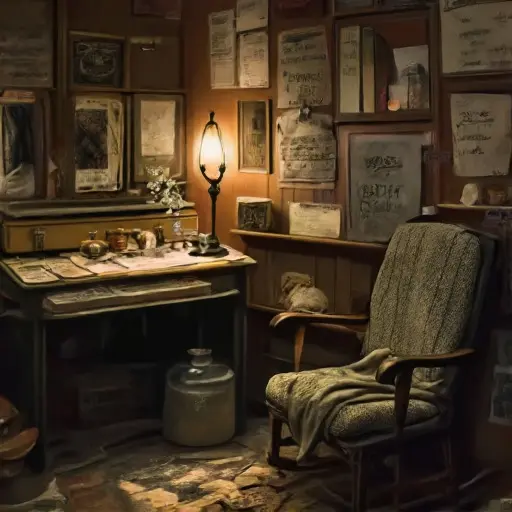
Only the shifted type block remains, its slight misalignment holding the room in unanswered pause. Whatever stilled Fiona’s final printing stroke lingers in the pressing-hall’s ink-scented calm.
McCrae House remains abandoned still.
