Lost Dispatch from the Shadowed Towers of Giltspur Hold
The Tower Room and the Operator’s Last Shift
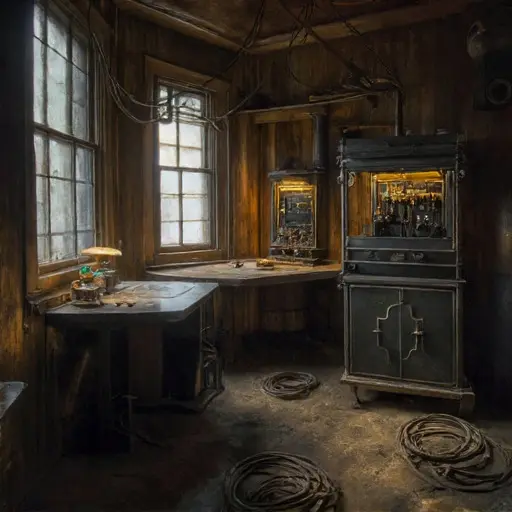
Giltspur Hold, an unusual Victorian structure built with a prominent, functional radio tower, was the residence and workplace of Mr. Arthur Vance, a contracted telegraph communications operator who worked for the provincial government from 1905 until 1921. Vance was an intensely solitary figure, his existence governed by the relentless demands of receiving and dispatching crucial administrative and weather reports across the network. His disappearance in the summer of 1921 was noted in regional records as a failure to report for duty, with no further explanation.
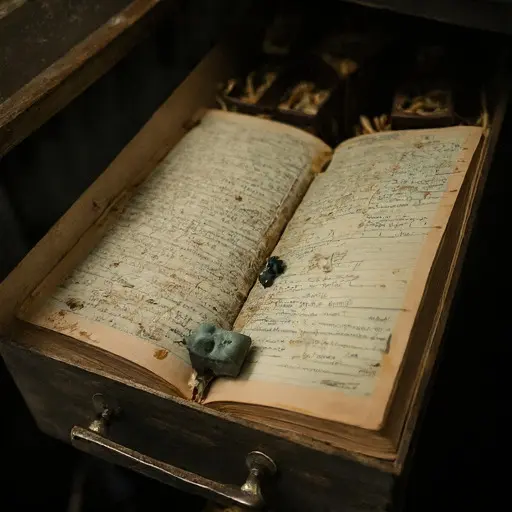
The core of his professional life was the dedicated communications room in the aforementioned tower. Here, his tools of precision remained. Tucked into a drawer of the operating table, we found a small, heavy logbook bound in dark oilcloth. Titled Daily Signal Register, it was a meticulous, sequential record of every message sent and received, noting the time, originator, and destination. The volume stopped mid-page on an entry dated June 12, 1921.
The Final Cipher and the Unanswered Call

The absence of any personal or financial distress records made Vance’s vanishing difficult to explain. The final clue lay behind a small, hinged panel near the wall-mounted relay box, a space designed to access wiring. Inside, we found a single, heavy, blank sheet of paper, folded precisely in four, its surface pristine.
Resting on top of this paper was a small, well-worn leather pouch containing two items: a heavily used, cipher key on a wooden fob, and a single, large silver shilling, dating from 1898. The shilling was not simply money; it was worn smooth on one side, bearing the distinct, shallow indentation of a telegraph key’s base—a personal talisman used to keep the key stable during rapid transmissions.
The logbook showed the last message received by Vance was an urgent request for confirmation of a dispatch sent to London. The log ends before Vance could respond. He had not abandoned his duty; he was midway through an essential transaction when the records stop. The blank paper in the concealed space, the cipher key, and the talismanic coin suggest a calculated finality—a decision made with the professionalism of an operator closing a circuit. The silence in Giltspur Hold is not merely decay; it is the lingering tension of a single, forgotten message—an essential communication lost to the static, the final, crucial confirmation that was never tapped out on the cold brass key.
