Lost Demir Writing Chamber and the Brush That Halted
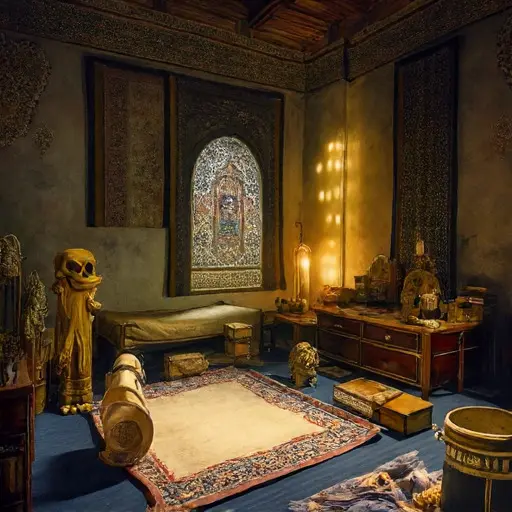
The hush inside Demir House settles over lantern-lit walnut panels. In the writing chamber, dust softens every deliberate surface. It is here, amid inks that no longer breathe, that a silence heavier than absence lingers.
The brush set aside still points toward the lectern, as though Hüseyin Kemal Demir meant to resume a line he never finished.
Where the Ripple Entered His Craft
Hüseyin, calligrapher-scribe, born 1871 in Konya, worked with practiced restraint. A prayer book bound in filigreed leather reveals his origins; beside it rests his mother Fatma Demir’s spindle of dyed thread. His routine traced quiet devotion: morning warmups with reed pens, afternoon commissions for merchants, twilight copying of poems. Every object bears his touch—blades sharpened evenly, pigments ground to fine dust, papercuts brushed away in patient sweeps.
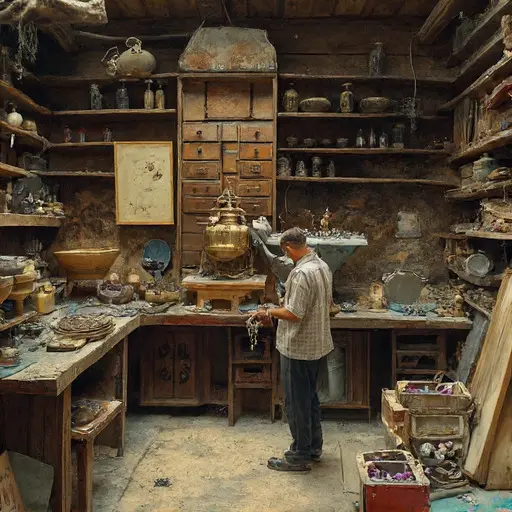
What Cracked His Concentration
Late commissions brought accusations that Hüseyin had miscopied a merchant’s legal deed. In the side niche, a crumpled parchment bears seams where he tried to lift ink too roughly. A reed pen is snapped at the midpoint, its fibers flared. The binding cord of his sample folio is torn, as if pulled during argument or panic. A wax seal impressed with an unfamiliar crest lies shattered near the brazier. Something in these marks suggests pressure he would not name.
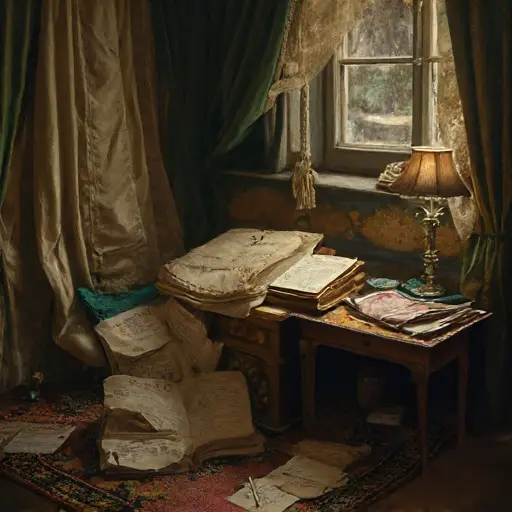
At last, only the halted brush remains, its bristles dried in mid-arc. Whether correction or confession, Hüseyin’s final gesture dissolved into the chamber’s waiting hush.
Demir House remains abandoned still.
