Lamentine Keep: The Musician’s Cursed Score
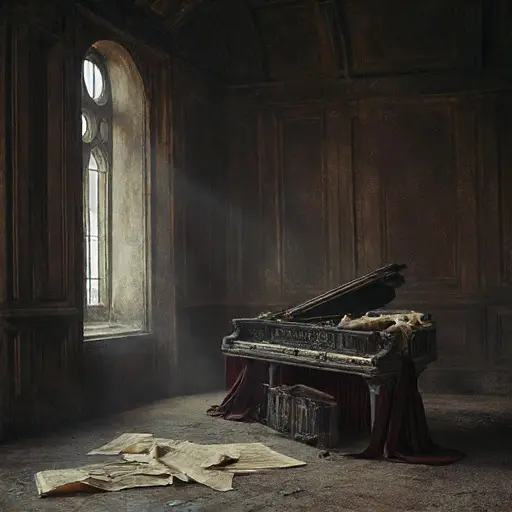
The air inside Lamentine Keep was unlike that of other ruins; it felt strangely pressurized, as if holding its breath. The silence was less about emptiness and more about stifled sound, a profound quiet that pressed against the eardrums. The name, likely chosen for its melancholic resonance, perfectly suited the atmosphere of the once-luxurious, now-forlorn Victorian structure. Stepping into this abandoned Victorian house was like intruding on a sustained rest note—a tense, prolonged pause in a tragically unfinished symphony.
The last owner was Mr. Julian Thorne, a brilliant, obsessive composer of the late 19th century who inherited the Keep. Thorne’s profession was music, but his focus quickly narrowed from composition to sound itself. He became fixated on writing the “Perfect Requiem,” a score so emotionally potent that he believed it could physically summon the deepest emotions of human grief and sorrow. He lived for the sound that could break the heart, isolating himself within the Keep’s thick walls to work on his singular, consuming score. His passion, however, curdled into a kind of desperate, sonic mania.
The Soundproof Studio
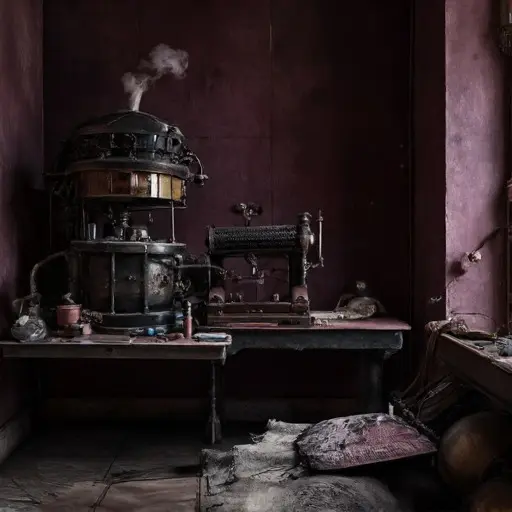
Thorne had a section of the house modified—a small, windowless chamber near the roof he soundproofed with heavy velvet and cork. This was his sanctuary, his “Soundproof Studio.” Here, away from all natural noise, he worked on his masterpiece. His journals, found tucked behind a loose wall panel, were a terrifying progression from musical theory to psychological study. He wrote less about notes and chords, and more about the frequencies of human despair and the physics of overwhelming sadness. “The score is nearly complete,” one entry read, “The silence will be shattered by the sound of ultimate, beautiful grief.”
His obsession is preserved in the house’s strange acoustic properties. In the grand music room, even a whisper seems to echo and amplify unnervingly, as if the space is actively seeking sound to fill its void.
The Final Chord in the Abandoned Victorian House
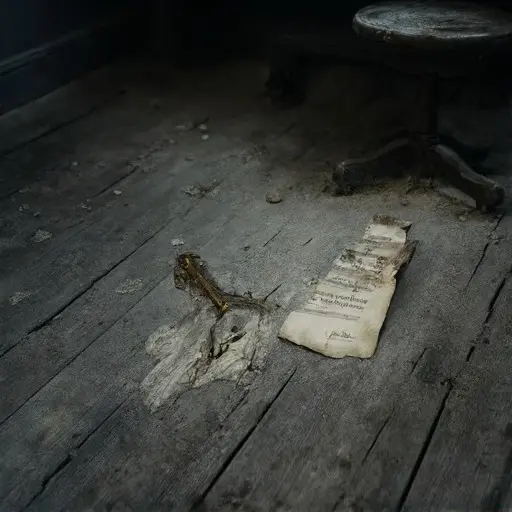
The story of Julian Thorne ends abruptly. One night, the few remaining staff reported a sudden, sharp, and terrifying dissonance—a sound that shook the very foundation of the Keep, followed by an immediate, profound silence. When they investigated, the Soundproof Studio door was ajar, and the room was empty. His clothes were folded neatly on the bench, but Thorne himself was gone.
The only physical trace remaining is the piano itself. Run your fingers over the keys in this abandoned Victorian house, and you find that the C-sharp key is perpetually sticky and slightly depressed, as if the composer’s hand rests upon it still. The Keep does not echo with cheerful melodies, but with the pressure of unreleased sorrow, forever waiting for the final, cursed note of the Perfect Requiem to be struck.
