Karadjan Villa: The Crimson Collapse of a Porcelain Empire
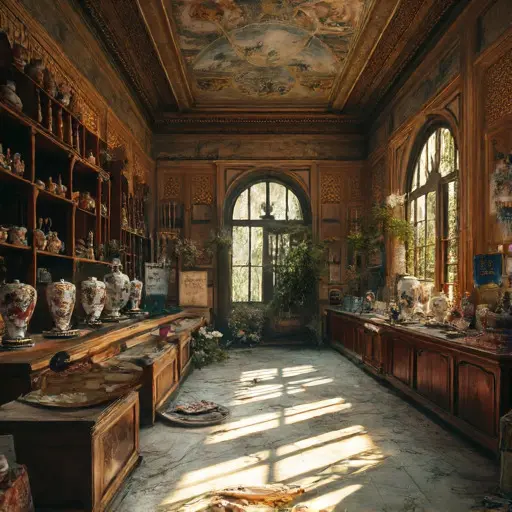
The Karadjan Villa was commissioned in 1898 above the harbor slopes for Elias Karadjan (1865–1912), a porcelain export merchant operating between East Asia, Marseille, and the Ottoman port cities. His wealth came from re-exporting kiln-fired ceramics through bonded warehouses, leveraging fragile tariff exemptions and high-demand aristocratic contracts across Mediterranean markets. The villa was both residence and commercial showroom, designed to impress foreign buyers with curated displays of imperial trade luxury.
Karadjan’s household included his wife Sofia and his niece Mariette, who assisted in cataloging shipment records and maintaining correspondence with European import houses. His social standing depended on punctual shipments, intact cargo, and reputation for handling delicate goods without loss.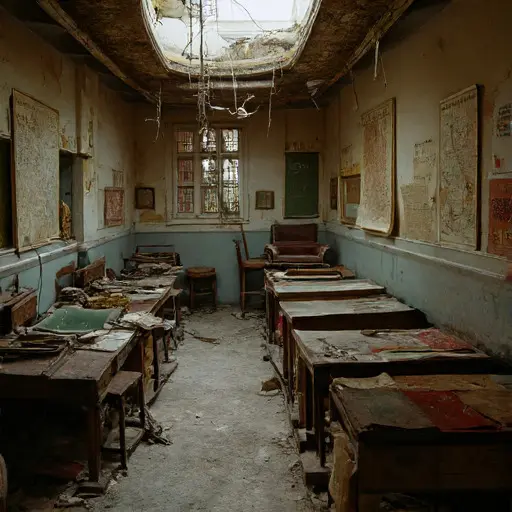
The turning point came in 1910 when new quarantine restrictions were imposed after a regional outbreak of infectious disease along the Aegean trade routes. Entire shipments of porcelain were detained in harbor warehouses, their insurance voided under disputed clauses. Simultaneously, an internal audit revealed irregular re-export declarations, triggering an investigation into Karadjan’s brokerage practices.
Credit lines collapsed within months. Warehouse partners in Marseille and Trieste terminated agreements, leaving unpaid cargo stranded at sea or confiscated by port authorities. The villa’s accounting rooms filled with unanswered legal summons and sealed inspection orders.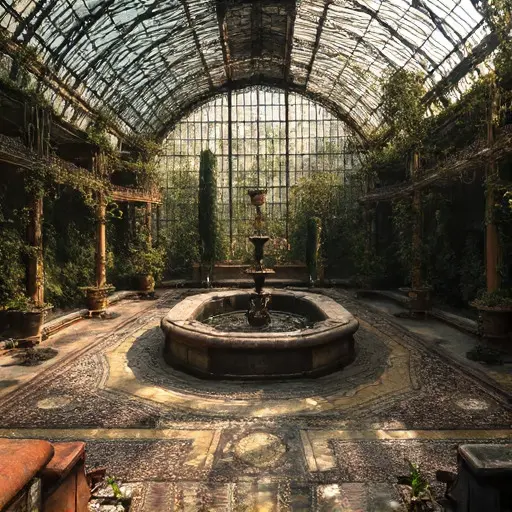
By 1912, creditors seized remaining assets, citing unpaid tariffs and collapsed insurance claims. Elias Karadjan died shortly after in obscurity, his name removed from active merchant registries without formal closure. The villa was left under administrative limbo, its inventories never fully completed due to overlapping claims between insurers and port authorities.
Inside the final office, a single export register remains open, listing halted porcelain shipments marked indefinitely “quarantined.”
The Karadjan Villa still stands above the harbor, abandoned and unresolved, its rooms slowly dissolving into dust and salt air without restitution or return.