Inside the Lost Labyrinth of Whisper-Ghyll
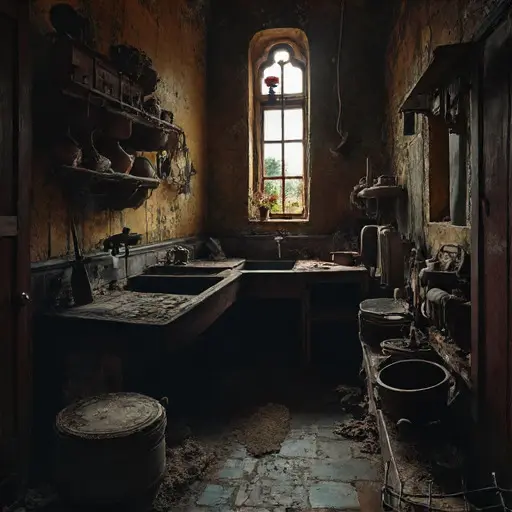
The atmosphere inside Whisper-Ghyll was less about haunted spaces and more about the crushing weight of forgotten labor. The instant one crossed the threshold into the Service Corridor, the air shifted from the cold elegance of the formal rooms to the heavy, chemical scent of soap, starch, and damp coal dust. This house, unlike many, told its tale through the sheer volume of its domestic necessity.
The floorboards of the service halls were bowed and deeply worn from endless traffic. The quiet here was not serene; it was the eerie, absolute silence that follows decades of relentless, deafening work.
Jonas Hawthorn: The Man of Pure Utility
The owner of Whisper-Ghyll was Jonas Hawthorn, a Victorian railway tycoon whose wealth was built on logistics and efficiency. Jonas was a man who valued function over form, and his primary temperament was one of cold, unwavering practicality. His mansion was designed to be a machine for living, run by a skeleton staff that he demanded be perfectly efficient. His wife, Florence, was merely an adjunct to his status, and their two children, Edwin and Margaret, were treated as future assets.
The Laundry Room’s Last Load
Florence Hawthorn lived a life of severe, prescribed duty, finding herself a stranger in her own home. Her only refuge from Jonas’s suffocating practicality was the Laundry Room, an ironic choice given the ceaseless work performed there. She would often linger there under the pretense of supervising, drawn by the rhythm and the warmth.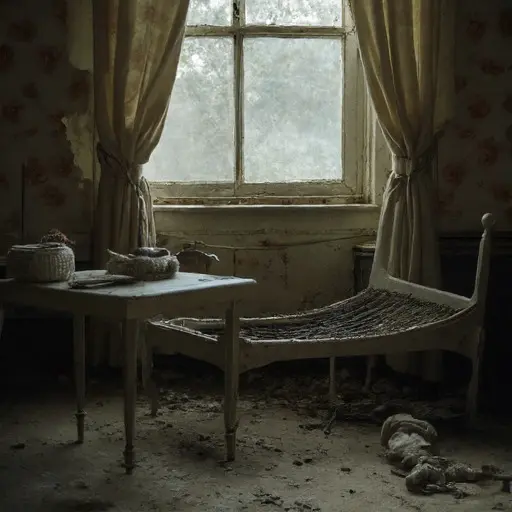
The Locked Safe in the Servants’ Staircase
The family’s final collapse was swift and brutal. Margaret, already frail, succumbed quickly to pneumonia in 1908. Florence, realizing her husband’s cold practicality had directly caused their child’s death, refused to speak to him or remain in the house for another night. She left, taking only her son, Edwin, and her botanical book, leaving all her other possessions to the manor.
Jonas Hawthorn disappeared shortly after, presumably taking his own life or vanishing into anonymity. Whisper-Ghyll was left intact, a complex mechanism suddenly shut off, its interiors utterly full of the inventory of a perfectly forgotten, tragically misguided life.
