Ichor-Schema: The Cartel’s Final Ledger
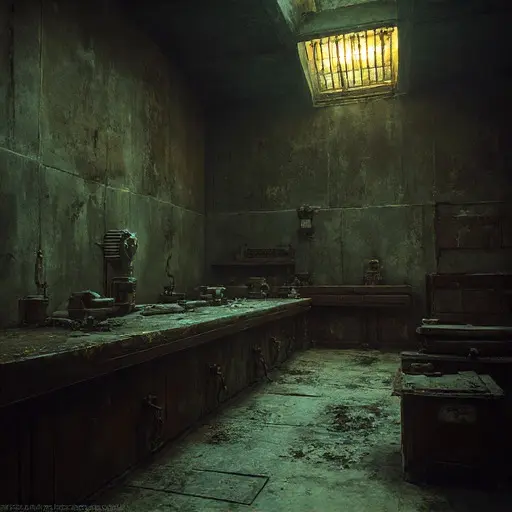
The moment the heavy, false bookshelf leading to Ichor-Schema was finally swung open, the air rushed out—cold, dense, and heavy with the pervasive, unsettling odor of stale cigar smoke, dry leather, and the fine dust of pulverized paper. The name, combining a vital fluid (blood/essence) with a systematic plan, perfectly captured the manor’s true function: the systematic management and accounting of illegal, life-and-death transactions. This abandoned Victorian house was structured not for domestic comfort, but for absolute secrecy and numerical control, its internal layout a bewildering maze of hidden rooms, reinforced vaults, and thick walls designed to muffle sound.
The final inhabitant was Mr. Lucius Cane, a brilliant, but intensely paranoid master accountant and financial strategist for a powerful, unseen criminal organization of the late 19th century. Mr. Cane’s profession was the meticulous recording and laundering of enormous sums of illicit money, keeping his organization financially opaque and untouchable. His singular obsession, however, was the creation of the ‘Zero Balance’—a perfect, ultimate ledger sheet where the total of all income and expenditure would be precisely and permanently zero, believing that in this state of absolute financial equilibrium, his entire organization would become immune to detection and collapse. After a sudden, violent audit by rivals, he retreated to the manor. He dedicated his final years to resolving this single, terrifying goal, believing that the only way to save his operation was through numerical annihilation. His personality was intensely meticulous, emotionally guarded, and utterly consumed by the pursuit of financial finality.
The Scorch Vault
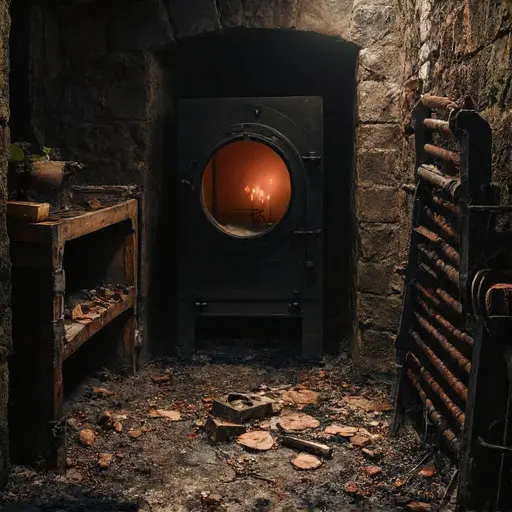
Mr. Cane’s mania culminated in the Scorch Vault. This secure, fire-retardant room was where he spent his final days, not balancing books, but systematically destroying every record of his organization’s existence. His journals, written in a cramped, precise hand that eventually gave way to dense, financial jargon and frantic notations about “final settlements,” were found pinned beneath a heavy, empty money clip. He stopped trying to balance the ledger and began trying to zero out existence, concluding that the only way to achieve the Zero Balance was to remove the entire system of transaction. “The books must speak no number,” one entry read. “The only truth is the final zero. To save the essence, the entire schema must vanish in smoke.”
The house preserves his secretive methods. Many internal floorboards are designed to creak audibly when stepped on, except for a single, specific, narrow pathway that leads silently through the house, marking the accountant’s practiced, secret route.
The Final Tally in the Abandoned Victorian House
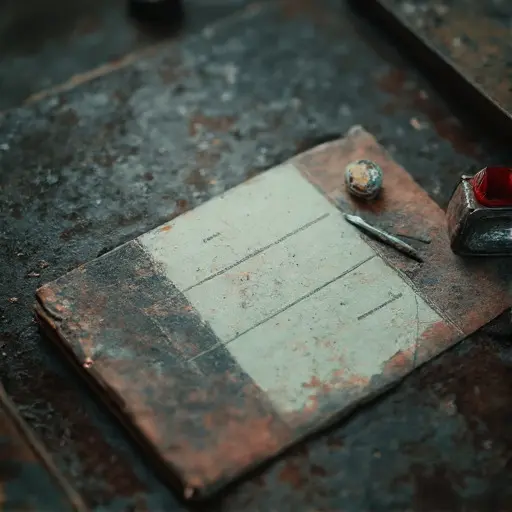
Mr. Lucius Cane was last heard working in the Scorch Vault, followed by the muffled roar of the furnace and a brief, high-pitched whistling sound, and then immediate, profound silence. He did not leave the manor. The next morning, the counting room was cold, the vault door ajar, and the man was gone. No body was found, and the only evidence was the singular, physical alteration to his final workspace.
The ultimate chilling clue is the blank paper slip. It is the final page of his ledger—the Zero Balance achieved, containing no numbers, no names, and no transaction history. The ink and the pen were disabled, ensuring no further record could ever be made. This abandoned Victorian house, with its hidden vaults and coded passages, stands as a cold, imposing testament to the master accountant who pursued financial finality, and who, in the end, may have successfully engineered the Ultimate Ledger, vanishing into the absolute, unrecorded anonymity that he deemed the only true form of security.
