Hidden Makonnen Ink-House and the Quill That Halted
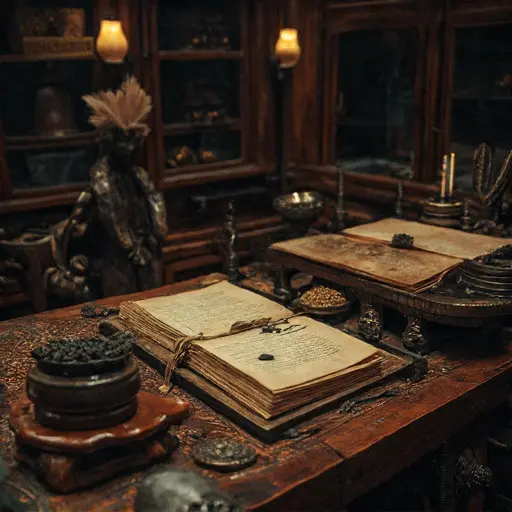
A tempered hush inhabits Makonnen House, deepest in the ink-house, where scent of parchment lingers. Here Tesfaye Alem Makonnen once copied prayers and legal decrees for families across the district. Now the halted quill suggests a final moment he never returned to finish.
Even the air seems weighted, as though awaiting the rest of a sentence that will never arrive.
A Mark in the Scribe’s Long Routine
Tesfaye, scribe, born 1872 in Gondar, trained under his uncle Kiros Makonnen, whose carved inkstone rests near the brazier. His days unfolded in quiet sequence: grinding pigments at dawn, ruling guidelines by midday, and copying tight scripts after lanterns were lit. Evidence of his meticulous method endures—straightedges aligned by height, parchment stacks trimmed evenly, reed knives polished smooth. Every detail implies a man grounded in steady practice, trusting precision as a form of devotion.
When His Letters Lost Their Confidence
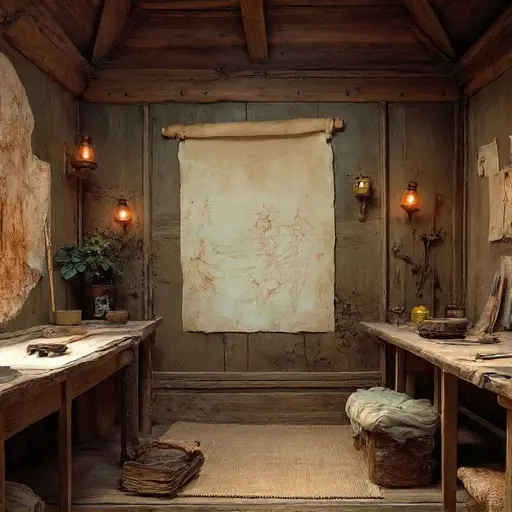
Rumors murmured that Tesfaye miscopied a boundary dispute—an error that stirred resentment among local elders. In the side cupboard, a scroll lies partly unrolled, its seals smudged as if touched too early. A reed quill is snapped at its midpoint. Kiros’s inkstone shows a streak where pigment overflowed. A folded decree sits unevenly under a lamp whose wick burns low, the margins blurred where a thumb pressed too long. Even a spare parchment stack lists subtly to one side, hinting at strain that crept into his normally level hand.
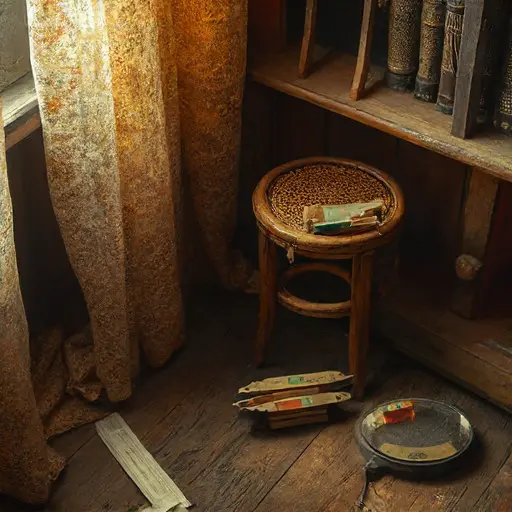
Only the halted quill remains, its ink mark drying into silence. Whatever pulled Tesfaye from his final line lingers in the ink-house’s dim hush, unanswered.
Makonnen House remains abandoned still.
