Hidden Kovács Leather-Room and the Stitch That Wandered
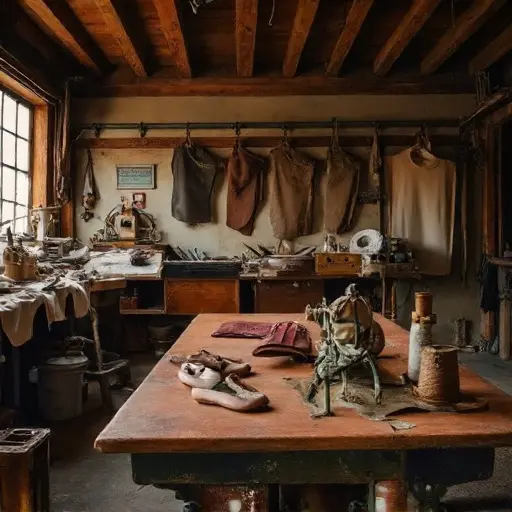
A quiet weight settles inside Kovács House, deepest in the leather-room, where once the scent of oak-bark tannin clung to every beam. Here Bálint Andor Kovács shaped traveling satchels and harness pieces for carters crossing the plains. Now a wandering stitch on his final satchel holds the room in hesitant suspension, hinting at a moment when certainty faltered.
Trace Through the Tanner’s Steady Craft
Bálint, leatherworker, born 1876 near Debrecen, learned his trade from his mother Erzsébet Kovács, whose thimble rests on a linen square beside the stretching frame. His days progressed by habit: morning scraping of hides, afternoon measuring cuts, and long evenings burnishing seams beside a single lamp. Evidence of his order remains in the straight rows of knives, thread spools sorted by gauge, and pattern boards stacked without lean. Even the stitching machine’s treadle sits polished where his boot pressed countless arcs.
When His Hand Lost Its Measure
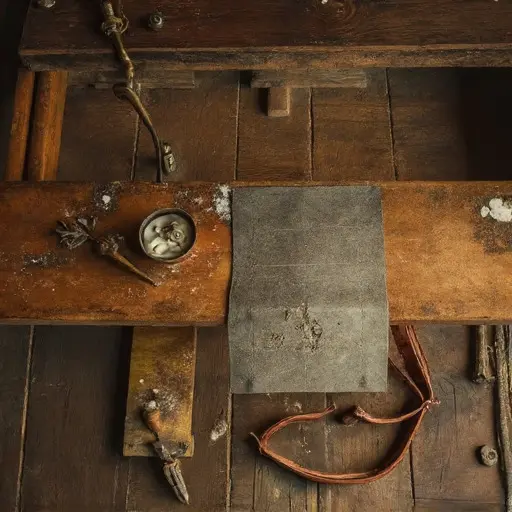
Rumors held that Bálint supplied an order of flawed harness straps to a military courier—an accusation he denied, yet could not shake. In the supply recess, a bundle of offcuts lies spilled from its crate. Erzsébet’s thimble cushion holds a new puncture mark, deeper than routine would make. A ruler of horn rests at a slant atop pattern papers, its edge chipped. A strap buckle sits twisted on the bench, its prong bent slightly inward. These signs edge near a truth he did not give voice to, forming a quiet mosaic of strain.
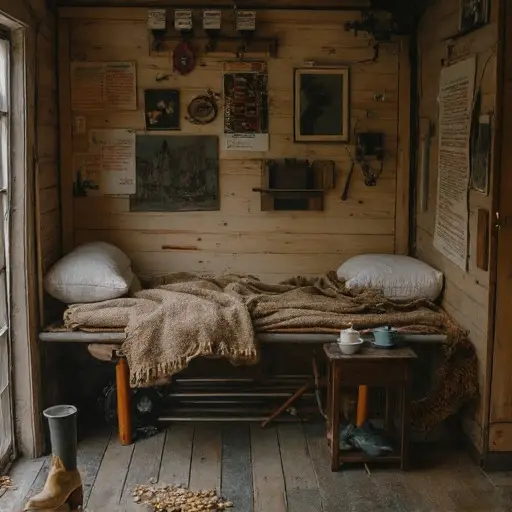
Only the wandering stitch remains, curving where Bálint’s hand once held steady. Whatever halted his final seam lingers in the leather-room’s muted calm.
Kovács House remains abandoned still.
