Hidden Calderón Press-Room and the Forme That Shifted
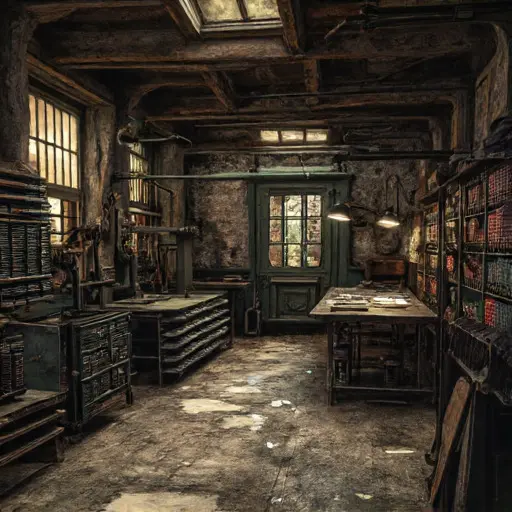
Silence in Calderón House gathers where the press-room tightens its shadows. The presses loom like halted hearts. Here Julián Rafael Calderón once shaped arguments and declarations into print; now the forme left out of square seems to wait for hands that will never complete the final lock.
Nothing explains the slight shift in the type, nor the draft of cool air that tugs at abandoned proofs.
Grain in the Typesetter’s Routine
Born 1877 in Buenos Aires, Julián trained as a printer-typesetter for civic pamphlets. A mate gourd etched with pampas motifs hints at his roots; his sister, María Calderón, stitched the cloth that cushions the composing tray. His schedule was constant: dawn for melting ink cakes, noon for setting headlines, dusk for pulling proofs until the lamps dimmed. His discipline survives in the squared drawers, the polished reglets, the ruler worn along his thumb’s habitual rest.
When the Lines Fell Out of Step
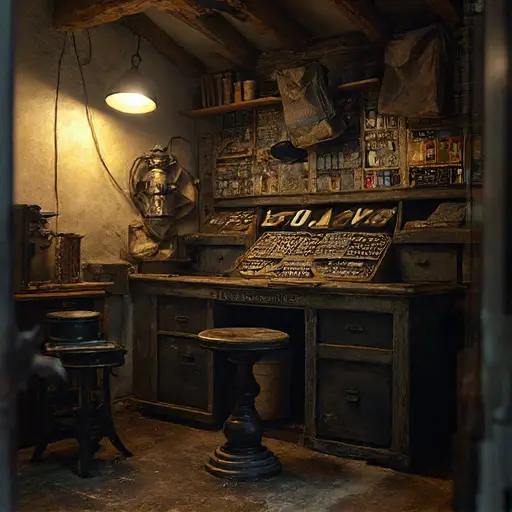
Whispers spread that Julián misprinted a critical political tract, endangering a patron’s reputation. In the supply recess, an ink cake lies cracked where it fell; a typescale is bent inward, showing force beyond daily wear. María’s stitched cloth is caught on a metal drawer, its thread snapped. A line gauge bears smudges where he pressed too firmly, as if bracing himself. A locked forme on the lower shelf has shifted by mere millimeters—too subtle for accident, too pointed to ignore.
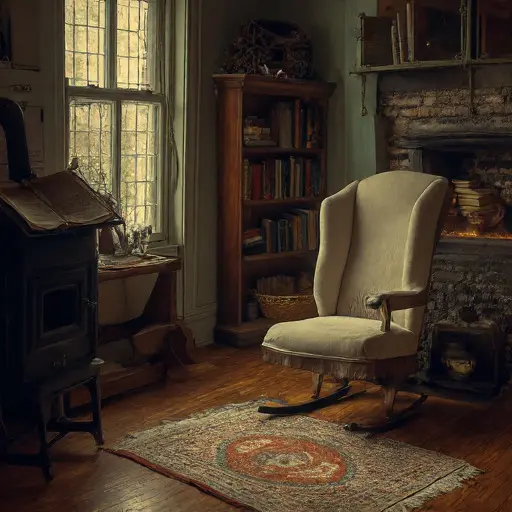
In the end, only the misaligned forme remains, bearing lines Julián never tightened. Whatever turned his final night askew left its meaning sealed in metal and paper.
Calderón House remains abandoned still.
