Haunting Whitlock Observatory-Loft and the Lens That Dimmed
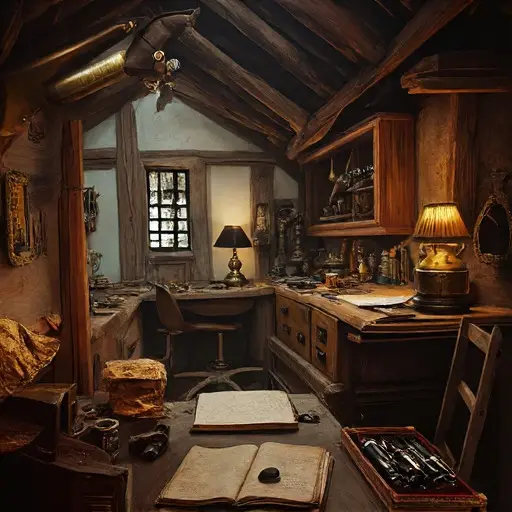
The hush inside Whitlock House concentrates in the observatory-loft, where cold metal and chalk-scented pages settle under rafters. Here Edwin Mortimer Whitlock once traced faint stars across calculated grids. Now a dimmed lens remains at the heart of the loft, suggesting a gesture that faltered before its purpose could be named.
Glow in the Astronomer’s Steady Course
Edwin, astronomer, born 1871 in Portsmouth, favored instruments inherited from his aunt Harriet Whitlock, whose monogrammed compass rests beside a brass quadrant. His routine: morning lens cleaning, midday chart copying, evenings spent aligning the mount by lamplight. Evidence lingers—pencils trimmed to sharp angles, charts weighted flat by river stones, oculars kept spotless. Even his timing sheets, stacked beneath the table edge, reflect a tempered devotion to precision.
Where His Measurements Lost Direction
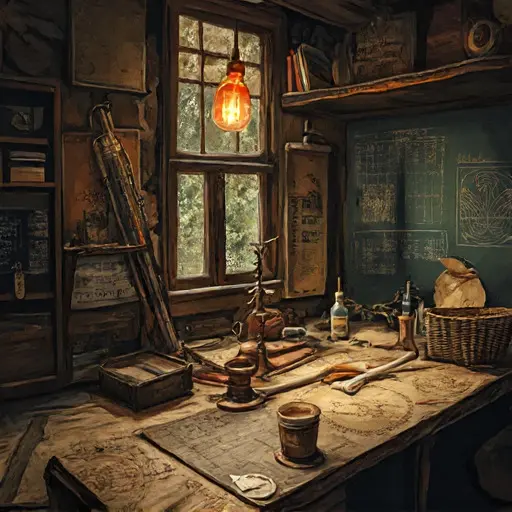
Whispers claimed Edwin misreported a variable star’s periodicity, undermining a colleague’s publication. In the instrument nook, a reticle eyepiece lies chipped at the rim. A star atlas is smudged where a thumb pressed too firmly. Harriet’s compass is turned on its side, needle trembling against cork. A tin of cleaning powder is spilled across the sill, its grains forming a hesitant arc. None of these marks reveal why his dependable hand faltered, though each edges toward a doubt he never voiced.
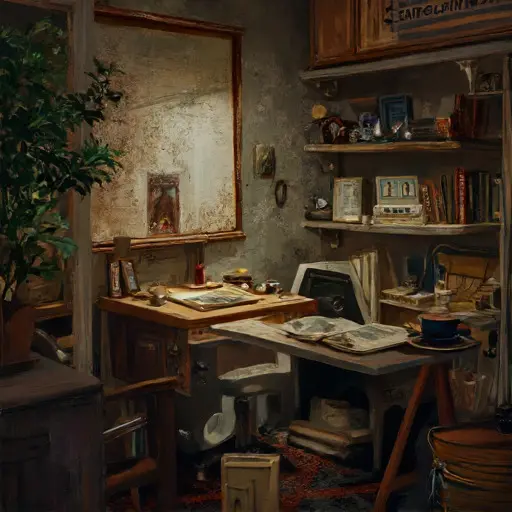
Only the dimmed lens remains, its surface clouded as if expecting a final adjustment that never came. Whatever halted Edwin’s last observation lingers in the loft’s still air.
Whitlock House remains abandoned still.
