Haunting Shadows in the Langley Family’s Forgotten Atelier
The Life of a Dedicated Painter
Edmund Langley, born 1878 in Lyon, France, studied at the École des Beaux-Arts, coming from a modest bourgeois family. His mother taught music, his father ran a small print workshop. Edmund’s daily routine involved early-morning sketches, afternoons in oil painting, and evening study of classical masters.
His temperament was meticulous but restless, reflected in palettes with carefully mixed hues, precise brushwork, and notes in tiny, careful script. Canvas corners reveal smudged fingerprints, paint-stained sleeves, and sketchbooks pressed between heavy books, all hints of a life immersed in painting.
Atelier as a Repository of Creativity
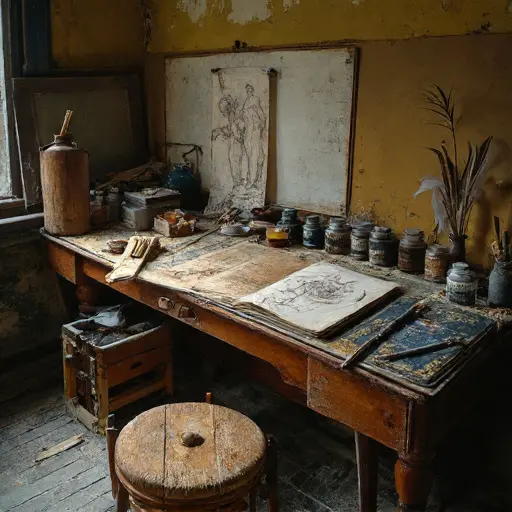
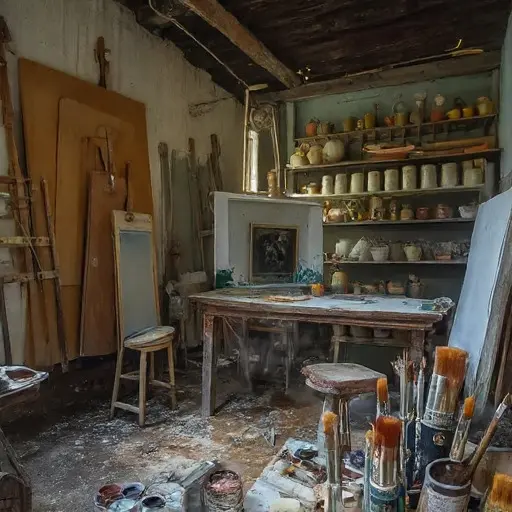
The primary atelier is dominated by wooden easels, paint-stained tables, and shelves of pigment jars. Half-finished canvases lean against walls, some partially obscured by dust sheets. Brushes sit in dried water jars, and palettes are hardened with layered color. Sketchbooks are open to preliminary designs, some pages torn or curling. The arrangement suggests deliberate work interrupted, with painting halted mid-progress, capturing absence through incomplete compositions.
Decline through Financial Hardship
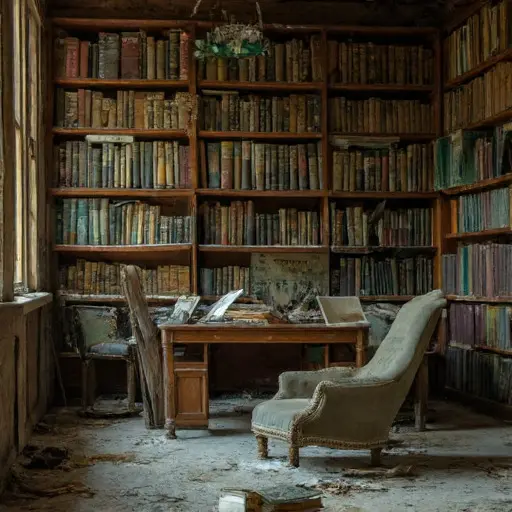
Edmund’s decline began when commissions failed to materialize, and the family workshop closed. Unable to afford quality materials or maintain the atelier, he withdrew from public exhibitions. Paintings remained unfinished, oil jars dried out, and sketches stacked in neglect. The halted painting routine left the interior suspended in quiet decay, a record of professional aspiration overcome by circumstance.
Evidence of Interrupted Artistic Life
Scattered brushes, half-finished canvases, pigment jars, and sketchbooks convey the intensity of Edmund’s devotion. The atelier and library preserve the traces of methodical work and abandoned creativity, silently marking a life disrupted, unresolved, and left to the quiet weight of absence.