Forgotten Tools at the Eerie Quiet of Long Meadow Loft
The Paint Room and the Specialist’s Signature
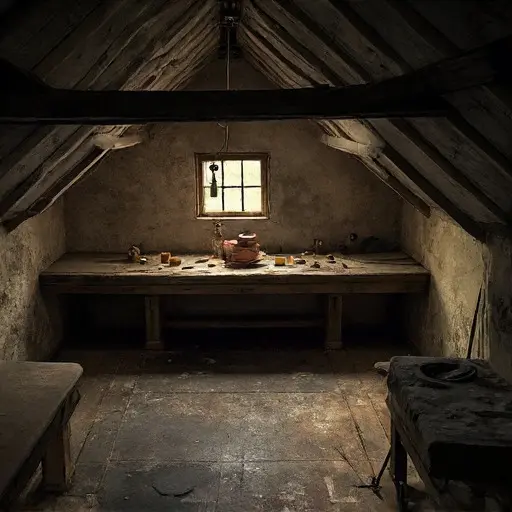
Long Meadow Loft, a relatively small but sturdy Victorian home, was the residence and working studio of Mrs. Adeline Hughes, a specialized fabric or textile restoration specialist from 1890 to 1912. Hughes was employed by wealthy local families to repair and conserve valuable tapestries, curtains, and upholstery. Her profession required precision, patience, and a deep knowledge of chemical treatments. She lived alone after the death of her mother and maintained a rigorous, solitary schedule. Her disappearance in 1912 was listed in parish records as an ‘unexplained permanent emigration.’
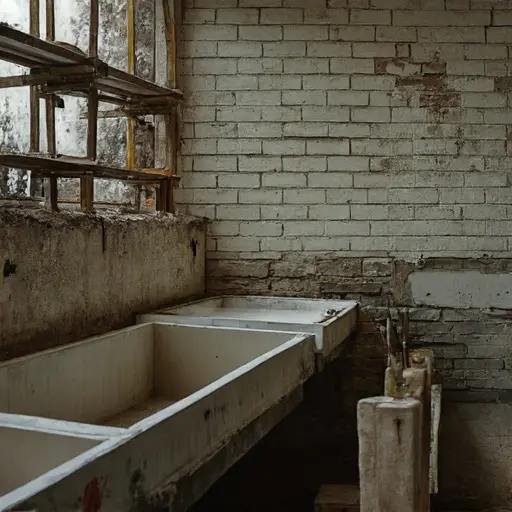
The professional core of the house was a repurposed laundry room on the second floor, which she used as a controlled dyeing and cleaning area. The room contained several massive, lead-lined stone sinks and a complex system of wooden racks for drying. The atmosphere here was cool, perpetually damp, and smelled of faint residual dyes and cleaning solvents—a ghost chemical signature.
On a slate shelf in the corner, protected from the worst of the damp, we found her official register: a large, thin book bound in plain green cloth, titled simply Conservation Ledger. It detailed every commission, the method of restoration used, and the payment received. The final entry, meticulous as ever, listed the completed cleaning of a large Belgian tapestry, dated May 1912, the transaction marked as ‘Paid in Full.’
The Final Deposit Slip and the Map of Departure
Mrs. Hughes’s fate was solved by a small, mundane piece of paper found tucked inside the final pages of the ledger. It was a bank deposit slip for a significant sum, dated the day after the tapestry was finished and paid for. The sum was equivalent to roughly six months of her typical earnings—a large, but not impossible, amount to save.
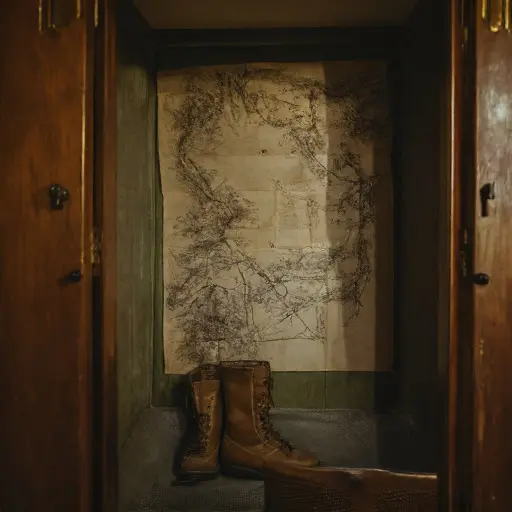
The paper trail ended there, but the emotional clue lay in her private sleeping quarters. Taped to the inside of a tall, locked wardrobe door, we found a large, detailed, but crudely drawn pencil sketch of a railway and ferry route leading from her town to the southern coast and across the English Channel. The map was annotated not with place names, but with small, circled numbers corresponding to estimated travel times and ticket costs, all scrawled in her hand.
She had not disappeared due to debt or tragedy, but by a methodical, pre-planned execution of an escape from her solitary, demanding life. The money was her fare, the cleaning of the tapestry her final professional duty, and the map was the private evidence of her chosen, forgotten route. She had meticulously paid her dues, closed her accounts, and, with the practical tools of her trade left behind, simply walked away from the demanding stillness of her meticulous life.
