Forgotten Routines in the House of the Snow Tunnel Inspector
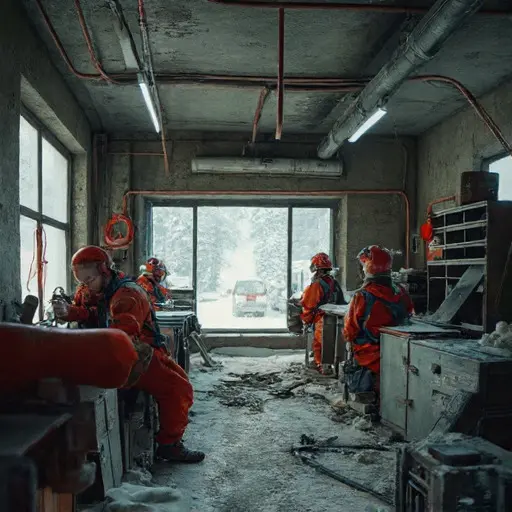
The tunnel reports are still clipped together on the desk.
Some pages are marked with handwritten notes about ice pressure and wall vibration measurements collected during the final winter inspections.
This house belonged to Emil.
He worked as a snow tunnel inspector, monitoring avalanche tunnels and mountain road protection systems built along dangerous alpine routes.
The office inside the house doubled as a field station during winter months.
Thermal scanners sat charging near the wall. Structural diagrams were pinned beside emergency radios. Heavy boots and reflective jackets remained lined up near the entrance exactly where they had been left.
The entire place was designed around routine maintenance work.
At the Thermal Survey Bench
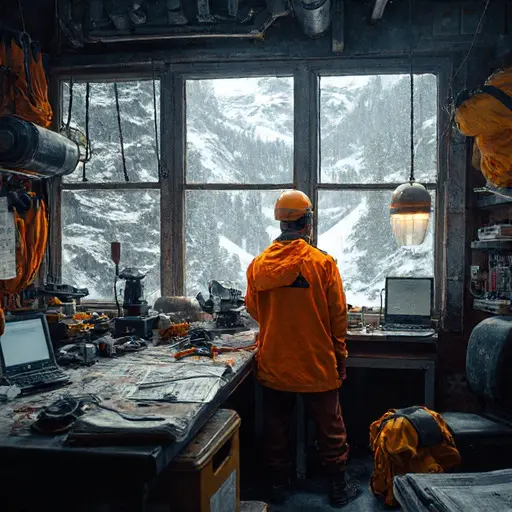
Emil worked most often at the Thermal Survey Bench.
The long steel desk near the equipment lockers was used to compare temperature fluctuation readings against tunnel wall stress measurements gathered during patrol inspections.
His wife died many years earlier after a severe winter transport accident on the same mountain route he later supervised.
After that, Emil rarely left the station except for inspection runs.
For years, the profession remained necessary.
Mountain communities and transport agencies relied on tunnel inspectors to monitor structural stability, snow accumulation pressure, and avalanche barrier systems during dangerous winter seasons.
Then automation replaced most field inspection work.
Remote sensor networks and drone-based monitoring systems reduced the need for permanent human inspection stations across the mountain roads.
Emil continued working anyway.
Even after staffing reductions.
Even after the local office was scheduled for closure.
But the decline was not only technological.
Traffic through the mountain corridor itself decreased.
A newer highway route bypassed the old avalanche road entirely, leaving many tunnels underused and eventually classified as secondary infrastructure with minimal maintenance funding.
Emil stayed through the final winters, maintaining manual inspections long after most crews had been reassigned elsewhere.
During one particularly unstable snow season, repeated freeze-thaw cycles caused dangerous structural shifts inside several older avalanche tunnels.
He spent weeks documenting damage patterns from the station house while severe storms repeatedly blocked outside access.
The final inspection logs on the desk describe worsening wall fractures and ice expansion pressure near the northern tunnel entrance.
He died before evacuation crews reached the station during a prolonged avalanche closure.
The road was eventually shut down permanently.
The tunnels remain sealed beneath snow.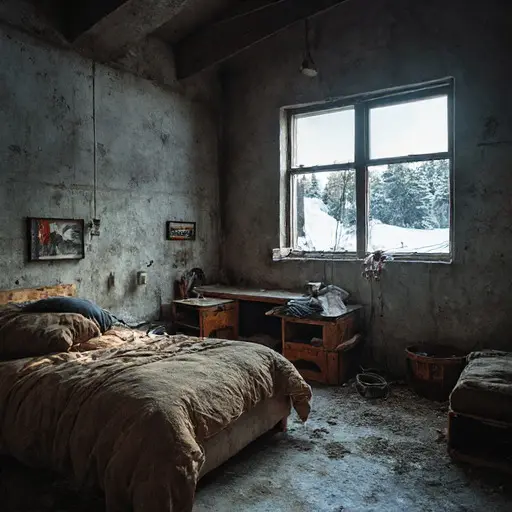
The thermal scanners remain plugged into dead charging stations.
The inspection reports are still stacked on the bench.
And at the Thermal Survey Bench, Emil’s unfinished maintenance records continue waiting in silence beside a road no one uses anymore.