Exploring Abernathy Dell: A Forsaken Architect’s Last Blueprints
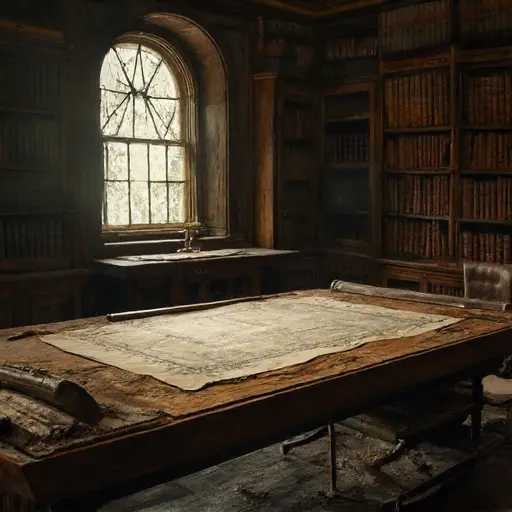
Abernathy Dell was built in 1891 for Mr. Alistair Rourke, a successful and notoriously exacting architectural roof inspector whose career focused on the rigorous examination of leadwork, slate integrity, and gutter efficiency on major civic buildings. Rourke, having spent his life chronicling the structural failures of others, invested heavily in his own flawless construction, only to suffer a debilitating stroke in 1905, leaving the house financially secure but emotionally hollow. He was moved to a distant, specialized sanitarium and the house was simply closed up, preserved almost perfectly because there was no need for sale or dispute among non-existent heirs.
The Attic’s Registry of Structural Flaw
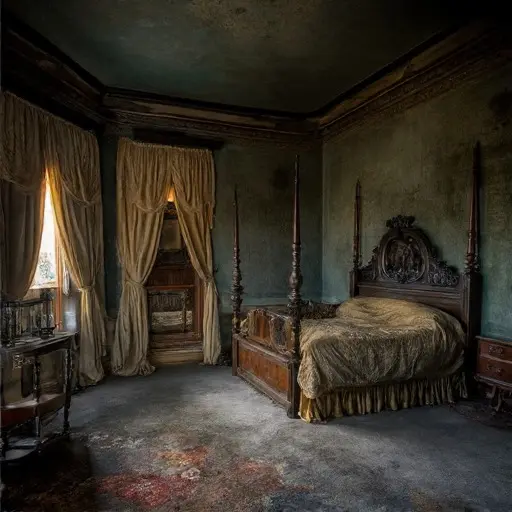
Rourke’s profession dictated an obsession with documentation, and the house’s small, functional attic—not the usual storage purgatory but a purpose-built observation post—held his most telling archive. Here, under the steep pitch of the roof he himself designed, were rows of narrow, ledger-style books. These were not financial records, but meticulous reports detailing every structural flaw, material degradation, and maintenance delay he had documented over a twenty-year career across the county. Each entry was accompanied by a small, precisely executed technical drawing. One book, left open on a wooden table near a defunct iron stovepipe, detailed the disastrous failure of a schoolhouse parapet in 1898—a detailed, clinical analysis of human negligence and load-bearing miscalculation. The pervasive cold of the attic, where the exterior air temperature seemed only slightly mitigated by the brick, emphasized the sterile, intellectual loneliness of this space dedicated to finding fault.
The Ledger of the Unpaid Debts
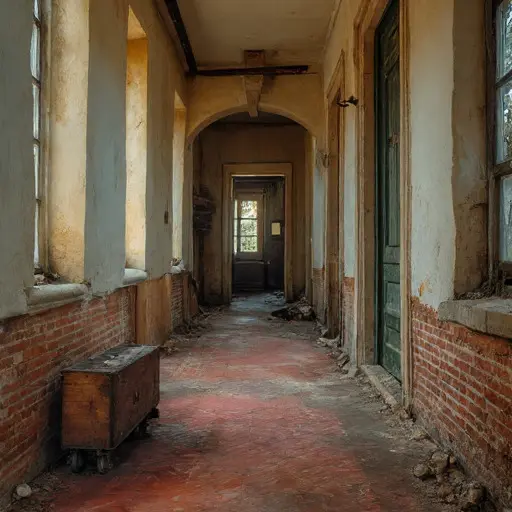
The greatest emotional residue of Rourke’s sudden fate was found in the small parlor used for receiving clients. Tucked into the roll-top desk was a cash book, the final entry dated just two days before his stroke. The last ten pages contained a list of small, meticulously itemized debts Rourke had incurred for materials for a private project he was building for himself—a small, seaside cottage he planned to retire to. These weren’t grand expenditures, but detailed lines for pine boards, specialized paint, small window sashes, and specific wrought-iron brackets—all marked “Paid in Full” except for the last three, which remained open, the ink waiting for a final, validating checkmark.
