Eerie Valdés Map-Room and the Chart That Shifted
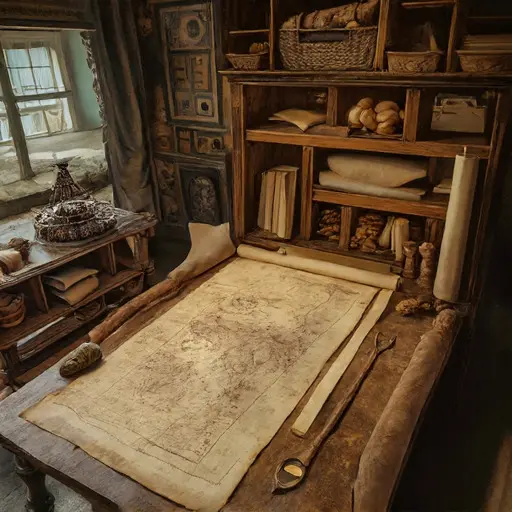
The quiet within Valdés House thickens in the map-room, where dust traces the absence of footsteps. Here Santiago Emilio Valdés once charted distant coasts drawn from maritime testimonies. Now, a single chart remains unsettled on the table, its corners resisting the calm that has overtaken every drawer and compass.
Crease in the Cartographer’s Progress
Born in 1872 near Cádiz, Santiago worked as a cartographer compiling navigational references for local merchants. A ceramic cup painted with Andalusian motifs sits beside quills trimmed to tapered points; his sister, Isabel Valdés, stitched the cloth that cushions his compass case. His days followed measured rhythm: early drafting lines, midday adjustments to bearings, dusk shading of relief along imagined shorelines. Evidence of this care lingers in ink pots sorted by hue, in rulers polished smooth along the palm-worn edge.
Where His Bearings Strayed
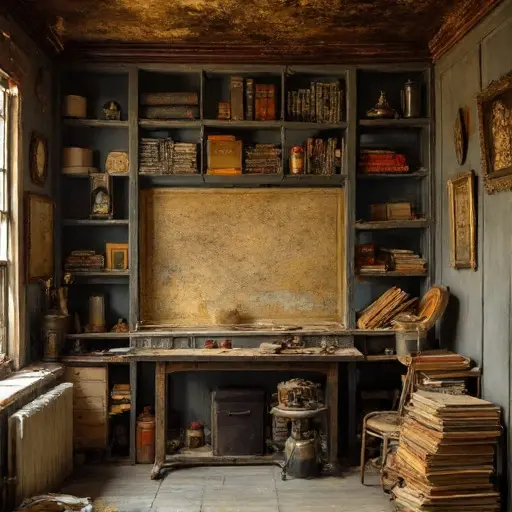
Late commissions brought contradictions: sailors disputed his latest depictions, insisting he misplotted a reef. In the supply niche, a compass shows a warped needle clinging to one side of its housing. A coastal register bears a smudge where Santiago pressed too hard, as if steadying himself. Isabel’s embroidered cloth is snagged on a drawer pull, its thread snapped. A wax seal affixed to a bundle of testimonies is fractured into dull fragments, hinting at tense revisions he never resolved.
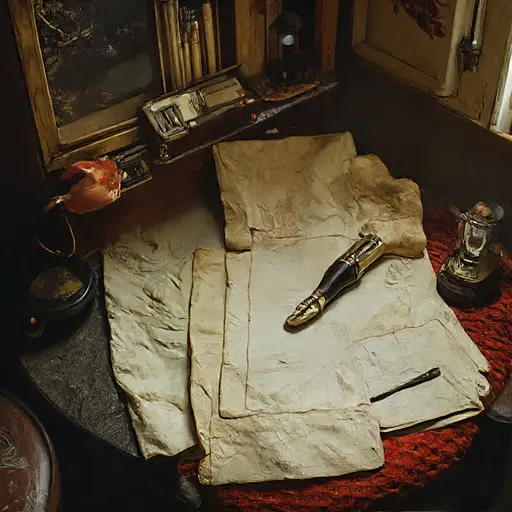
At last, only the shifted chart persists, lifted by that subtle crease. Whether Santiago fled error, accusation, or doubt, the moment remains trapped in this room’s arrested breath.
Valdés House remains abandoned still.
