Eerie Silence of Ashworth Manor’s Last Resident
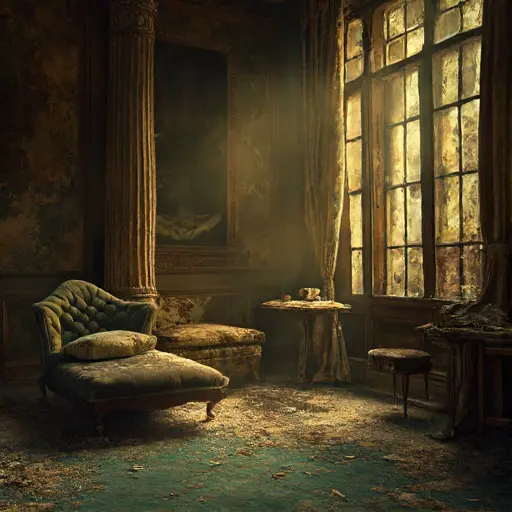
The door didn’t creak so much as sigh when it was nudged open, releasing a breath of air that smelled like old paper, dried lavender, and a century of trapped silence. This was Ashworth Manor, a monument to opulence and a quiet tomb of its own history. The introduction hall was vast, the polished mahogany banister of the sweeping staircase swallowed by shadows. Every footfall on the wide-planked floor was a jarring report, a disrespectful intrusion into the deep, echoing quiet. Sunlight, thick with motes of fine dust, slanted through the tall windows, illuminating the decay not as ruin, but as a preservation of a moment long past. The house didn’t feel empty; it felt like a presence holding its breath, waiting for the return of a life it could never quite let go of.
The Painter and the Luminous Room
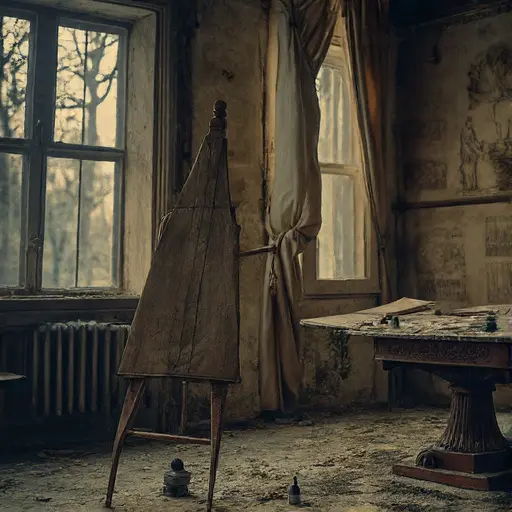
The primary occupant, and the shadow that still clung to the house’s grand rooms, was Elias Thorne, a celebrated portrait painter of the late Victorian era. Thorne was a man utterly obsessed with light—not just seeing it, but capturing its very soul on canvas. He was known for the unsettling realism in his subjects’ eyes, as if he painted not just their image, but their deepest sorrow.
His studio, a massive room on the third floor designed to face north for optimal, consistent light, was where his story crystallized.
It was here we found his final, unfinished work. Unlike his commissioned portraits, this canvas depicted only the interior of the room itself, yet rendered with a strange, frantic energy. It was in the details that his fate unfolded. Behind the canvas, tucked into a loose floorboard, was a small, leather-bound journal. The entries, written in a hand that grew increasingly desperate, spoke not of light, but of the darkness that had begun to reflect in the eyes of his sitters, a darkness he realized was radiating from the house itself. “The paint is too cold,” one entry read, “The shadows are not mine to command. They belong to Ashworth now.”
The Unfinished Portrait’s Gaze
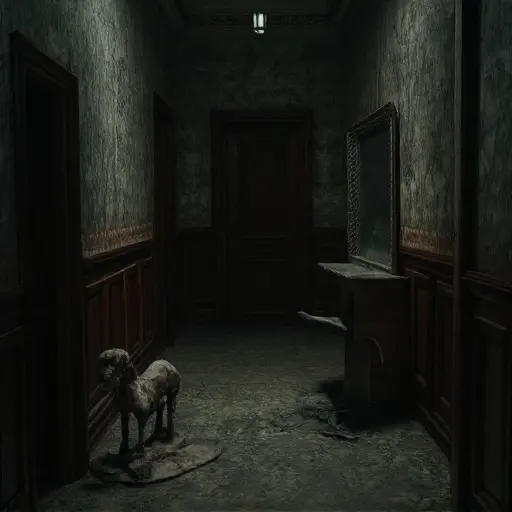
Thorne didn’t simply leave; he vanished. His last entry was a chilling testament to his psychological collapse: a final, scrawled line that read, “I’ve become the shadow I couldn’t paint.” His body was never found, but the memory of his presence lingered everywhere. In the parlor, the mahogany grand piano was closed, a single, yellowed sheet of music—a melancholic nocturne—resting atop the lid.
The house didn’t decay normally; it preserved Elias Thorne’s emotional truth. The melancholy of his final months was trapped in the quiet dust, the stale air, the very structure.
The sense of an ending here is less about tragedy and more about a fading echo. Elias Thorne, the painter obsessed with light, became a permanent part of Ashworth Manor’s shadows. The house, in its silent, elegant decline, became his final, and most haunting, self-portrait.
